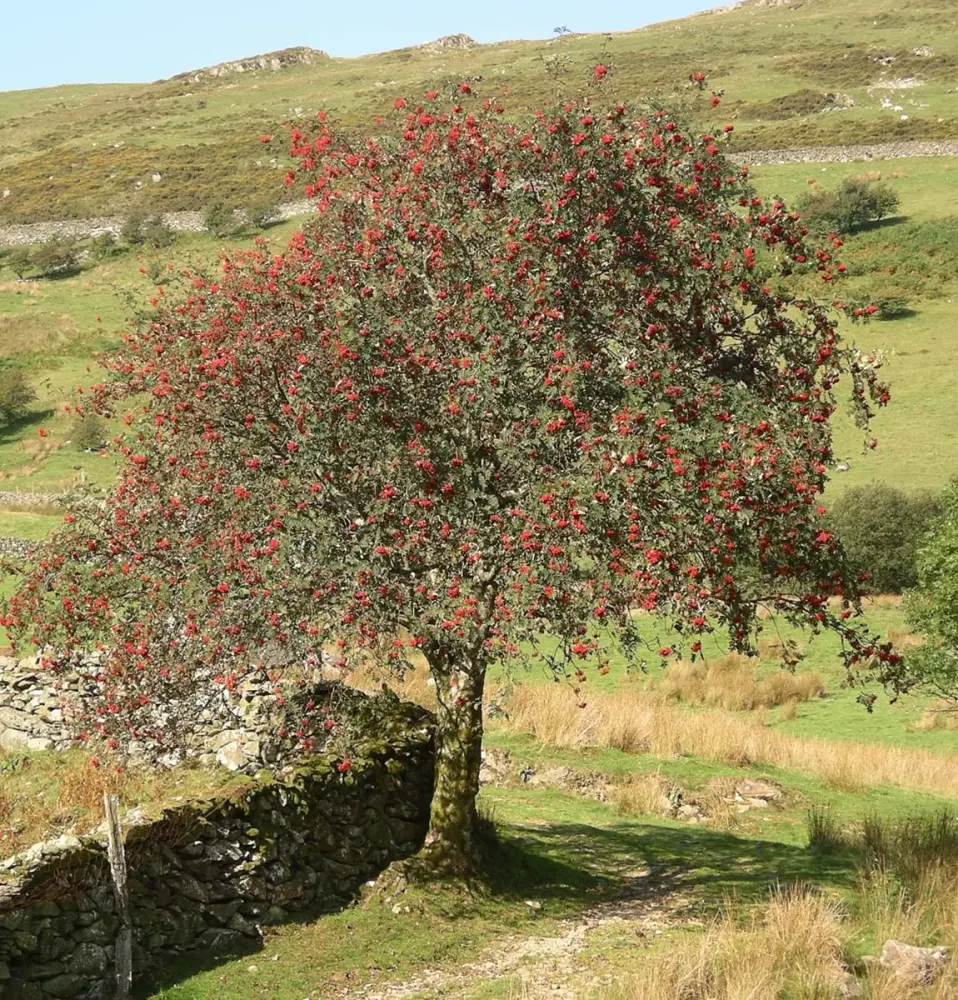
© Velela · CC BY-SA 2.5 · Commons
Sorbus aucuparia
CautionVogelbeere · (Sorbus aucuparia)
Rose family (Rosaceae)
Description
Sorbus aucuparia, commonly called rowan and mountain-ash, is a species of deciduous tree or shrub in the rose family.
- TeaFruitInternalFolk medicine
In Austrian and Central European folk medicine, rowan berries were used as tea, syrup, or jelly for colds, flu, cough, bronchitis, and fever. Adequate heat treatment is always required to convert parasorbic acid into harmless sorbic acid.
Preparation & dosage
Simmer 5–10 g dried (or frost-treated) rowan berries in 250 ml water for 15 minutes, strain. Never use raw fruits.
- Dry amount
- 5–10 g
- Doses per day
- 2×
[#src_wiki_en_sorbus] [#src_wiki_de_sorbus] [#src_pfaf_sorbus]
- GargleFruitExternalFolk medicine
Freshly pressed or gently warmed rowan berry juice was used as a gargle for hoarseness and sore throat. Singers traditionally used it for vocal cord care.
- SpiceFruitInternalFolk medicine
Cooked or frost-treated rowan berries are processed into jelly, jam, compote, chutneys, or tart syrup and served as a condiment for game and lamb dishes. Special cultivars ('Moravica', 'Edulis') are low in parasorbic acid and suitable for raw consumption.
- TeaFruitInternalFolk medicine
In folk medicine, rowan berry preparations were used as a mild diuretic and laxative and for hemorrhoids and kidney conditions. The sorbitol content contributes to a mild laxative effect.
Preparation & dosage
- TeaFlowerInternalFolk medicine
Flowers and leaves were used in folk medicine as a tea substitute and for rheumatism and gout. Note: leaves contain cyanogenic glycosides and should only be used occasionally and in small amounts.
- CompressBarkExternalFolk medicine
Bark decoctions were applied externally for skin conditions and as an astringent wash (traditionally also gynecological use). PFAF documents the bark for treating diarrhea and vaginal discharge.
- RawFruitInternalFolk medicine
Cultivars such as 'Konzentra' and 'Rosina' (Sorbaria edulis group) are low in parasorbic acid and can be eaten raw after the first frost. These cultivated forms are nutrient-rich and contain vitamin C, carotenes, sorbitol, and flavonoids.