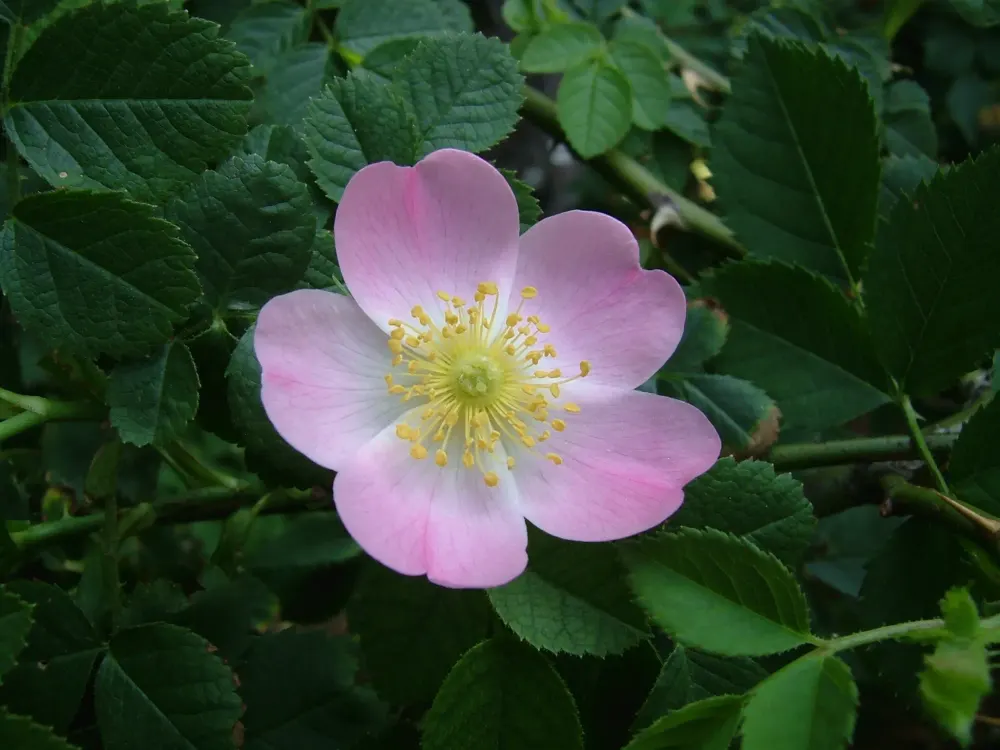
© Sakurai Midori · CC BY-SA 3.0 · Commons
Rosa canina
Hundsrose · (Rosa canina)
Rose family (Rosaceae)
Description
Rosa canina, the dog rose, is a variable climbing, wild rose species native to Europe, northwest Africa, and western Asia.
- TeaFruitInternalTraditional use
Traditionally used rose-hip tea as a vitamin-C-rich preparation for the supportive treatment and prevention of colds, flu-like infections and general fatigue during the cold season. Rose hips, with 0.4-2 % ascorbic acid, are among the richest native sources of vitamin C. The German Commission E lists Cynosbati fructus with a positive assessment for this indication.
Preparation & dosage
Pour 250 ml boiling water over 2-4 g crushed dried rose hips (with or without seeds), cover and infuse for 10-15 minutes, then strain. Drink up to three cups daily. For better vitamin-C retention use water just below boiling and infuse covered.
- Dry amount
- 2–4 g
- Doses per day
- 3×
- Max duration
- 8 weeks
[#src_kommission_e_cynosbati_fructus] [#src_pfaf_rosa_canina] [#src_heilkraeuter_hagebutte]
- RawFruitInternalClinical trial
Standardised rose-hip powder (from fruit skin, flesh and seeds) for osteoarthritic complaints of knee, hip and hand. Clinical trials (Winther et al., Christensen et al.) show that the galactolipid GOPO significantly reduces pain, stiffness and NSAID requirement. ESCOP lists Rosae pseudo-fructus for this indication.
Preparation & dosage
Stir 2.5-5 g standardised rose-hip powder (with seeds, cold-milled) twice daily into water, yoghurt or juice and take with meals. A noticeable effect usually develops only after 3-4 weeks of continuous use.
- Dry amount
- 2.5–5 g
- Doses per day
- 2×
- Max duration
- 12 weeks
[#src_escop_rosae_pseudo_fructus] [#src_winther_2005_doi] [#src_christensen_2008_doi]
- SpiceFruitInternalFolk medicine
Classical use of the deseeded fruit flesh as jam, rose-hip liqueur, rose-hip sauce (e.g. with game) and rose-hip puree as a child-friendly source of vitamin C. Fruit acids and pectins are mildly digestion-promoting; the sweet-sour fruit flesh has been part of peasant winter stores in northern and central Europe for centuries.
Preparation & dosage
[#src_pfaf_rosa_canina] [#src_heilkraeuter_hagebutte] [#src_wikipedia_de_hagebutte]
- TeaFlowerInternalFolk medicine
In folk medicine, dog-rose flower tea is occasionally used as a mildly soothing and heart-strengthening infusion for nervous restlessness and exhaustion. The effect is gentle and not supported by modern studies; mostly enjoyed as a fragrant well-being tea.
Preparation & dosage
Pour 250 ml boiling water over 1-2 g dried dog-rose petals, cover and infuse for 8-10 minutes, then strain. Drink one to two cups daily.
- Dry amount
- 1–2 g
- Doses per day
- 2×
- RawFruitInternalFolk medicine
In wild-food cookery, fully ripe rose hips are eaten straight from the bush: gently squeeze the fruit between the fingers, open at the stem end and suck out the sweet-sour flesh — do not swallow seeds and itch-hairs. A classic trail-side autumn nibble.
Preparation & dosage
- GargleFruitExternalFolk medicine
Folk-medicinal use of a strong rose-hip infusion as astringent gargle for incipient sore throat, hoarseness and mild irritations of the oral and pharyngeal mucosa. Tannins (catechin polymers) act astringent, vitamin C and fruit acids mildly antiseptic.
Preparation & dosage
Pour 250 ml boiling water over 5-8 g crushed rose hips, infuse for 15 minutes, strain and let cool to body temperature. Gargle several times daily (3-4 times); do not swallow when using a strong infusion.
- Dry amount
- 5–8 g
- Doses per day
- 4×