© Conrad Nutschan at de.wikipedia · CC BY-SA 3.0 · Commons
Quince
CautionQuitte · (Cydonia oblonga)
Rose family (Rosaceae)
Description
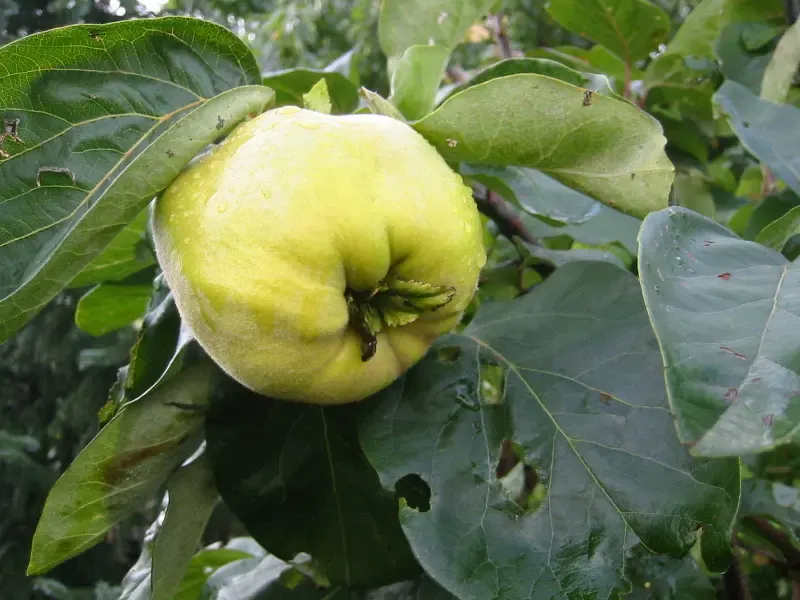
The quince is the sole member of the genus Cydonia in the Malinae subtribe of the Rosaceae family. It is a deciduous tree that bears hard, aromatic bright golden-yellow pome fruit, similar in appearance to a pear. Ripe quince fruits are hard, tart, and astringent.
- TeaSeedInternalTraditional use
Quince seeds (unbroken) soaked or briefly simmered in water yield a mucilage-rich decoction. The mucilage coats irritated mucous membranes, providing relief in cough, hoarseness, and mild digestive upset. Seeds must not be chewed.
Preparation & dosage
Soak 2–5 g whole, unbroken seeds in 200 ml cold water for 30 minutes. Bring briefly to a boil, strain, and drink warm.
- Dry amount
- 2–5 g
- Doses per day
- 3×
[#src_pfaf_cydonia] [#src_henriettes_cydonia] [#src_frontiers_cydonia]
- RawFruitInternalFolk medicine
Raw quince fruit is rich in pectin, tannins, and malic acid. Prepared as jelly, compote, or juice, it supports mild diarrhea and digestive weakness. The high pectin content binds fluid in the intestine.
Preparation & dosage
[#src_pfaf_cydonia] [#src_wiki_de_cydonia] [#src_frontiers_cydonia]
- GargleFruitExternalFolk medicine
Fresh quince juice or a decoction of the fruit is used as a gargle for mild inflammation of the oral and pharyngeal mucosa. The tannins act as astringents with mild anti-inflammatory effect.
Preparation & dosage
- SalveSeedExternalTraditional use
Quince seed mucilage is incorporated into salves and creams for external use on cracked skin, sore nipples, and minor burns. The mucilage forms a protective film over the skin.
Preparation & dosage
- RawFruitInternalFolk medicine
Syrup made from unripe quince fruit was a traditional remedy for diarrhea, especially in children. Anthimus (6th century) specifically recommended quinces for severe diarrheal conditions.
Preparation & dosage
- SpiceFruitInternalFolk medicine
In the kitchen, quinces are primarily processed into jellies, jams, and preserves. Their high pectin content promotes gelling without added gelling agents. Dried and crushed seeds can be used as a spice in hot beverages.
Preparation & dosage