© Unknown (see Commons) · CC BY-SA 3.0 · Commons
Urtica dioica
CautionGroße Brennnessel · (Urtica dioica)
Nettle family (Urticaceae)
Description
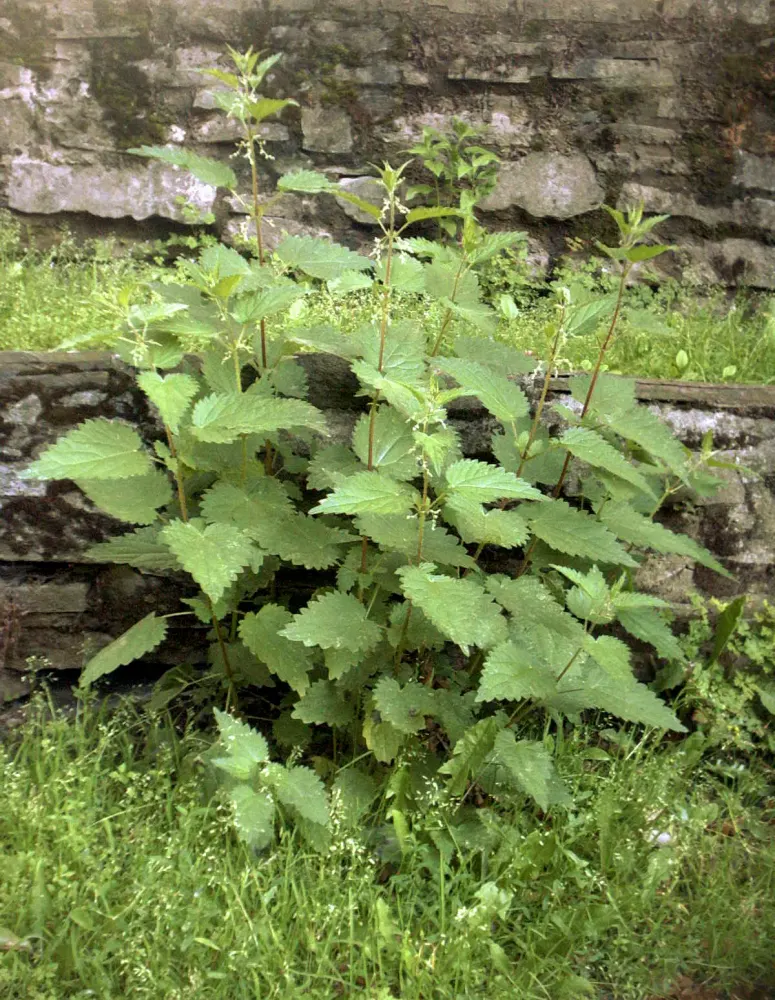
Urtica dioica, often known as common nettle, burn nettle, stinging nettle, nettle leaf, or just a nettle or stinger, is a herbaceous perennial flowering plant in the family Urticaceae. Originally native to Europe, much of temperate Asia and western North Africa, it is now found worldwide.
CONTRAINDICATED during pregnancy
Per EMA, safety in pregnancy not established.
CONTRAINDICATED during breastfeeding
Insufficient data for breastfeeding.
CONTRAINDICATED for children
Leaf tea not under 12, herb tea/root not under 18.
- TeaLeafInternalTraditional use
Classic nettle leaf tea for mild rheumatic joint complaints and flushing therapy.
Preparation & dosage
SPRING CURE / FLUSHING TEA: 2–4 g cut dried nettle leaves + ~200 ml boiling water, steep 10 min, strain. 3–6× daily (8–12 g/day). Drink plenty of additional water (≥ 2 L/day).
- Dry amount
- 2–4 g
- Doses per day
- 4×
- Max duration
- 4 weeks
⚠ Age restriction: ≥ 12 years — Per EMA, not for children under 12 years.
- TeaAerial partsInternalTraditional use
Nettle herb tea as adjuvant for mild urinary complaints.
Preparation & dosage
FLUSHING TEA: 1.5 g nettle herb + 150 ml boiling water, steep 10 min, strain. 3–4× daily. Drink ≥ 2 L additional water/day.
- Dry amount
- 1–2 g
- Doses per day
- 4×
- Max duration
- 2 weeks
⚠ Age restriction: ≥ 18 years — Nettle herb tea per EMA not for under 18 years.
- TeaAerial partsInternalTraditional use
Spring cure for mild rheumatic joint pain.
Preparation & dosage
RHEUMATIC TEA: 3–6 g + 200 ml boiling water, steep 10 min. 3× daily (9–18 g/day).
- Dry amount
- 3–6 g
- Doses per day
- 3×
- Max duration
- 4 weeks
⚠ Age restriction: ≥ 18 years — For joint complaints not for under 18 years.
- TinctureAerial partsInternalTraditional use
Fresh plant juice — most concentrated form of the classic spring cure.
Preparation & dosage
FRESH PLANT JUICE: 10–15 ml expressed juice 3× daily before meals. Drink plenty of water. 2–4 weeks, then break.
- Liquid amount
- 10–15 ml
- Doses per day
- 3×
- Max duration
- 2 weeks
⚠ Age restriction: ≥ 12 years — Expressed juice per EMA not for under 12 years.
- TeaRootInternalTraditional use
Nettle root tea for BPH — different mechanism (lignans rather than flushing).
Preparation & dosage
NETTLE ROOT TEA (BPH): 2 g + 150 ml boiling water, steep 10 min. 2–3× daily. Only after medical exclusion of serious conditions.
- Dry amount
- 2–2 g
- Doses per day
- 3×
⚠ Age restriction: ≥ 18 years — BPH indication only concerns older men.
- SpiceLeafInternalFolk medicine
Young nettle shoots as traditional spring wild vegetable.
Preparation & dosage
YOUNG NETTLES AS WILD VEGETABLE: Harvest with gloves, blanch or roll to destroy stinging hairs. Steam like spinach. Very high iron, vitamin C, calcium, protein.
Distribution in Europe
🤝 Permaculture Partners
In your garden, this plant acts as:
✨ Best symbiotic partners
- 🌿 Matricaria chamomilla Nettle slurry strengthens chamomile and many other herbs.
- 🌿 Peppermint Classic companion-planting partner.
📦 Part of these planting sets:
Source: Helga und Margarete Langerhorst, Mein gesunder Naturgarten (eigene Kuration)