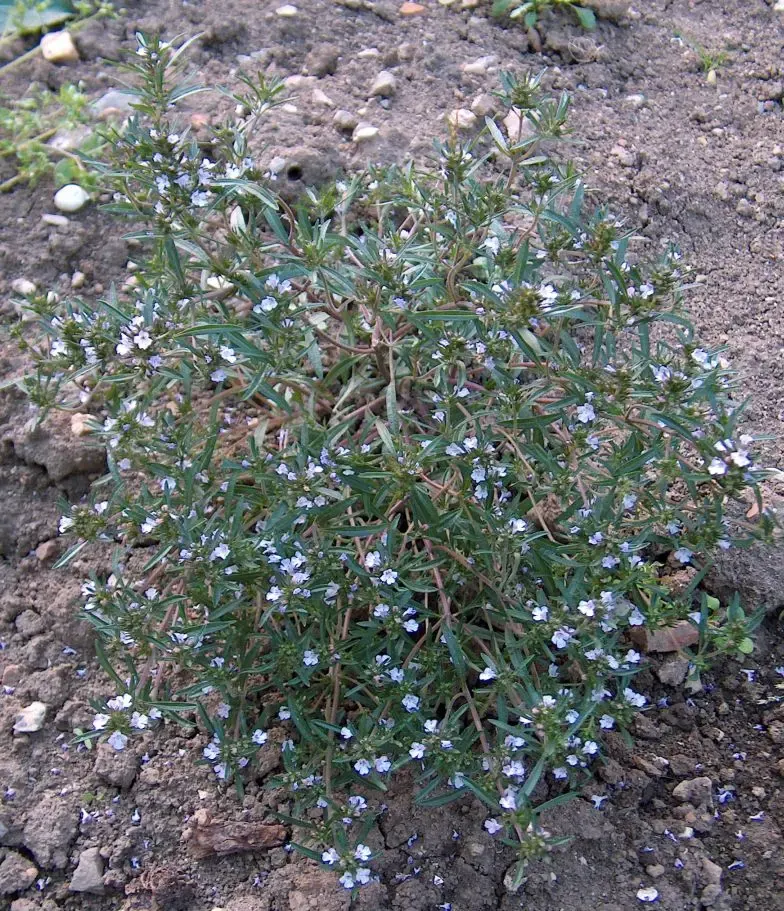
© Unknown · CC BY-SA 3.0 · Commons
Summer savory
CautionSommer-Bohnenkraut · (Satureja hortensis)
Mint family (Lamiaceae)
Description
Summer savory is among the best known of the savory genus. It is an annual, but otherwise is similar in use and flavor to the perennial winter savory. It is used more often than winter savory, which has a slightly more bitter flavor.
CONTRAINDICATED during pregnancy
Do not use as a herbal preparation (tea, extract, oil) during pregnancy — insufficient safety data, possible emmenagogue effect. Small culinary amounts are considered safe.
CONTRAINDICATED during breastfeeding
Avoid concentrated preparations due to insufficient data. Culinary amounts in food are traditionally accepted.
CONTRAINDICATED for children
No concentrated extracts or essential oil in children — insufficient safety data.
- SpiceAerial partsInternalFolk medicine
Fresh or dried leaves and shoot tips are used as a culinary herb. Summer savory is the classic herb for beans — tradition holds that it reduces the flatulent effect of legumes. In Bulgarian cuisine it is an ingredient of sharena sol (speckled salt); in Provençal cuisine it is part of herbes de Provence.
Preparation & dosage
- TeaAerial partsInternalTraditional use
A tea from the flowering shoots has been used since antiquity for digestive complaints such as flatulence, abdominal cramps, nausea and diarrhoea. The plant is already mentioned in the ancient cookbook De re coquinaria (3rd/4th c.). Carminative and stomachic effects are attributed to the essential oils carvacrol and thymol.
Preparation & dosage
Pour 150 ml hot water over 1–2 g dried herb, steep 10 minutes, strain.
- Dry amount
- 1–2 g
- Doses per day
- 3×
[#src_wiki_de_satureja] [#src_pfaf_satureja] [#src_review_frontiers_2023]
- GargleAerial partsExternalFolk medicine
A decoction of the herb is used in folk medicine as a gargle for throat inflammations and pharyngeal complaints. The antiseptic effect is attributed to the high carvacrol content of the essential oil.
Preparation & dosage
- TeaAerial partsInternalFolk medicine
In folk medicine, savory tea is used for coughs and bronchial catarrh. The expectorant effect is attributed to the essential oil, which helps loosen bronchial secretions.
Preparation & dosage
Pour 150 ml hot water over 1–2 g dried herb, steep 10 minutes.
- Dry amount
- 1–2 g
- Doses per day
- 3×
- CompressAerial partsExternalFolk medicine
A sprig of fresh savory rubbed on insect stings (bees, wasps) is said to soothe itching and swelling — a widespread folk remedy. Essential oils act locally cooling and mildly antiseptic.
- Essential oilAerial partsExternalFolk medicine
The essential oil (0.5–2% in flowering herb) with lead compounds carvacrol and thymol shows strong antimicrobial and antifungal activity in laboratory studies. Used externally diluted in aromatherapy; do not apply undiluted to the skin.
- TinctureAerial partsInternalTraditional use
Savory extracts are used in traditional herbal medicine as appetite stimulants and digestive aids. Historically documented as a remedy among Romans; in the 17th century described by Nicholas Culpeper as wind-expelling.
Preparation & dosage
Distribution in Europe
🪴 Grow at home
- ☀ Light
- full sun
- 💧 Water
- weekly
- 🌱 Soil
- Standard herb compost
- 🪴 Pot
- 15 cm
- ⭐ Difficulty
- ★☆☆ beginner
- 🐾 Pets
- pet-safe
Tips:
- Sunny, fairly dry — like all Mediterranean herbs.
- Classic companion for bean dishes.
- Harvest before frost — annual.
Care tips are general indoor-gardening recommendations, not scientific sources.
🤝 Permaculture Partners
In your garden, this plant acts as:
✨ Best symbiotic partners
- 🌿 Phaseolus vulgaris Savory strengthens beans and deters black bean aphid.
- 🌿 Phaseolus vulgaris Savory is the classic bean partner against aphids.
- 🌿 Fenugreek Classic companion-planting partner.
⚠️ Better not planted together
- 🥬 Garlic Classic companion-planting partner.
Source: Helga und Margarete Langerhorst, Mein gesunder Naturgarten (eigene Kuration)