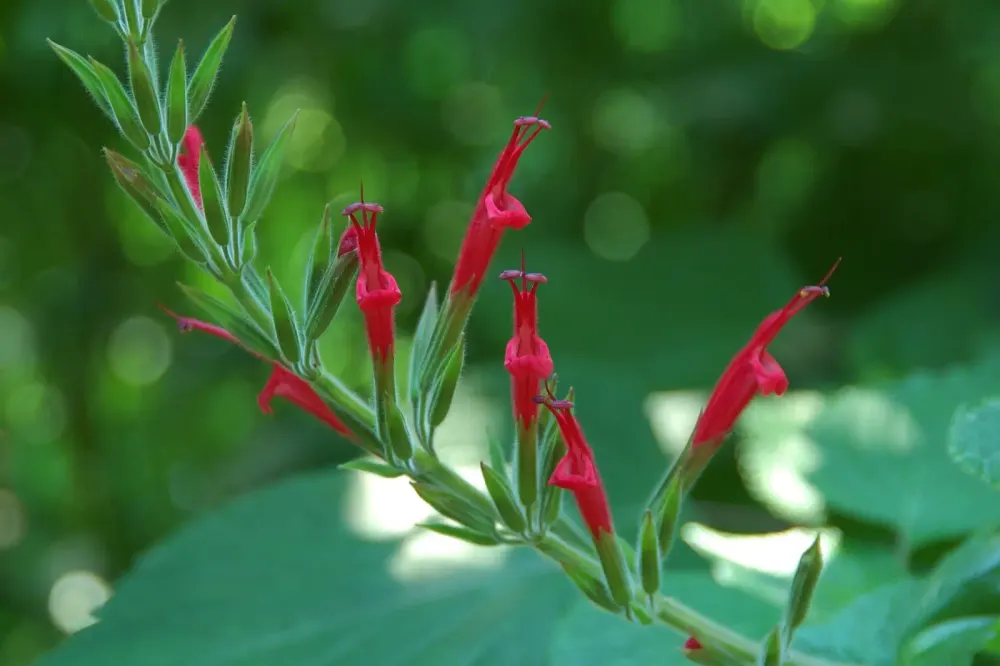
© Eric Hunt · CC BY 2.5 · Commons
Salvia elegans
Honigmelonen-Salbei · (Salvia elegans)
Mint family (Lamiaceae)
Description
Salvia elegans is a perennial shrub native to Mexico. It has a number of variants, including pineapple sage and tangerine sage.
🌿 Risk of confusion — read before wild-harvesting!
Salvia elegans is well tolerated in culinary amounts and as tea in traditional doses. No sufficient safety data for prolonged therapeutic use (>4 weeks) — therefore limit duration. Due to blood-pressure-lowering effects in animal studies, use cautiously in low blood pressure and when taking antihypertensive medication. Because of serotonergic activity (see González-Cortazar 2021 / PubMed 34568977), do NOT use concurrently with SSRI/SNRI antidepressants without medical advice (theoretical serotonin-syndrome risk at high doses). Do NOT confuse with the hallucinogenic Salvia divinorum.
- TeaAerial partsInternalTraditional use
In Mexican folk medicine, Salvia elegans (locally 'mirto' / 'mirto de monte') is a classical tea herb for anxiety, nervous restlessness, stress and mild depressive mood. An experimental hydroalcoholic extract of leaves and flowers showed anxiolytic and antidepressant-like effects in animal models (Herrera-Ruiz 2006). Sweet, fruity aroma — also drunk as a bedtime calming household remedy.
Preparation & dosage
Pour 200 ml boiling water over 1-2 g (1 tsp) dried or 2-3 fresh leaves (with flowers if available), cover and infuse 8 minutes, then strain. Drink 1-2 cups daily, ideally 30-60 minutes before bedtime.
- Dry amount
- 1–2 g
- Doses per day
- 2×
- Max duration
- 4 weeks
[#src_herrera_ruiz_anxiolytic_2006] [#src_gonzalez_cortazar_isosakuranetin] [#src_wiki_salvia_elegans_en]
- TeaAerial partsInternalTraditional use
Traditional Mexican use for mild hypertension and 'nervous high blood pressure'. A decoction of Salvia elegans leaves and flowers inhibits angiotensin-converting enzyme (ACE) in vitro and antagonises angiotensin II receptors (Jiménez-Ferrer 2010) — supporting the folk indication on a molecular level. NOT a replacement for antihypertensive medication.
Preparation & dosage
Pour 250 ml boiling water over 2-4 g dried Salvia elegans, cover and infuse 10 minutes, then strain. One cup morning and evening. If you are on prescribed antihypertensive medication, consult your doctor — additive effects are possible.
- Dry amount
- 2–4 g
- Doses per day
- 2×
- Max duration
- 4 weeks
[#src_jimenez_ferrer_hypertension_2010] [#src_wiki_salvia_elegans_en]
- TeaLeafInternalFolk medicine
Folk-medicinal use for nervously triggered digestive complaints — bloating, upper-abdominal pressure, nervous stomach cramps. The sweet, fruity aroma makes the tea pleasant for stress-related nausea. Also used against mild dizziness and 'buzzing in the ears'.
Preparation & dosage
Pour 200 ml boiling water over 1-2 g dried leaves, cover and infuse 8 minutes, then strain. Drink one cup 30 minutes after meals, 2-3 times daily.
- Dry amount
- 1–2 g
- Doses per day
- 3×
- Max duration
- 3 weeks
[#src_pmc_neotropical_salvia_review] [#src_wiki_salvia_elegans_en]
- TinctureAerial partsInternalTraditional use
Hydroalcoholic extract (tincture) of the aerial parts as a more concentrated form for nervous restlessness and sleep problems — corresponds to the extract type studied in mice (Herrera-Ruiz 2006). Compounds such as isosakuranetin-5-O-rutinoside and ursolic acid are more soluble in alcohol than in water alone.
Preparation & dosage
1:5 tincture in 60 % ethanol from dried aerial parts (leaves with flowers). Usual daily dose: 20-40 drops (1-2 ml) twice daily in a little water, once in the afternoon and once an hour before bedtime.
- Liquid amount
- 1–2 ml
- Doses per day
- 2×
- Max duration
- 4 weeks
[#src_herrera_ruiz_anxiolytic_2006] [#src_gonzalez_cortazar_isosakuranetin]
- SpiceLeafInternalFolk medicine
Culinary herb: the young leaves and bright red flowers have a fresh pineapple scent and a slightly sweet, fruity taste. Classical in fruit salads, chicken marinades, summer drinks (iced tea, lemonade), sorbets and as edible decoration on desserts.
Preparation & dosage
- InhalationLeafExternalFolk medicine
Aromatherapy: fresh crushed leaves beside the pillow or in a bowl of warm water on the bedside table release the calming pineapple aroma. Folk-medicinal use in Mexico against 'mal de aire' and nervous insomnia. No commercial Salvia elegans essential oil — fresh plant is the only form.
Preparation & dosage
Gently crush a handful of fresh leaves between the fingers, place in a bowl or small fabric pouch beside the pillow. The scent acts gently calming overnight. Replace fresh leaves after 2-3 nights.
- Doses per day
- 1×
- Max duration
- 4 weeks
[#src_pmc_neotropical_salvia_review] [#src_wiki_salvia_elegans_en]
- BathAerial partsExternalFolk medicine
Folk-medicinal calming bath in Mexico: add an infusion of leaves and flowers to a warm full bath or foot bath. Traditionally also used in 'limpias' (cleansing rituals) against 'susto' (fright sickness) and emotional strain — gentle sensory calming through aroma and warm water.
Preparation & dosage
Pour 1.5 L hot water over 30-60 g fresh or a large handful of dried Salvia elegans, infuse 15 minutes, strain and add to a full bath (35-38 °C, 15-20 minutes). Max once daily, ideally in the evening.
- Dry amount
- 30–60 g
- Doses per day
- 1×
[#src_pmc_neotropical_salvia_review] [#src_wiki_salvia_elegans_de]
Distribution in Europe
🪴 Grow at home
- ☀ Light
- full sun
- 💧 Water
- every few days
- 🌱 Soil
- Standard herb compost with drainage
- 🪴 Pot
- 25 cm
- ⭐ Difficulty
- ★☆☆ beginner
- 🐾 Pets
- pet-safe
Tips:
- Summer on balcony, winter indoors (not hardy).
- Red flowers attract bees.
- Cut back in spring for compact growth.
Care tips are general indoor-gardening recommendations, not scientific sources.