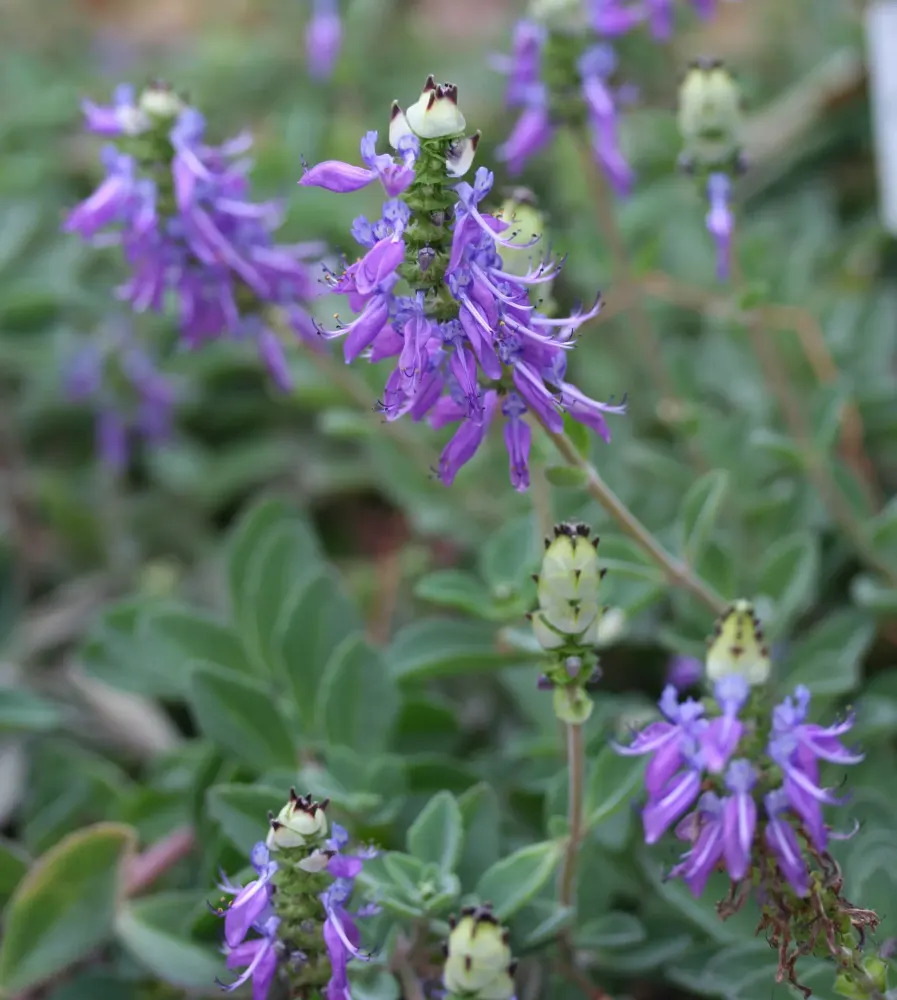
© Michael Wolf · CC BY-SA 3.0 · Commons
Coleus comosus
CautionVerpiss-dich-Pflanze · (Plectranthus caninus)
Mint family (Lamiaceae)
Description
Coleus comosus, synonym Plectranthus ornatus, is a flowering plant from the mint family Lamiaceae, native to eastern Africa.
External use only!
This plant must NOT be taken internally. Use only as compress, salve, or bath.
- RawWhole plantExternalFolk medicine
Plectranthus caninus is grown as a low, spreading ground cover and bedding plant in part shade or sun. The succulent-like, slightly hairy leaves and compact habit suit rock gardens, containers and seasonal stepping-stone plantings in Mediterranean borders. The inconspicuous blue-violet labiate flowers appear in late summer and attract pollinators. As a hybrid of disputed genealogy, the plant is grown in central Europe only as an annual or container subject — it is not frost-hardy.
[#src_wiki_de_verpiss_dich] [#src_wiki_en_coleus_caninus] [#src_pow_kew_caninus]
- RawLeafExternalFolk medicine
Marketing myth and commercial history: the plant was introduced in 2001 by the Swabian nurseryman Dieter Stegmeier (Essingen) under the brand name 'Verpiss-dich-Pflanze' (literally 'Piss-off plant'), claiming that its scent — released when touched — deters cats and dogs from marking in the garden. The claimed repellent effect on pets is INSUFFICIENTLY supported scientifically: no controlled studies with randomised animal samples exist, only anecdotal reports with mixed outcomes — some animals react, many ignore the plant. German consumer protection bodies (Stiftung Warentest, Verbraucherzentralen) and horticultural press have repeatedly classified the advertising claims as misleading or inadequately substantiated. The plant therefore remains a historically interesting ethnobotanical example of commercial folklore, not an evidence-based animal-repellent measure.
[#src_wiki_de_verpiss_dich] [#src_verbraucherzentrale_verpiss] [#src_ndr_verpiss]
- RawLeafExternalFolk medicine
When touched or crushed, the glandular-hairy leaves release a strongly musky-mentholic scent reminiscent of camphor and mint — typical of essential-oil-bearing Lamiaceae. Many people find the smell unpleasant to acrid. As an aromatic plant it can be placed along paths or near seating as a 'touch-fragrance' plant, but its intense scent makes it less suitable directly at dining or seating areas.
- RawWhole plantExternalFolk medicine
Taxonomic placement and origin: Plectranthus caninus is presumed to be a horticultural hybrid whose exact parent species are disputed. The literature repeatedly equates it with Plectranthus ornatus (= Coleus comosus) or treats it as a selection thereof. The underlying wild species originate in southern and eastern Africa (Coleus complex). Within the genus Plectranthus, the 'Piss-off plant' is therefore an ornamental without documented traditional medicinal use — a clear contrast to related species such as Plectranthus barbatus (a source of forskolin) or Plectranthus amboinicus (a culinary herb).
[#src_pow_kew_caninus] [#src_wiki_en_coleus_caninus] [#src_wikidata_caninus]
- RawLeafExternalFolk medicine
Caution note (not a therapeutic indication): in sensitive individuals, prolonged direct skin contact with crushed plant sap may cause transient irritation, redness or mild burning. True contact dermatitis from Lamiaceae is rare but possible with known mint-family allergy (rosemary, sage, mint). Garden gloves are recommended when cutting back or repotting larger stands — this is an ethnobotanical caution, not a medicinal use.
Distribution in Europe
🪴 Grow at home
- ☀ Light
- full sun
- 💧 Water
- every few days
- 🌱 Soil
- Standard compost with drainage
- 🪴 Pot
- 20 cm
- ⭐ Difficulty
- ★☆☆ beginner
- 🐾 Pets
- toxic to pets
Tips:
- Smell only triggers on contact — place where cats walk past.
- Not frost-hardy — bring inside or treat as annual.
- Repellent effect on cats/dogs scientifically debated.
Care tips are general indoor-gardening recommendations, not scientific sources.