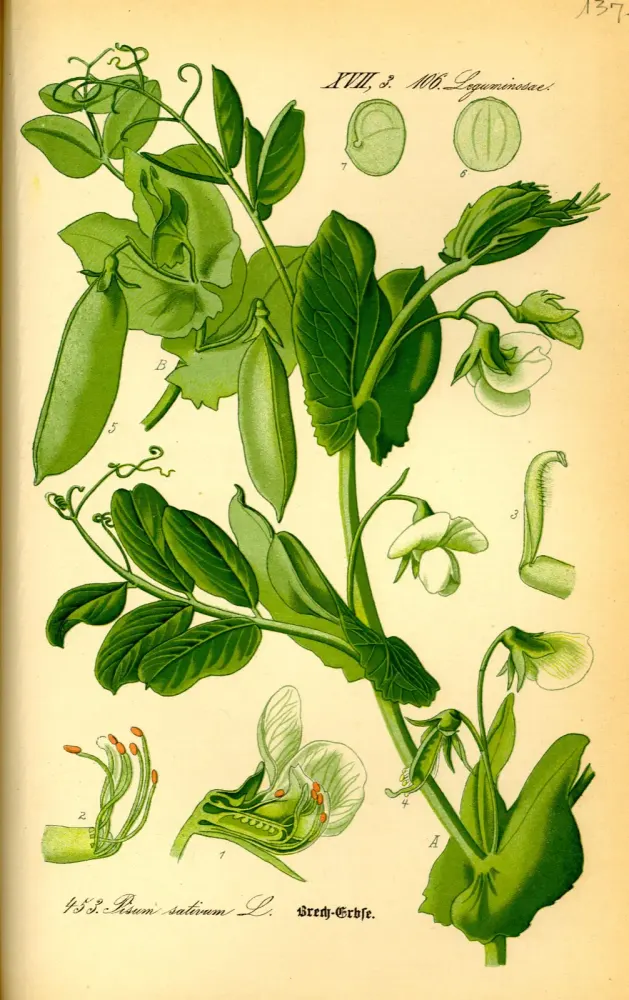
© Unknown · Public domain · Commons
Pea
Erbse · (Pisum sativum subsp. sativum)
Bean family (Fabaceae)
Description
Pea is a pulse or fodder crop, but the word often refers to the seed or sometimes the pod of this flowering plant species. Peas are eaten as a vegetable.
🌿 Risk of confusion — read before wild-harvesting!
The confusion occasionally appears in popular sources and is factually incorrect.
- RawSeedInternalClinical trial
Freshly picked garden peas are eaten raw straight from the pod — sweet, crisp, and nutrient-dense. Per 100 g, green peas provide approximately 5 g protein, 14 g carbohydrate, 5 g dietary fibre, vitamin C (40 mg, ~44 % DV), vitamin K (~25 µg), and folate (~65 µg). Natural sugars (sucrose, glucose) drop rapidly after harvest through enzymatic conversion — freshly picked peas are noticeably sweeter than supermarket produce.
[#src_usda_fdc_peas] [#src_wp_en_pea] [#src_pfaf_pisum_sativum]
- RawAerial partsInternalFolk medicine
Pea shoots (the tender growing tips and young leaves of the pea plant) are eaten raw in salads or as microgreens. They taste fresh and pea-like, and are rich in vitamin C and folate. Sprouts of germinated peas (pea microgreens, 7–14 days old) are a popular ingredient in Asian cuisine and modern cooking, also used as a garnish.
- SpiceSeedInternalTraditional use
Fresh or frozen peas are steamed, boiled or added to stir-fries, risottos, pasta and soups. Dried split peas (yellow or green halves) form the base of classic pea soup — one of the oldest and most globally widespread folk dishes. Whole dried peas should be soaked for 8–12 hours before cooking and then simmered for at least 45–60 minutes; split peas require no soaking.
[#src_wp_de_erbse] [#src_wp_en_pea] [#src_pfaf_pisum_sativum]
- RawSeedInternalClinical trial
Pea protein isolate (PPI) is obtained by wet extraction from dried peas (protein content 80–90 %) and used in food technology as a plant-based alternative to soy protein — in protein shakes, meat substitutes, baked goods and pasta. The amino acid profile is complete but relatively low in methionine and cysteine; leucine content is good (relevant for muscle protein synthesis). Clinical studies show comparable satiety and muscle-building effects to whey protein with lower allergenicity.
[#src_efsa_pea_protein] [#src_usda_fdc_peas] [#src_wp_en_pea]
- SpiceFruitInternalFolk medicine
The pods of sugar snap peas (mangetout) — a cultivar type within Pisum sativum — are eaten together with the seeds. They are especially tender and sweet when harvested young, and are suitable raw in salads or briefly blanched as a side dish. Sugar snap pods provide additional dietary fibre and vitamin C from the pod wall.
- RawSeedInternalTraditional use
Dried peas have been a staple food since the Neolithic period across Europe, the Near East and India. They are inexpensive, long-lasting (1–3 years in dry, cool storage) and an important protein and calorie source in traditional subsistence cooking worldwide. Historically, pea porridge and pea soup formed the basis of peasant diets in central Europe alongside bread.
[#src_wp_de_erbse] [#src_wp_en_pea] [#src_wikidata_pisum_sativum]
- RawWhole plantInternalTraditional use
As a legume, the garden pea forms a symbiosis with nitrogen-fixing bacteria (Rhizobium leguminosarum), enriching the soil with biologically available nitrogen — in intercropping and crop rotation, subsequent crops (e.g. cereals, brassicas) benefit from a nitrogen input of up to 50–100 kg N/ha. As a green manure, the whole plant is incorporated into the soil after harvest. The pea is thus a key element of sustainable agriculture and permaculture design.
[#src_pfaf_pisum_sativum] [#src_wp_de_erbse] [#src_wp_en_pea]
🤝 Permaculture Partners
In your garden, this plant acts as:
✨ Best symbiotic partners
- 🌿 Cucumber Classic companion-planting partner.
- 🌿 Carrot Carrot loosens soil for the pea root.
- 🌿 Lettuce Classic companion-planting partner.
- 🌿 Spinach Classic companion-planting partner.
⚠️ Better not planted together
📦 Part of these planting sets:
Source: Helga und Margarete Langerhorst, Mein gesunder Naturgarten (eigene Kuration)