© Isidre blanc · CC BY-SA 4.0 · Commons
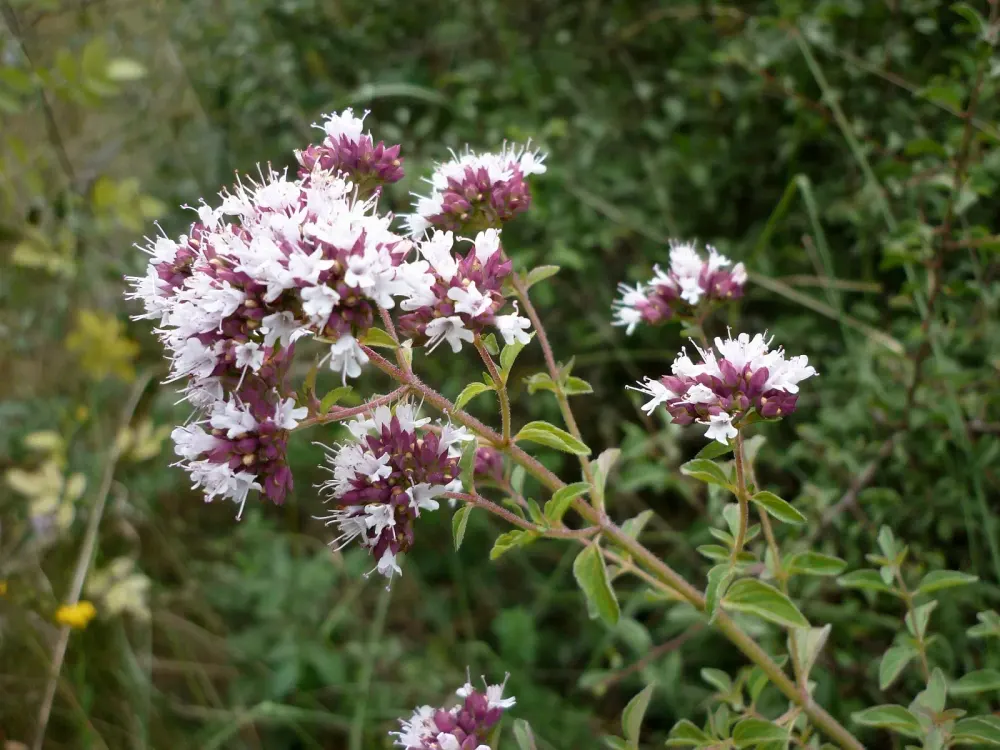
Oregano
CautionOregano · (Origanum vulgare)
Mint family (Lamiaceae)
Description
Oregano is a species of flowering plant in the mint family, Lamiaceae. It was native to the Mediterranean region, but widely naturalised elsewhere in the temperate Northern Hemisphere.
- TeaAerial partsInternalTraditional use
Traditional folk-medicinal use as an aromatic infusion for dyspeptic complaints (bloating, flatulence, loss of appetite) and for catarrhal upper-respiratory complaints such as irritable cough and incipient bronchitis. The active principle is the carvacrol-rich essential oil with digestive, spasmolytic and secretolytic effects.
Preparation & dosage
Pour 150 ml boiling water over 1-2 g dried oregano herb, cover and infuse for 10 minutes, then strain. Drink a fresh cup two to three times daily between meals.
- Dry amount
- 1–2 g
- Doses per day
- 3×
- Max duration
- 4 weeks
[#src_pfaf_origanum] [#src_heilkraeuter_oregano] [#src_madaus_origanum]
- TinctureAerial partsInternalFolk medicine
Folk-medicinal ethanolic tincture of the flowering herb for dyspeptic complaints, cramp-like stomach pain and productive bronchial catarrh. Ethanol preserves the volatile carvacrol-/thymol-containing essential oil and rosmarinic acid better than an aqueous infusion.
Preparation & dosage
1:5 tincture in 70 % ethanol from dried oregano herb. Usual daily dose: 20-40 drops (1-2 ml) three times daily in a little water before meals. Avoid in pregnancy.
- Liquid amount
- 1–2 ml
- Doses per day
- 3×
- Max duration
- 4 weeks
- Essential oilAerial partsExternalTraditional use
Oregano essential oil (Oleum origani) is traditionally used for its antimicrobial properties due to its high carvacrol and thymol content — applied diluted as a rub for cold complaints or as an additive for inhalations. Strongly skin-irritating when undiluted; always dilute in a fixed carrier oil.
Preparation & dosage
Dilute 1-3 drops oregano essential oil in 10 ml almond or olive oil and rub onto chest/back. Not undiluted on the skin, not in the eyes, not for internal use without professional guidance.
- Liquid amount
- 0.05–0.15 ml
- Doses per day
- 2×
⚠ Age restriction: ≥ 4 years — Oregano essential oil must not be used in infants and children under 4 years due to carvacrol/thymol content — risk of mucous-membrane irritation and laryngospasm with facial application.
[#src_pfaf_origanum] [#src_heilkraeuter_oregano] [#src_wikipedia_de_oregano]
- InhalationAerial partsExternalFolk medicine
Folk-medicinal steam inhalation of oregano herb or a few drops of diluted oregano essential oil for stubborn bronchial mucus, rhinitis and incipient bronchitis. The secretolytic action of carvacrol and thymol loosens viscous mucus.
Preparation & dosage
Pour 1 L hot (not boiling) water over a handful (5-10 g) of dried oregano herb, cover head with a towel, close eyes and inhale steam for 5-10 minutes. Alternatively add 2-3 drops oregano oil to 500 ml hot water.
- Dry amount
- 5–10 g
- Doses per day
- 2×
⚠ Age restriction: ≥ 4 years — Inhalation with oregano oil not for children under 4 years due to carvacrol/thymol content — laryngospasm risk.
- SpiceLeafInternalFolk medicine
Classical Mediterranean culinary herb — the main use of oregano. Essential component of pizza, tomato, lamb and fish dishes, Greek and Italian salads. The essential oils stimulate appetite and digestion; moderate culinary amounts are safe, including in pregnancy.
Preparation & dosage
[#src_pfaf_origanum] [#src_heilkraeuter_oregano] [#src_usda_fdc_oregano]
- CompressAerial partsExternalFolk medicine
Folk-medicinal use as a warm compress for rheumatic complaints, muscle tension, bruises and slow-healing skin areas. The essential oils are hyperaemic and mildly antiseptic.
Preparation & dosage
Distribution in Europe
🪴 Grow at home
- ☀ Light
- full sun
- 💧 Water
- weekly
- 🌱 Soil
- Standard herb compost, well-draining
- 🪴 Pot
- 18 cm
- ⭐ Difficulty
- ★☆☆ beginner
- 🐾 Pets
- pet-safe
Tips:
- Sunny spot intensifies aroma.
- Leaves taste best before flowering.
- Prefers dry over wet.
Care tips are general indoor-gardening recommendations, not scientific sources.
🤝 Permaculture Partners
In your garden, this plant acts as:
✨ Best symbiotic partners
- 🌿 Yarrow Classic companion-planting partner.
- 🌿 Cucurbita pepo Classic companion-planting partner.
- 🌿 Lavandula angustifolia Classic companion-planting partner.
- 🌿 Matricaria chamomilla Classic companion-planting partner.
- 🌿 Basil Classic companion-planting partner.
- 🌿 Salvia officinalis Classic companion-planting partner.
- 🌿 Thymus vulgaris Both aromatic and bee-friendly — ideal neighbours.
📦 Part of these planting sets:
Source: Helga und Margarete Langerhorst, Mein gesunder Naturgarten (eigene Kuration)