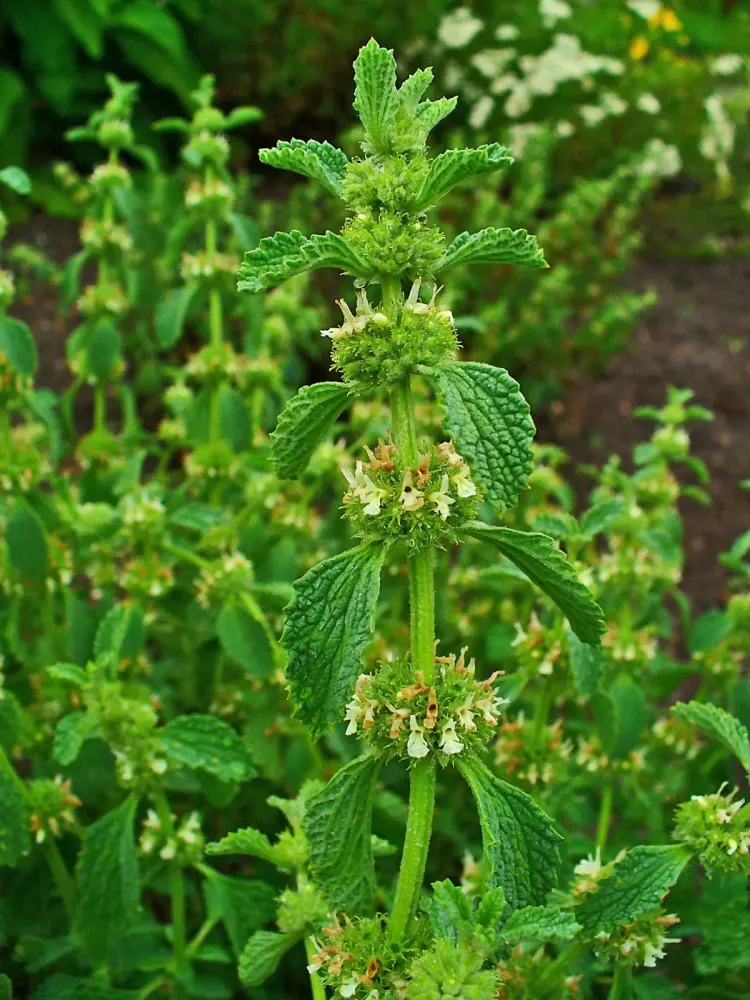
© H. Zell · CC BY-SA 3.0 · Commons
White Horehound
CautionAndorn · (Marrubium vulgare)
Mint family (Lamiaceae)
Description
Common white horehound is a woolly-haired perennial with grey-green leaves and small white labiate flowers in dense false whorls. It was named medicinal plant of the year 2018 in Germany. Its bitter-aromatic herb is traditionally used for respiratory complaints and digestive problems.
CONTRAINDICATED during pregnancy
Horehound is absolutely contraindicated in pregnancy. Marrubiin is uterotonic and was historically used as an abortifacient. Avoid even small amounts (tea, tincture). Only trace culinary doses in flavouring applications are historically unproblematic — therapeutic use strictly prohibited.
CONTRAINDICATED during breastfeeding
Horehound is contraindicated during lactation. Marrubiin and bitter phenylpropanoids pass into breast milk and may cause colic, digestive upset or diarrhoea in the infant. Avoid therapeutic doses. Culinary amounts (fresh leaves as flavouring) should also be avoided as a precaution during lactation.
CONTRAINDICATED for children
Per EMA monograph not suitable for children and adolescents under 18 — insufficient safety and efficacy data. Cardiac rhythm potential of marrubiin makes even low doses risky in children. Exception: culinary trace doses in horehound candy (traditional Anglo-Saxon) in household amounts.
Critical drug interactions with:
Antiarrhythmika (Amiodaron, Sotalol, Flecainid, Klasse-I- und III-Antiarrhythmika)
- TeaAerial partsInternalTraditional use
Traditional horehound herb tea as expectorant for cold-related and irritative cough, and as a bitter remedy for loss of appetite and dyspeptic complaints — main indication of the EMA monograph.
Preparation & dosage
INFUSION (EMA Traditional Use): 1.5–2.5 g dried, cut horehound herb (Herba Marrubii) in 200 ml boiling water, covered, steep 10 min, strain. Daily dose 4.5–7.5 g (3 single doses). Drink warm, moderately sweetened with honey. Indication (EMA traditional use): relief of cough in colds and irritative cough, mucus loosening (expectorant), and support for dyspeptic complaints and temporary loss of appetite. Mechanism: marrubiin (bitter lactone) reflexively stimulates bronchial secretion (secretomotoric) and promotes bile acid secretion (choleretic). Max 4 weeks without medical advice. Cough with fever, purulent sputum, dyspnoea or persistence beyond 1 week requires medical assessment.
- Dry amount
- 1.5–2.5 g
- Doses per day
- 3×
- Max duration
- 4 weeks
⚠ Age restriction: ≥ 18 years — Per EMA for adults and adolescents 18+ only — insufficient data for children under 18.
[#src_ema_marrubii_herba] [#src_escop_marrubii_herba] [#src_kommission_e_marrubium]
- TinctureAerial partsInternalTraditional use
Alcoholic horehound tincture as alternative to tea — practical before meals as bitter tonic and expectorant for cold-related cough.
Preparation & dosage
TINCTURE (DER 1:5, ethanol 25–45 %): 1–2 ml (~20–40 drops) in water 3× daily, preferably before meals (for bitter-mediated action on bile and digestion). Daily dose equivalent to 4.5–7.5 g herb. Traditional use as for tea — expectorant and bitter tonic. Note ethanol content: unsuitable for alcohol dependence, severe liver disease, epilepsy. Not during pregnancy or lactation.
- Liquid amount
- 1–2 ml
- Doses per day
- 3×
- Max duration
- 4 weeks
⚠ Age restriction: ≥ 18 years — Adults 18+ only due to ethanol content and absence of paediatric data.
- TeaAerial partsInternalCommission E
Bitter herb tea from horehound for stimulating digestion, bile production and bile flow — Kommission E positive assessment for loss of appetite and dyspepsia.
Preparation & dosage
BITTER TONIC TEA (Kommission E indication): 2–4 g dried horehound herb in 250 ml boiling water, covered, steep 10 min, strain. Drink unsweetened or minimally sweetened before meals — bitters are most effective when reaching taste receptors unimpeded. 3× daily before meals. Daily dose 6–12 g herb per Kommission E. Indication: loss of appetite, dyspeptic complaints, stimulation of bile and liver metabolism (cholagogue, choleretic). Marrubiin and its breakdown product marrubiinic acid measurably stimulate hepatic bile secretion.
- Dry amount
- 2–4 g
- Doses per day
- 3×
- Max duration
- 4 weeks
[#src_kommission_e_marrubium] [#src_wichtl_marrubium] [#src_escop_marrubii_herba]
- TinctureAerial partsInternalFolk medicine
Folk use as bitter tonic and blood-purifying alterative for rheumatic complaints — no clinical evidence, documented historically only.
Preparation & dosage
HOREHOUND BITTERS TINCTURE (folk tradition): 1–1.5 ml (~20–30 drops) in water 2× daily. Folk medicine used horehound as a blood-purifying (alterative) remedy and for rheumatic complaints. No clinical evidence for these indications. Do NOT combine with cardiac medications (marrubiin has potential antiarrhythmic action at high doses). Adults only.
- Liquid amount
- 1–1.5 ml
- Doses per day
- 2×
- Max duration
- 6 weeks
- GargleAerial partsExternalFolk medicine
Folk horehound gargle tea for sore throat, hoarseness and pharyngitis — astringent tannins soothe locally.
Preparation & dosage
GARGLE TEA: 2–3 g horehound herb in 200 ml boiling water, covered, steep 10 min, strain, cool to hand-warm. Gargle 30–60 sec 3–4× daily — do not swallow. Folk use for sore throat, hoarseness and pharyngitis. Astringent tannins and antimicrobial Lamiaceae tannins locally soothe the pharyngeal mucosa. Can be used alongside the herbal tea.
- Dry amount
- 2–3 g
- Doses per day
- 3×
- Max duration
- 2 weeks
[#src_madaus_1938_marrubium] [#src_pfaf_marrubium] [#src_wp_de_andorn]
- SpiceAerial partsInternalFolk medicine
Culinary use of young horehound leaves as intense bitter flavouring in digestifs, herbal liqueurs and traditional horehound candy (Anglo-Saxon folk cuisine).
Preparation & dosage
CULINARY & LIQUEUR: Young fresh horehound leaves in very small amounts as bitter-aromatic flavouring in herb vinegars, herb butter or savoury dishes. Horehound is an ingredient in traditional herbal liqueurs and digestifs (e.g. historic Marrubium bitters). For horehound candy (traditional Anglo-Saxon): boil fresh plant extract with sugar. Intensely bitter — use sparingly. Culinary doses (a few grams fresh herb daily) are considered safe.
- TeaAerial partsInternalFolk medicine
Historical folk horehound tea for febrile colds as diaphoretic — in-vitro evidence for anti-inflammatory activity, clinical data lacking.
Preparation & dosage
FEVER TEA (historical folk use): 1.5–2 g horehound herb in 200 ml hot water, steep 8 min, strain, drink warm. 3× daily for febrile colds. Horehound was historically used as a diaphoretic and antipyretic. No clinical evidence for these effects; mild anti-inflammatory activity of phenylpropanoids and flavonoids documented in vitro. Fever above 39 °C, marked impairment or fever exceeding 3 days: seek medical care.
- Dry amount
- 1.5–2 g
- Doses per day
- 3×
- Max duration
- 2 weeks
[#src_madaus_1938_marrubium] [#src_who_marrubium] [#src_wp_de_andorn]
Classical quotes
"Horehound is one of the oldest and most proven remedies for respiratory tract conditions."