© Marco Schmidt[1] · CC BY-SA 2.5 · Commons
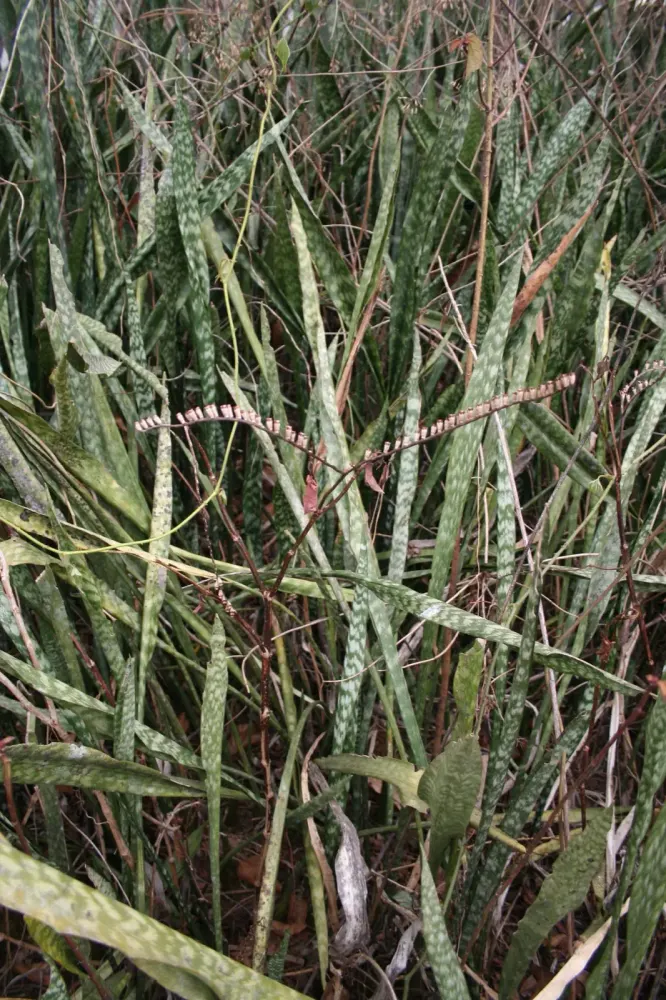
Dracaena trifasciata
Caution🐾Sansevieria · (Dracaena trifasciata)
Asparagus family (Asparagaceae)
Description
Dracaena trifasciata is a species of flowering plant in the family Asparagaceae, native to tropical West Africa from Nigeria east to the Congo. It is most commonly known as the snake plant, Saint George's sword, mother-in-law's tongue, and viper's bowstring hemp, among other names. Until 2017, it was known under the synonym Sansevieria trifasciata.
- RawWhole plantExternalTraditional use
When kept as a houseplant, the snake plant filters formaldehyde, benzene, and trichloroethylene from indoor air. CAM photosynthesis allows it to release oxygen at night, making it particularly suitable for bedrooms.
- RawLeafExternalTraditional use
The long leaf fibres are traditionally used in West African countries to make bowstrings, mats, and baskets — hence the German common name Bogenhanf (bowstring hemp).
- RawWhole plantExternalTraditional use
Multiple plants in a room can measurably increase relative humidity and reduce benzene concentrations, as documented by Wolverton for comparable Asparagaceae species.
- RawLeafExternalFolk medicine
In Nigeria and other West African countries, leaves are traditionally applied against inflammations and skin conditions — documented ethnobotanically only, no clinical evidence.
Distribution in Europe
🪴 Grow at home
- ☀ Light
- low light
- 💧 Water
- sparse
- 🌱 Soil
- Cactus/succulent soil
- 🪴 Pot
- 18 cm
- ⭐ Difficulty
- ★☆☆ beginner
- 🐾 Pets
- toxic to pets
Tips:
- Extremely undemanding — survives weeks of neglect.
- CAM photosynthesis: releases oxygen at night, ideal for bedroom.
- TOXIC for cats/dogs — keep out of reach.
Care tips are general indoor-gardening recommendations, not scientific sources.