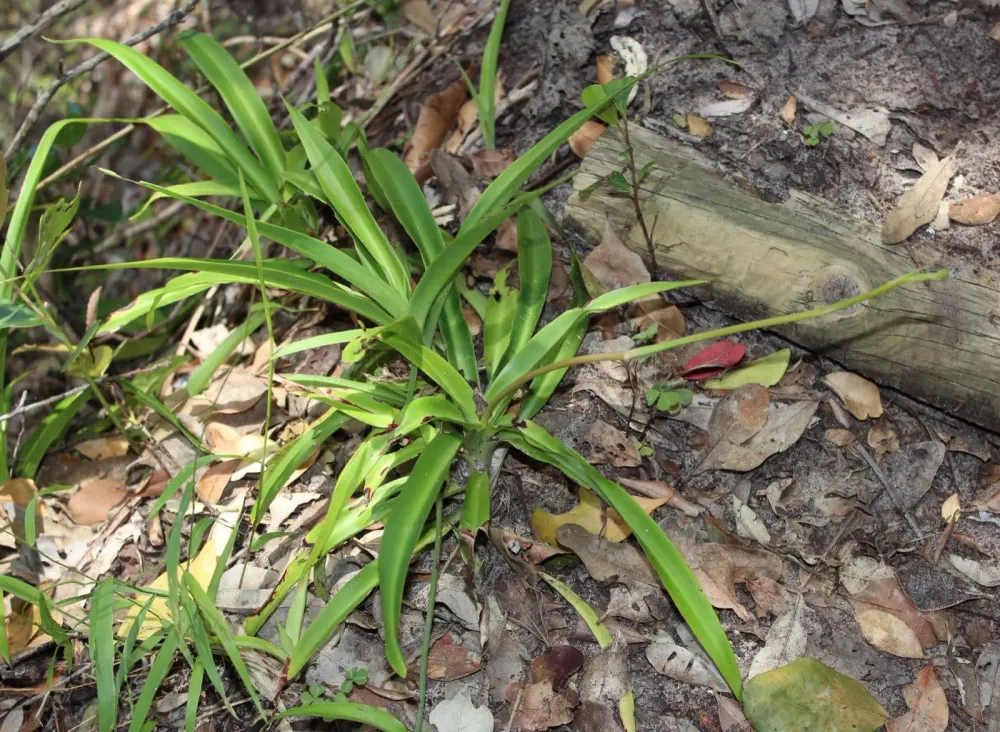
© Tony Rebelo · CC BY-SA 4.0 · Commons
Chlorophytum comosum
Grünlilie · (Chlorophytum comosum)
Asparagus family (Asparagaceae)
Description
Chlorophytum comosum, usually called spider plant or common spider plant due to its spider-like look, also known as spider ivy, airplane plant, ribbon plant, and hen and chicks, is a species of evergreen perennial flowering plant of the family Asparagaceae. It is native to tropical and Southern Africa but has become naturalized in other parts of the world, including Western Australia and Bangladesh. Chlorophytum comosum is easy to grow as a houseplant because of its resilience, but it can be sensitive to the fluoride in tap water, which commonly gives it "burnt tips".
- RawWhole plantExternalTraditional use
Spider plant was identified in the 1989 NASA Clean Air Study as an effective absorber of formaldehyde and xylene from indoor air. However, a large number of plants are needed to achieve a noticeable effect in an average room.
- RawRootInternalFolk medicine
The fleshy tuberous roots of the spider plant are considered edible by the Nguni peoples of South Africa and are reported to have mild laxative effects.
- CompressLeafExternalFolk medicine
In South African folk medicine, leaves of the spider plant are applied externally as a compress for burns and bone fractures.
- RawWhole plantExternalFolk medicine
Spider plant is one of the world's most popular houseplants, grown decoratively for its ease of care and hanging stolons ("spiderettes").
Distribution in Europe
🪴 Grow at home
- ☀ Light
- bright, indirect
- 💧 Water
- weekly
- 🌱 Soil
- Standard potting compost
- 🪴 Pot
- 20 cm
- ⭐ Difficulty
- ★☆☆ beginner
- 🐾 Pets
- pet-safe
Tips:
- The only classic air-purifier safe around cats.
- Cut off plantlets and root them in water.
- Brown leaf tips = too much fluoride in water — use rainwater or stale tap water.
Care tips are general indoor-gardening recommendations, not scientific sources.