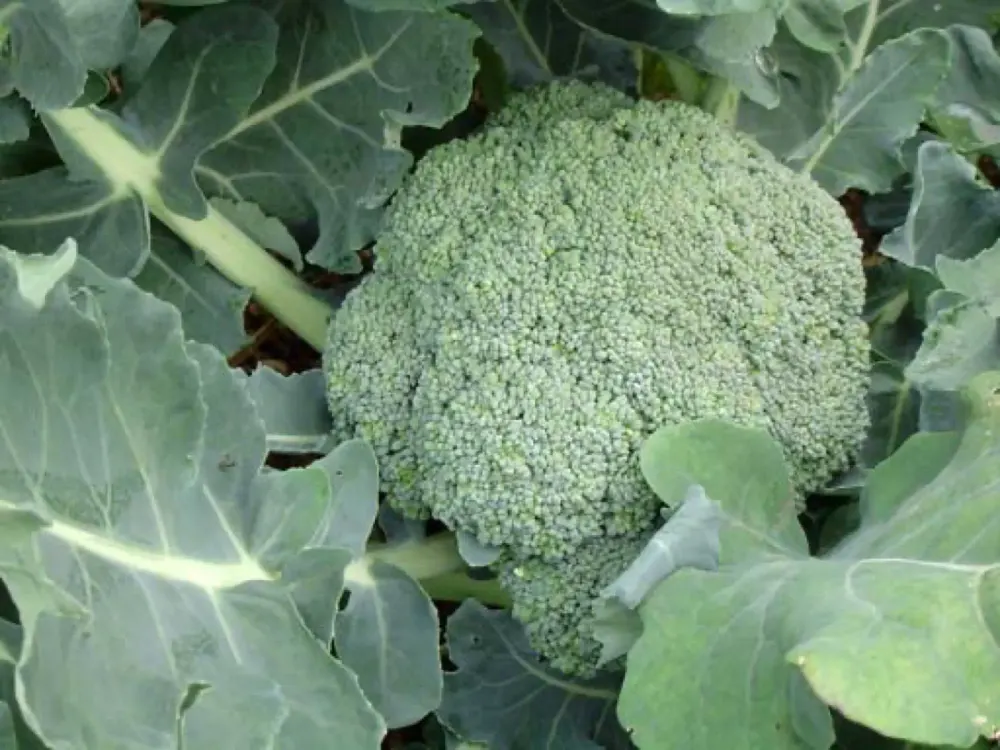
© Unknown · CC BY-SA 3.0 · Commons
Broccoli
Brokkoli · (Brassica oleracea var. italica)
Cabbage family (Brassicaceae)
Description
Broccoli is an edible green plant in the cabbage family whose large flowering head, stalk and small associated leaves are eaten as a vegetable. Broccoli is classified in the Italica cultivar group of the species Brassica oleracea. Broccoli has large flower heads, or florets, usually dark green, arranged in a tree-like structure branching out from a thick stalk, which is usually light green.
- RawFlowerInternalClinical trial
Raw broccoli (fresh florets and stems) delivers very high vitamin C density (~90 mg/100 g, USDA) and preserves more glucosinolates than cooking, because myrosinase — the enzyme converting glucoraphanin to sulforaphane — is inactivated at cooking temperatures. Raw consumption (briefly chewed then eaten) or brief blanching + cooling is considered optimal for maximum sulforaphane yield. Regular intake of raw or lightly steamed Brassica vegetables is associated with higher intake of antioxidants, folate, and vitamin K.
[#src_usda_fdc_broccoli] [#src_wp_en_broccoli] [#src_fahey_sulforaphane_2002]
- RawSeedInternalClinical trial
Broccoli sprouts (3–4 day old seedlings) contain 10- to 100-fold higher glucoraphanin concentrations than mature broccoli (Fahey et al., PNAS 1997). Preparation: germinate seeds in a sprouting jar (rinse 2–3× daily, 3–4 days), then consume fresh. Studies show 40 g sprouts per day significantly increases systemic sulforaphane biomarkers. Broccoli sprouts are therefore the most concentrated dietary source of glucoraphanin/sulforaphane and are the subject of numerous clinical trials on detoxification enzymes (phase II enzymes) and antioxidant response (Nrf2 activation).
[#src_fahey_sprouts_pnas_1997] [#src_fahey_sulforaphane_2002] [#src_wp_en_broccoli]
- RawFlowerInternalTraditional use
Steamed broccoli (5–7 minutes on low heat, in a steamer basket or with minimal water) retains the majority of water-soluble vitamins (vitamin C, folate) and minerals better than boiling, where nutrients leach into cooking water. The cooking water can be reused as a nutrient-rich broth. Traditional kitchen practice recommends brief steaming with a little olive oil and garlic — also sensorially beneficial, as sulforaphane and indoles are somewhat volatile.
[#src_usda_fdc_broccoli] [#src_pfaf_brassica_oleracea] [#src_wp_de_brokkoli]
- RawFlowerInternalClinical trial
Sulforaphane (formed from glucoraphanin via myrosinase) activates the Nrf2 transcription factor and induces phase II detoxification enzymes (e.g. glutathione S-transferase, NAD(P)H quinone oxidoreductase). Clinical studies demonstrate sulforaphane uptake after broccoli consumption and elevated antioxidant markers in plasma. EFSA has not adopted an authorised health claim for sulforaphane; however, the evidence base for antioxidant capacity and enzyme induction is clinically well established. Daily intake of 80–200 g fresh or lightly steamed broccoli covers a significant part of the vitamin C, vitamin K, and folate requirement.
- SpiceFlowerInternalFolk medicine
In the kitchen broccoli is used versatilely as a side vegetable, in soups, pasta dishes, raw in salads, and as a gratin ingredient. Southern Italian cuisine (origin region Calabria/Campania) traditionally combines broccoli with olive oil, garlic, chilli, and lemon — a preparation that can optimise glucosinolate bioavailability by combining with myrosinase-activating foods (mustard, rocket). Oven-roasted broccoli (200 °C, 20 min) develops nutty flavours via the Maillard reaction and works well as a snack.
[#src_wp_de_brokkoli] [#src_wp_en_broccoli] [#src_pfaf_brassica_oleracea]
- RawFlowerInternalTraditional use
Broccoli as a regular component of a plant-rich diet delivers lutein and zeaxanthin (carotenoids, important for macular health), beta-carotene (vitamin A precursor), vitamin K (important for blood clotting and bone metabolism), and calcium and iron in amounts notable for a vegetable. PFAF lists broccoli as a food source of high nutritional significance. Regular consumption of cruciferous vegetables features in nutritional epidemiology studies on chronic disease — however without an authorised EFSA health claim at this level.
- RawWhole plantInternalTraditional use
Broccoli stems and leaves are just as edible as the florets and are fully utilised in zero-waste cooking. Stems (peeled) contain similar nutrients to the florets but have a firmer texture, suitable for soups, stir-fries, or raw veggie sticks. Leaves can be steamed like Swiss chard or kale. Full utilisation corresponds to circular economy principles in nutrition and increases dietary fibre and vitamin intake.
🤝 Permaculture Partners
In your garden, this plant acts as:
✨ Best symbiotic partners
- 🌿 Onion Onion deters cabbage root fly.
- 🌿 Apium graveolens Classic companion-planting partner.
- 🌿 Lettuce Classic companion-planting partner.
- 🌿 Thymus vulgaris Thyme scent masks broccoli from cabbage white butterfly.
⚠️ Better not planted together
- 🥬 Fragaria vesca Classic companion-planting partner.
- 🥬 Tomato Classic companion-planting partner.
Source: Gertrud Franck, Gesunder Garten durch Mischkultur (1980, eigene Kuration) | Helga und Margarete Langerhorst, Mein gesunder Naturgarten (eigene Kuration)