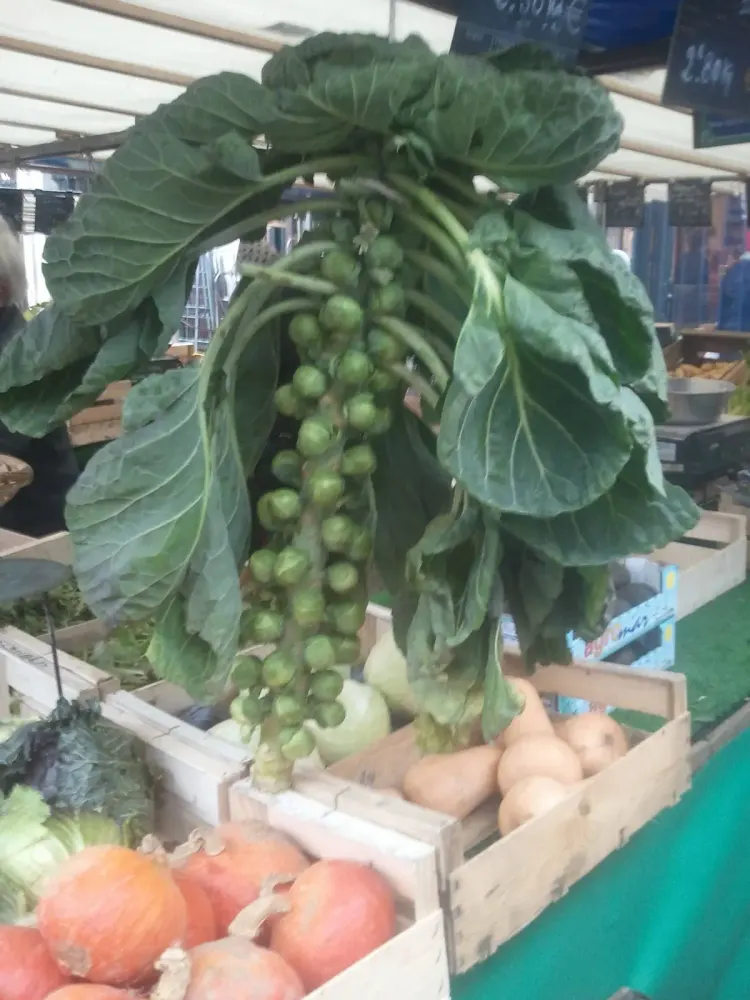
© Popolon · CC BY-SA 3.0 · Commons
Brussels sprout
CautionRosenkohl · (Brassica oleracea var. gemmifera)
Cabbage family (Brassicaceae)
Description
The Brussels sprout is a member of the Gemmifera cultivar group of cabbages, grown for its edible buds.
- RawFruitInternalTraditional use
Brussels sprouts (Brassica oleracea var. gemmifera) is an important winter vegetable. Raw or lightly steamed it contains approximately 85 mg vitamin C per 100 g (>100% of daily requirement), high amounts of vitamin K, and folate. Glucosinolates (mainly sinigrin and progoitrin) are the secondary metabolites that confer the characteristic bitter taste and potentially chemoprotective properties.
- SpiceFruitInternalTraditional use
As a vegetable side dish (steamed, blanched or roasted), Brussels sprouts provide dietary fibre (approx. 3.8 g/100 g) and folate (61 µg/100 g), essential for cell division and prevention of neural tube defects. Gentle cooking methods (sous-vide, blanching) preserve more glucosinolates than prolonged boiling.
- RawFruitInternalTraditional use
The very high vitamin C content of Brussels sprouts (85 mg/100 g fresh weight) supports immune defence, collagen synthesis, and wound healing. Vitamin C is an important antioxidant that protects against oxidative stress and improves absorption of non-haem iron.
- RawFruitInternalTraditional use
Brussels sprouts contain vitamin K1 (approx. 177 µg/100 g), essential for blood coagulation and bone metabolism. Patients on vitamin K antagonists (warfarin) should keep their Brussels sprouts consumption constant and discuss it with their doctor.
- RawFruitInternalClinical trial
Glucosinolates from Brassica vegetables are hydrolysed by myrosinase to isothiocyanates (mainly sulforaphane from glucoraphanin). Sulforaphane and related compounds induce phase II enzymes (glutathione S-transferases, quinone reductase) via the Nrf2 pathway and stimulate immunomodulatory effects. These molecular mechanisms have been characterised in cell culture experiments and animal models.
[#src_brassica_sulforaphan_immuno] [#src_brassica_glucos_hplc]
- RawFruitInternalTraditional use
The high folate content (61 µg/100 g) of Brussels sprouts supports DNA synthesis, cell division, and homocysteine metabolism. Epidemiological studies associate adequate folate intake with reduced stroke risk and lower incidence of colorectal carcinoma. Folate-rich diets (including Brassica vegetables) are highlighted in European nutritional guidelines.
[#src_brassica_cruciferous_colon] [#src_brassica_hydrothermal]
- RawFruitInternalClinical trial
Epidemiological cohort studies and meta-analyses associate higher cruciferous vegetable intake with reduced risk of colorectal carcinoma. The dose-response meta-analysis (BMC Gastroenterology 2025) confirms a significant inverse association between cruciferous vegetable consumption and colorectal cancer risk. Brussels sprouts are among the richest Brassica vegetables in glucosinolates.
[#src_brassica_cruciferous_colon] [#src_brassica_cruciferous_prostate]
🤝 Permaculture Partners
In your garden, this plant acts as:
✨ Best symbiotic partners
- 🌿 Apium graveolens Classic companion-planting partner.
- 🌿 Spinach Classic companion-planting partner.
Source: Helga und Margarete Langerhorst, Mein gesunder Naturgarten (eigene Kuration)