© Evan-Amos · CC0 · Commons
Beetroot
CautionRote Bete · (Beta vulgaris subsp. vulgaris var. conditiva)
Amaranth family (Amaranthaceae)
Description
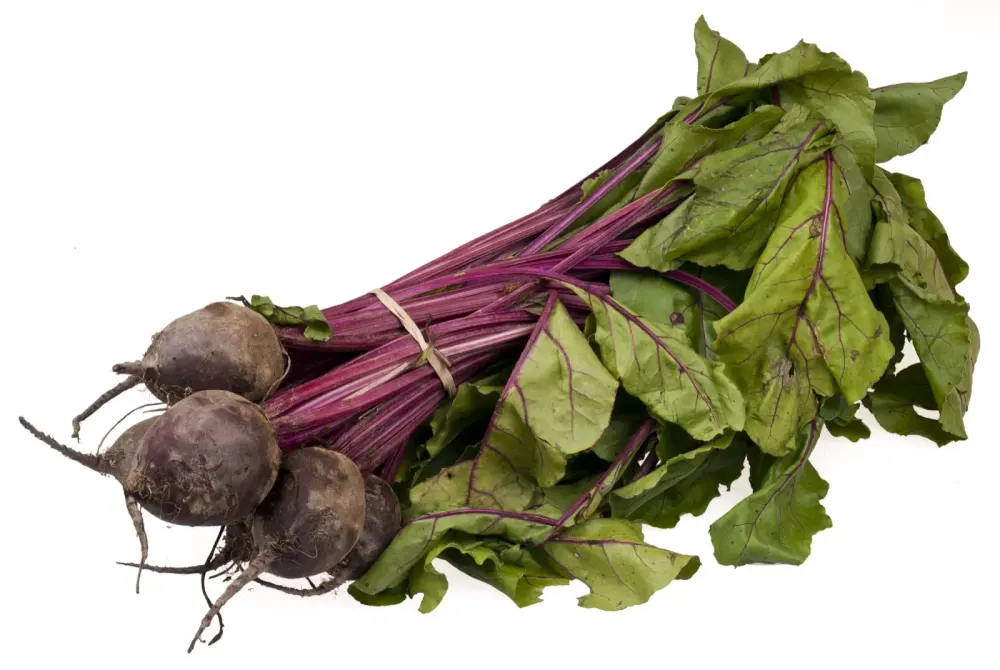
Beetroot or beet is the taproot portion of a Beta vulgaris subsp. vulgaris plant in the Conditiva Group. The plant is a root vegetable also known as the table beet, garden beet, or dinner beet, or else categorized by color as red beet or golden beet.
- RawRootInternalFolk medicine
Raw grated beetroot (e.g. as a crudité salad with lemon and olive oil) delivers betalains, folate, manganese and nitrate at maximum concentration, as heat partially degrades these compounds. Folk tradition values raw beetroot as a liver-supportive and digestion-aiding vegetable. The skin is edible if well scrubbed and also contains pigments.
[#src_usda_fooddata] [#src_wp_en_beetroot] [#src_pfaf_beta_vulgaris]
- RawRootInternalClinical trial
Beetroot juice (approx. 200–500 ml daily, pressed from fresh roots) is the best-studied form for utilising the high nitrate content. Several randomised controlled trials demonstrate significant reductions in systolic blood pressure (–3 to –10 mmHg) and improved endurance performance through increased mitochondrial efficiency and reduced muscular O2 demand. Effect is dose-dependent and onset is approx. 2–3 hours. Not a substitute for antihypertensive medication.
[#src_rct_nitrate_exercise_lansley2011] [#src_efsa_nitrate_opinion] [#src_usda_fooddata]
- RawRootInternalTraditional use
Cooked beetroot — steamed, boiled or oven-roasted — is the classic preparation as a side dish, in soups (borscht, labskaus) or salads. Cooking breaks down cell walls and improves bioavailability of betalains, although nitrate and folate content decrease somewhat. Beetroot can be cooked skin-on and peeled afterwards.
[#src_wp_de_rote_bete] [#src_wp_en_beetroot] [#src_usda_fooddata]
- RawRootInternalFolk medicine
Fermented beetroot (kwas burakowy / beet kvass): The root is sliced, covered with water, salt and optionally a little rye sourdough starter, and left to ferment at room temperature for 2–5 days. The slightly sour, deep-red drink is rich in lactic acid bacteria and is traditionally consumed in Eastern Europe as a probiotic and digestive tonic. Betalains are largely preserved during fermentation.
- RawLeafInternalFolk medicine
Beetroot leaves (beet tops) are fully edible: young leaves raw in salads, older leaves blanched or steamed like spinach or chard. They contain more iron, calcium and vitamin K than the root itself and are rich in beta-carotene. Often overlooked in the kitchen — but a natural ingredient in traditional Eastern European and Mediterranean cooking.
[#src_usda_fooddata] [#src_pfaf_beta_vulgaris] [#src_wp_en_beetroot]
- SpiceRootInternalFolk medicine
Beetroot as a natural food colourant: betanin (E 162) is extracted from the root and used as a colourant in yoghurts, juices, sweets and processed foods. In home cooking, fresh beetroot juice or puree dyes pasta dough, bread dough and glazes a deep red to violet. The pigment is heat- and pH-sensitive — it fades above pH 7 and becomes unstable above 80 °C.
[#src_wp_de_rote_bete] [#src_wp_en_beetroot] [#src_wikidata_beta_vulgaris]
- RawRootInternalFolk medicine
Traditionally in folk medicine, beetroot is considered a blood-purifying and liver-strengthening vegetable. Some smaller studies suggest hepatoprotective effects of betalains (antioxidant protection of liver cells), but robust clinical evidence is lacking. The use as a food in folk medicine is documented and corresponds to the folk evidence level.
🤝 Permaculture Partners
In your garden, this plant acts as:
✨ Best symbiotic partners
Source: Helga und Margarete Langerhorst, Mein gesunder Naturgarten (eigene Kuration)