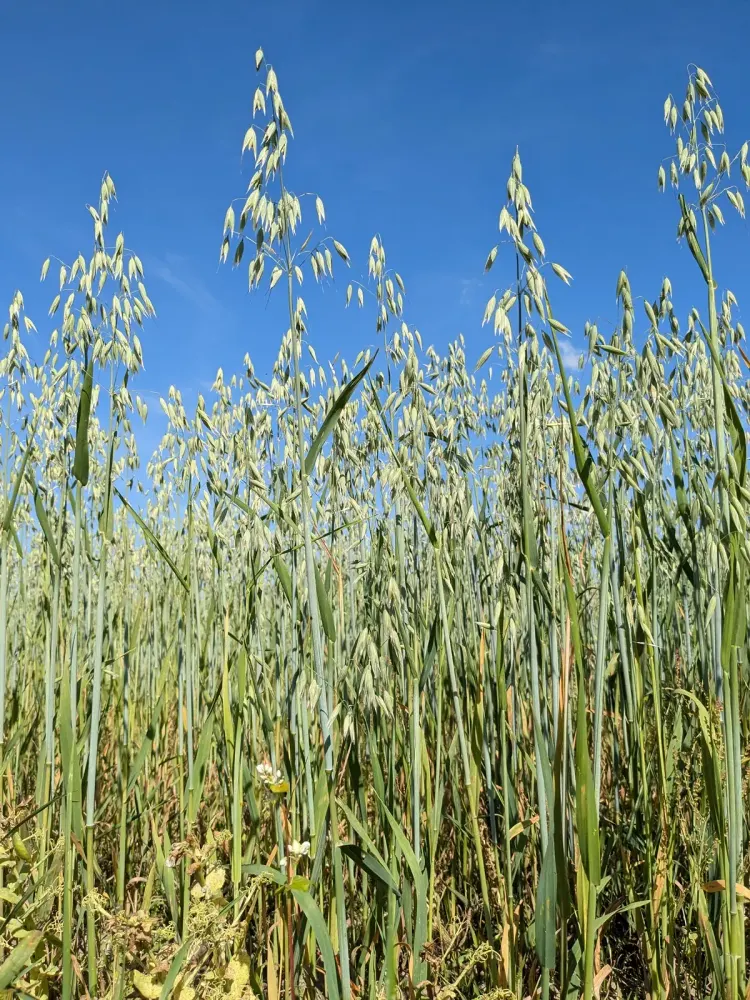
© Christian Fischer · CC BY-SA 4.0 · Commons
Oat
CautionSaat-Hafer · (Avena sativa)
Grass family (Poaceae)
Description
The oat, sometimes called the common oat, is a species of cereal grass (Avena) grown for fodder and for its seed, which is known by the same name. Oats appear to have been domesticated as a secondary crop, as their seeds resembled those of other cereals closely enough for them to be included by early cultivators. Oats tolerate cold winters less well than cereals such as wheat, barley, and rye, but need less summer heat and more rain, making them important in areas such as Northwest Europe that have cool, wet summers.
- BathAerial partsExternalCommission E
Commission-E-approved oat straw bath (Avenae stramentum) for seborrhoeic and pruritic skin conditions — the externally used drug is explicitly distinct from internal oat use.
Preparation & dosage
FULL BATH / SITZ BATH (Commission E — Avenae stramentum): Soak 100–150 g dried oat straw (straw, husks) cold in 2 l water, warm to ~60 °C, steep covered 15 min, strain into bath water (37–38 °C, ~150 l). Bath duration 15–20 min. Alternative: colloidal oatmeal (e.g. Aveeno-type; finely milled rolled oats, 200–300 g) stirred directly into the bath — forms a milky silky emulsion. Indicated for seborrhoeic and pruritic skin conditions. Do NOT add to bath with open wounds, acute inflamed conditions with fever, or cardiac insufficiency. Moisturise after bathing as the bath temporarily opens the skin barrier.
- Dry amount
- 100–150 g
- Doses per day
- 1×
- Max duration
- 4 weeks
[#src_kommission_e_avenae_stramentum] [#src_wichtl_teedrogen] [#src_pfaf_avena_sativa]
- BathSeedExternalClinical trial
Colloidal oatmeal bath from ground oat seed for atopic dermatitis and pruritus — well-studied clinically, recognised by the FDA as an OTC skin protectant.
Preparation & dosage
COLLOIDAL OAT BATH (atopic dermatitis): Standardised colloidal oatmeal (e.g. 200–300 g in bath or ready-to-use product with ≥ 1 % colloidal oat) stirred into lukewarm bath (36–37 °C). Bath 15–20 min. Pat dry gently (do not rub) and immediately apply emollient moisturiser within 3 minutes ('soak and seal'). Colloidal oat acts via beta-glucans (humectant, barrier-strengthening) and avenanthramides (anti-inflammatory, antipruritic). Regular use 3–4×/week recommended in atopic dermatitis. Do not use in known oat or gluten sensitivity (rare contact sensitisation possible).
- Dry amount
- 200–300 g
- Doses per day
- 1×
- Max duration
- 8 weeks
- RawSeedInternalClinical trial
Oat bran and rolled oats as functional food with EFSA-recognised beta-glucan evidence for normal blood cholesterol and blunting of post-prandial blood glucose rise.
Preparation & dosage
OAT BRAN / ROLLED OATS (EFSA health claim — beta-glucan): At least 3 g beta-glucan daily from oat bran or oat products distributed across main meals (e.g. 40 g oat bran ≈ 3 g beta-glucan). Consume with liquid. EFSA confirms: ≥ 3 g daily oat beta-glucan maintains normal blood cholesterol (EFSA Health Claim Regulation (EU) No. 432/2012). For effect on post-prandial glucose: ≥ 4 g beta-glucan per 30 g available carbohydrate per meal (EFSA Health Claim No. 2011;9(6):2207). Oat products must retain sufficient soluble beta-glucan — degree of processing and hydrolysis strongly influences effect. In coeliac disease use only certified gluten-free oat products.
- Dry amount
- 3–3 g
- Doses per day
- 3×
[#src_efsa_betaglucan_cholesterol] [#src_efsa_betaglucan_glucose] [#src_wichtl_teedrogen] [#src_pfaf_avena_sativa]
- TeaSeedInternalTraditional use
Traditional oat gruel as a gastric-sparing tonic food — established in folk medicine and still used in mild dietary regimens and naturopathic practice.
Preparation & dosage
OAT GRUEL (mucilage infusion): 30–50 g rolled or crushed oats with 500 ml cold water, heat slowly while stirring, simmer 5 min, steep covered 30 min, strain while warm. Daily dose: 3 cups. Folk and traditional use for gastrointestinal complaints (heartburn, mild IBS, diarrhoea), as bland food in GI illness, and for exhaustion and nervous debility. Mucilaginous compounds (beta-glucan, starch) are believed to coat the gastric mucosa protectively. Avoid in coeliac disease without certified gluten-free products.
- Dry amount
- 30–50 g
- Doses per day
- 3×
- Max duration
- 4 weeks
[#src_wichtl_teedrogen] [#src_haensel_sticher] [#src_wp_de_avena]
- TinctureAerial partsInternalFolk medicine
Green oat tincture as a traditional nervine tonic — folk use for exhaustion, restlessness, mild sleep disturbance; scientific evidence currently insufficient.
Preparation & dosage
GREEN OAT TINCTURE (Avena sativa herba viridis): Fresh green oat herb harvested at milk-ripe stage (Herba Avenae viridis) macerated in 40–60 % ethanol (DER 1:5). 2–4 ml (~40–80 drops) 3× daily diluted in water. Folk and traditional Western herbal medicine use for nervous exhaustion, restlessness, mild low mood and sleep disturbance. Scientific evidence is weak — no adequately controlled clinical trials. Anxiolytic and adaptogenic properties attributed to the avenocosid complex and avenanthramides, but not clinically confirmed.
- Liquid amount
- 2–4 ml
- Doses per day
- 3×
- Max duration
- 6 weeks
[#src_pfaf_avena_sativa] [#src_haensel_sticher] [#src_wp_en_avena]
- CompressSeedExternalTraditional use
Folk oatmeal compress for irritated, itching or inflamed skin — draws on the skin-soothing and antipruritic properties of beta-glucan- and avenanthramide-rich oat flour.
Preparation & dosage
OAT COMPRESS: Boil 50–100 g finely ground oatmeal or colloidal oat in 500 ml hot water stirring constantly, cool 20 min to hand-warm (~38–40 °C). Dip a clean linen strip in the mucilage, wring lightly and apply to affected skin. Cover with dry cloth. Leave 20–30 min. Repeat 2× daily. Traditional folk use for inflamed, itching, irritated skin (mild eczema, insect bites, nappy/diaper rash in infants, dry scaly skin). Do not apply to open wounds or strongly weeping eczema.
- Dry amount
- 50–100 g
- Doses per day
- 2×
- Max duration
- 2 weeks
[#src_reynertson_2015] [#src_haensel_sticher] [#src_pfaf_avena_sativa]
- RawSeedInternalFolk medicine
Oats as a functional food and folk tonic and cleansing agent — from traditional oat-cure fasting to modern prebiotic nutrition.
Preparation & dosage
FOOD — PORRIDGE / OVERNIGHT OATS / MUESLI: Oats in the form of groats, rolled oats (large or quick), oat bran or oat flour are a traditional staple food. Typical daily intake: 40–80 g rolled oats or 20–40 g oat bran. Folk medicine tradition of oat cleansing cure (1–3 oat-only days with oat soup and gruel) for rheumatism and gout. Modern use as a prebiotic food (insoluble fibres feed gut bacteria). Also traditionally in convalescence and weight-restoration regimens. Not a therapeutic medicinal product per se, but a functional food.
[#src_wp_de_avena] [#src_pfaf_avena_sativa] [#src_wichtl_teedrogen]