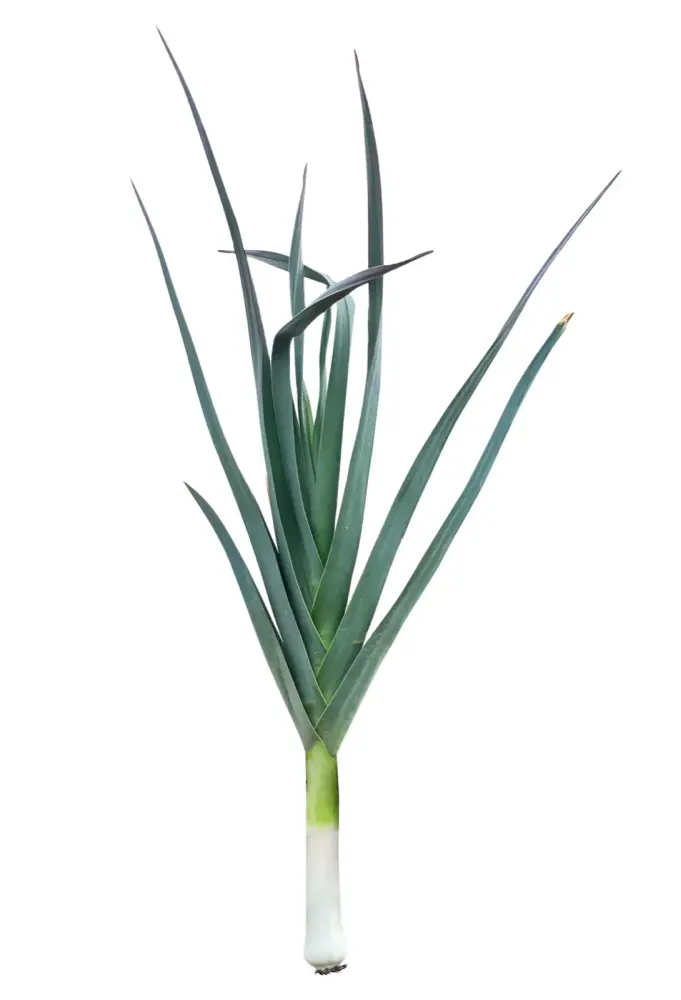
© Amada44 · CC BY-SA 4.0 · Commons
Leek
🐾Lauch · (Allium porrum)
Amaryllis family (Amaryllidaceae)
Description
A leek is a biennial vegetable, a cultivar of Allium ampeloprasum, the broadleaf wild leek. The edible part of the plant is a bundle of leaf sheaths that is sometimes colloquially called a "stem" or "stalk".
- RawLeafInternalFolk medicine
Finely sliced or chopped raw leek as salad ingredient, topping or seasoning. The mild onion-like flavour is far more pleasant than raw onion — almost no pungency. Raw consumption preserves more heat-sensitive vitamin C and folate. Small amounts are well tolerated by most people; larger quantities may cause bloating in sensitive individuals due to fructan content.
- SpiceLeafInternalTraditional use
Sweated or boiled leek as a mild, versatile vegetable in soups, stews and gratins — a classic winter vegetable of European cooking since antiquity.
Preparation & dosage
KITCHEN — COOKED: Slice leek into rings or strips, sweat in butter or olive oil over medium heat 5–10 min until soft and lightly golden. Use in soups (leek cream soup, vichyssoise, cock-a-leekie), stews, quiches, pasta, as a vegetable side or in risotto. Gentle cooking caramelises natural sugars and further mellows sulfur notes. The white part (blanched shaft) is more tender and mild; the dark-green leaf top is more intense and rich in vitamin K.
- RawLeafInternalFolk medicine
Folk use of leek as a mild digestive and intestinal remedy. Leek is considered a gentler, more digestible allium than onion or garlic — traditionally recommended for mild sluggish digestion, bloating and as an intestinal cleanser after heavy meals. The fructans (inulin-type) present act as prebiotic dietary fibre promoting Bifidobacterium and Lactobacillus in the colon. Confirmed as a fibre source scientifically; clinical studies on GI effects are lacking.
- SpiceLeafInternalFolk medicine
Traditional folk remedy: leek soup or hot leek broth for colds, coughs and sore throats. Following the tradition of sulfur-rich alliums (onion, garlic), leek is used in folk medicine as a warming and expectorant remedy for upper respiratory catarrhs. The organosulfides present have shown antimicrobial and mucolytic properties in vitro; direct clinical evidence for leek soup as a cold therapy does not exist. Benefit is likely multifactorial: warmth, fluid intake, mucus dilution, general comfort effect.
- SpiceLeafInternalFolk medicine
Leek contains flavonoids (esp. kaempferol) and organosulfides that show antioxidant and mildly hypotensive properties in vitro. In folk medicine leek is considered, like onion and garlic, a 'heart and vessel vegetable'. Epidemiological studies associate high allium intake (leek, onion, garlic) with lower cardiovascular risk; isolated clinical data for leek alone are lacking. Recommended as part of a vegetable-rich diet.
- SpiceLeafInternalTraditional use
Leek as an important vitamin K1 source (especially the dark-green leaves supply ~47 µg/100 g raw). Vitamin K1 is essential for blood coagulation and bone health. Leek also contains notable amounts of folate (ca. 16–64 µg/100 g depending on part), vitamin C (ca. 12 mg/100 g) and manganese. The traditional inclusion of leek in winter diet in northern Europe provided important micronutrients in seasons without fresh vegetables.
- SpiceLeafInternalFolk medicine
Folk medicinal use of fresh leek juice or finely chopped leek as a mild diuretic and to support kidney function — analogous to the traditional diuretic use of onion and garlic. Scientific evidence for a significant diuretic effect of leek in humans is lacking. High water content (~83 %) and potassium content (~180 mg/100 g) are nutritionally plausible.
🤝 Permaculture Partners
In your garden, this plant acts as:
✨ Best symbiotic partners
- 🌿 Apium graveolens Leek and celery complement each other nutritionally.
- 🌿 Celeriac Classic companion-planting partner.
- 🌿 Savoy cabbage Classic companion-planting partner.
- 🌿 Carrot Carrot is a good leek companion with no pest conflict.
- 🌿 Fragaria vesca Leek deters strawberry pests.
⚠️ Better not planted together
- 🥬 Pea Classic companion-planting partner.
📦 Part of these planting sets:
Source: Helga und Margarete Langerhorst, Mein gesunder Naturgarten (eigene Kuration)