© Konrad Lackerbeck · CC BY-SA 2.5 · Commons
Verbena officinalis
CautionEchtes Eisenkraut · (Verbena officinalis)
Verbena family (Verbenaceae)
Description
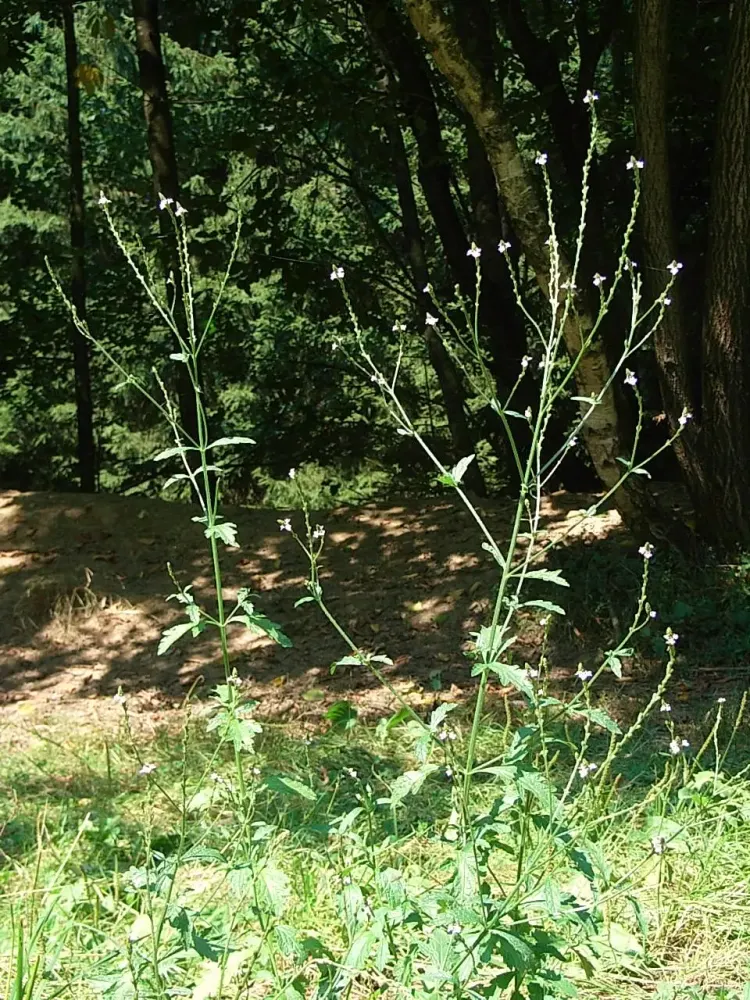
Found in cottage gardens and along sunny paths, common vervain sends up slender spikes of pale lilac flowers gathered as the flowering herb. Its chemistry includes iridoid glycosides such as verbenalin, flavonoids, tannins and caffeic acid derivatives like verbascoside. As an ingredient of well-known herbal combination remedies, vervain is traditionally used for catarrhal conditions of the respiratory tract; in folk practice it also ranks among Europe's oldest nervine herbs, taken for nervous exhaustion, nervous stomach upset and mild menstrual discomfort. Externally, infusions serve as a gargle or warm compress for joint complaints. One important caution: because of a possible effect on uterine activity, vervain should be strictly avoided during pregnancy.
CONTRAINDICATED during pregnancy
Traditionally contraindicated. Vervain (Verbena officinalis) contains iridoid glycosides (verbenalin, hastatoside) that may exert uterotonic activity. EMA HMPC, ESCOP and Kommission E consistently advise against use in pregnancy. Culinary trace amounts (herbal vinegar, garnish) are traditionally considered safe but have not been explicitly studied.
Traditional infusion of flowering vervain herb for catarrhal conditions of the respiratory tract — a constituent of the well-known combination product Sinupret.
Preparation & dosage
INFUSION (traditional use / Sinupret context): 1.5–2.5 g dried vervain herb (Herba Verbenae) in 150 ml boiling water, covered, steep 8–10 min, strain. Drink 3× daily freshly prepared, preferably between meals. EMA HMPC classifies Verbena officinalis as part of traditional phytotherapy for catarrhal conditions of the respiratory tract; clinical data as a single drug are limited. If no improvement after 2 weeks, consult a doctor. Fever > 38.5 °C, purulent sputum or dyspnoea require immediate medical evaluation.
- Dry amount
- 1.5–2.5 g
- Doses per day
- 3×
- Max duration
- 2 weeks
⚠ Age restriction: ≥ 12 years — Per EMA monograph for adults and adolescents from 12 years — insufficient data for children under 12.
Traditional tincture of vervain herb for catarrhal respiratory conditions — alternative to infusion when ethanol is acceptable.
Preparation & dosage
TINCTURE (DER 1:5 in 40–60 % ethanol): 1–2 ml (~20–40 drops) 3× daily diluted in water. Traditional use for catarrhal respiratory conditions. Due to ethanol content not for children under 12 or persons with alcohol dependence or liver disease. Limit use to 2 weeks; if no improvement consult a doctor.
- Liquid amount
- 1–2 ml
- Doses per day
- 3×
- Max duration
- 2 weeks
⚠ Age restriction: ≥ 12 years — Due to ethanol content suitable only for adults and adolescents from 12 years.
Folk nervine tea from vervain for nervous exhaustion, low mood and nervous dyspepsia — one of the oldest European nervine herbs.
Preparation & dosage
FOLK NERVINE TEA: 1–2 tsp dried vervain herb in 200 ml hot water (not boiling, ~90 °C), covered, steep 8–10 min, strain. 1–2 cups daily, preferably after meals. Folkloric use for nervous exhaustion, menstruation-related low mood and nervous dyspepsia. NOT a substitute for medical diagnosis with persistent complaints. Bitter-herbaceous, pleasant taste; sweeten with honey if desired.
- Dry amount
- 1–2 g
- Doses per day
- 2×
- Max duration
- 3 weeks
Folk gargle from vervain for mild throat and oral complaints — astringent tannins provide mucosal protection.
Preparation & dosage
GARGLE: 2–3 tsp dried vervain herb in 200 ml boiling water, steep 10–12 min, strain and cool to drinking temperature. Gargle (do not swallow) 3× daily for mild sore throat, inflamed gums and mild oral mucositis. Folk use — not for severe pain, purulent deposits or fever without medical evaluation. Prepare fresh daily.
- Dry amount
- 2–3 g
- Doses per day
- 3×
- Max duration
- 1 weeks
Folk warm herbal compress from vervain for rheumatic joint complaints, bruises and minor skin injuries.
Preparation & dosage
COMPRESS / POULTICE: 5–10 g dried vervain herb or a bunch of fresh herb in 300 ml boiling water, steep 12–15 min, strain. Cool the decoction to hand-warm temperature. Soak a cotton cloth, wring out and apply to aching joints, mild bruises, minor wounds or inflamed skin. Leave 15–20 min, apply 2× daily. Folk use to relieve rheumatic joint complaints and minor skin injuries. Not for open wounds showing signs of infection (redness, pus, swelling) — consult a doctor promptly.
- Dry amount
- 5–10 g
- Doses per day
- 2×
- Max duration
- 2 weeks
Folk emmenagogue tea from vervain to support menstrual flow and ease mild menstrual cramps — strictly contraindicated in pregnancy.
Preparation & dosage
TRADITIONAL WOMEN'S HERB TEA: 1–2 tsp dried flowering vervain herb in 200 ml hot water, steep 10 min, strain. 2× daily, preferably on the days before and during menstruation. Folkloric use as emmenagogue (promoting menstrual flow) and during mild menstrual pain; also used as a diaphoretic (promoting perspiration) in fever. IMPORTANT: Strictly avoid in pregnancy due to the risk of uterine activity — traditionally contraindicated. Does not serve as contraception.
- Dry amount
- 1–2 g
- Doses per day
- 2×
- Max duration
- 2 weeks
Bitter tincture from vervain for folk support of digestion and bile secretion — Kommission E (1992) issued a negative monograph due to insufficient efficacy data.
Preparation & dosage
BITTER TINCTURE (Kommission E issued a negative monograph in 1992 due to insufficient efficacy data, but folk use is historically established): 1–2 ml (~20–40 drops) 3× daily before meals in a little water. Bitter substance action is said to stimulate bile flow and aid digestion (cholagogue, appetite-stimulating). Commissioned E judged data insufficient and denied a positive monograph. Historically one of the best-known European bitter herbs. Due to ethanol content avoid in pregnancy, alcohol dependence or liver disease.
- Liquid amount
- 1–2 ml
- Doses per day
- 3×
- Max duration
- 4 weeks
Folk vervain bath for rheumatic complaints and muscle pain — external relaxation and pain-relief application.
Preparation & dosage
HERBAL BATH / PARTIAL BATH: 50–100 g dried vervain herb in 2 litres boiling water, steep 15–20 min, strain. Add the decoction to a prepared full bath (37–38 °C) or partial bath (foot/arm bath). Soak 20–30 min. Folk use for rheumatic complaints, muscle pain and general relaxation. NOT for heart failure, hypertension or circulatory weakness — seek medical advice before a full bath. Rest adequately after bathing.
- Dry amount
- 50–100 g
- Doses per day
- 1×
- Max duration
- 2 weeks
IMPORTANT: Vervain is considered traditionally safe for short-term use at customary tea amounts. STRICTLY AVOID in pregnancy due to possible uterine activity — this contraindication is classical and is consistently cited by EMA, Kommission E and ESCOP. For persistent respiratory complaints (> 2 weeks), fever > 38.5 °C, purulent sputum or dyspnoea consult a doctor immediately. Do not self-treat children under 12 without diagnosis. Tincture contains ethanol — note for liver disease, alcohol dependence and epilepsy.
⏱ Max continuous use: 2 weeks
Traditionally contraindicated. Vervain (Verbena officinalis) contains iridoid glycosides (verbenalin, hastatoside) that may exert uterotonic activity. EMA HMPC, ESCOP and Kommission E consistently advise against use in pregnancy. Culinary trace amounts (herbal vinegar, garnish) are traditionally considered safe but have not been explicitly studied.
No adequate data on the transfer of vervain constituents into breast milk. As a precaution, avoid therapeutic use during lactation. Culinary trace amounts are traditionally considered safe.
EMA monograph does not recommend vervain for children under 12 due to missing safety data. For adolescents from 12 years, traditional use for catarrhal respiratory conditions is applicable. For respiratory complaints in young children always prefer medical evaluation.
Drug interactions
Antikoagulanzien / Thrombozytenaggregationshemmer (Warfarin, Phenprocoumon, ASS, Clopidogrel)
Vervain contains tannins and iridoids; theoretical additive risk with anticoagulants or antiplatelet agents, particularly at higher doses. Not clinically documented, but INR monitoring is recommended with anticoagulant therapy.
Antihypertensiva (alle Klassen)
Weak hypotensive effects have been described for Verbena officinalis in animal studies. Theoretical additive blood-pressure-lowering effect when combined with antihypertensives is possible. Not clinically documented; blood pressure monitoring advisable with long-term therapy.
Eisenpräparate (orales Eisen)
Tannins in vervain can complex iron ions and reduce the oral absorption of iron supplements. Separate intake of iron preparations and vervain tea by at least 2 hours.
Contraindications
- Pregnancy — traditionally contraindicated due to possible uterine activity of iridoid glycosides.
- Hypersensitivity (allergy) to Verbena officinalis or other Verbenaceae.
- Children under 12 years — due to insufficient safety data (EMA HMPC).
- Severe liver or kidney disease — avoid alcoholic preparations (tincture) as a precaution.
Harvested part: flowering herb
- Time of day:
- Mid-morning (10–12) on a dry, sunny day — after morning dew has evaporated. Vervain flowers June to September; constituent content (verbenalin, flavonoids) is highest at the early to mid-flowering stage (stem approx. 30–50 % in flower).
- Drying:
- HARVEST: Cut upper shoot tips with flower spikes, young leaves and stems 15–25 cm long (no woody parts). Tie into small bundles or spread in a single layer on cloths. Dry in shade at a well-ventilated location, max 35–40 °C (fan drier or drying loft), not in direct sunlight — UV exposure degrades iridoid glycosides. Drying time: 5–10 days depending on humidity. Store dried herb in dark, airtight jars or tins. Use within 12 months. Discard if brown discolouration, musty or very faint scent — likely loss of potency.
- Storage:
- 12 months — Dark, dry, cool, airtight. Light and humidity accelerate iridoid degradation significantly. Do not store above stove or cooker. Use within 12 months.
- Time of day:
- Autumn afternoon (13–16) after a dry period — soil is looser and the root is easier to extract undamaged. NOTE: Roots are used far less frequently than the flowering herb; historical use mainly in folk medicine (Radix Verbenae).
- Drying:
- HARVEST (historical / folk medicine): Dig out whole plant after seed ripening. Free roots from soil, rinse briefly in cold water, cut lengthwise or into 3–5 cm pieces. Dry in dehydrator at 40–50 °C or on screens in a warm, ventilated area — drying time approx. 1–3 days. Properly dried, the inner surface is pale and the scent astringent-herbaceous. Store in dark jars or bags. Shelf-life: up to 2 years if well dried.
- Storage:
- 24 months — Dark, dry, cool. Dried roots are more stable than the herb; storable up to 2 years. Check for mould growth if storage conditions are humid.
- Iridoidglykoside (Verbenalin / Cornin, Hastalosid)GlycosideContent: 0.2-0.5 %Aerial parts
Characteristic lead compounds of Verbena officinalis. Verbenalin (synonym: cornin) is the quantitatively dominant iridoid glycoside; hastatoside occurs in smaller amounts. Both show anti-inflammatory and mild analgesic properties in animal studies, as well as weak uterotropic activity (explaining the pregnancy contraindication). Verbenalin inhibits prostaglandin synthesis in vitro and shows hepatoprotective properties in experimental models.
- Flavonoide (Luteolin, Luteolin-7-glucosid, Apigenin)FlavonoidContent: 0.5-1.5 %Aerial parts
Main flavonoid is luteolin and its 7-O-glucoside; alongside apigenin derivatives. Luteolin shows antioxidant, anti-inflammatory and mildly spasmolytic properties. The flavonoids contribute to the astringent and mucosal-protective effect in catarrhal conditions.
- Gerbstoffe / Tannine (kondensierte und hydrolysierbare Tannine)TanninContent: 1-4 %Aerial parts
Significant fraction responsible for the astringent action on mucous membranes (throat, oral cavity, gastrointestinal tract). Explains the traditional use as a gargle and the slightly astringent taste of the tea. Reduces absorption of iron supplements — maintain intake interval.
- Kaffeesäurederivate (Verbascoside / Acteosid, Isoverbascoside)Phenolic acidContent: 0.1-0.5 %Aerial parts
Phenylpropanoids with antioxidant, anti-inflammatory and antimicrobial properties in vitro. Verbascoside (also: acteoside) has been identified as a lead compound in several plant species; detected as an accompanying substance in Verbena officinalis. Likely contribution to the overall effect, but not clinically established in isolation.
- Schleimstoffe / PolysaccharidePolysaccharideContent: 1-3 %Aerial parts
Mucilage-containing polysaccharides contribute to the soothing and film-forming protective effect on respiratory mucous membranes. Partly explains the traditional use for catarrhal conditions of the upper respiratory tract and as a gargle. The water-insoluble fraction is barely released in a standard infusion — a gentler infusion at lower temperature dissolves more mucilage.
- Bitterstoffkomplexe (Stachyosid und andere Secoiridoide)BitterContent: 0.1-0.3 %Aerial parts
Bitter compounds contributing to the characteristically astringent-bitter taste of vervain. Traditionally associated with appetite-stimulating and choleretic (bile-promoting) activity. Basis of the historical use as a gastric tonic and digestive; not positively assessed in the Kommission E monograph (1992) due to lack of efficacy evidence.
- Ätherisches Öl (Spuren — Citral, Geraniol, Linalool)Essential oilContent: Spuren (<0.1 %)Aerial parts
Very low contents of volatile compounds; Verbena officinalis does not contain pharmacologically significant essential oil (unlike the aromatic lemon verbena, Aloysia citrodora). The slightly lemony scent of fresh herb derives mainly from trace amounts of geraniol and citral. Therapeutically irrelevant as an individual component.
- [1]MonographEMA/HMPC — European Union herbal monograph on Verbena officinalis L., herba (EMA/HMPC/349790/2011)(accessed: 2026-05-21)
- [2]MonographESCOP Monographs — Verbenae herba (Vervain Herb), 2nd edition(accessed: 2026-05-21)
- [3]MonographKommission E — Eisenkraut (Verbenae herba), Monographie (negativ), BAnz Nr. 43, 1992-03-02(accessed: 2026-05-21)
- [6]MonographPlants For A Future (PFAF) — Verbena officinalis database entry(accessed: 2026-05-21)
- [9]MonographCliniTox Giftpflanzen — Verbena officinalis L.: schwach giftig (+) (Institut für Veterinärpharmakologie und -toxikologie, Universität Zürich)(accessed: 2026-08-10)
- [4]BookWichtl, Max (Hrsg.) — Teedrogen und Phytopharmaka, 5. Auflage, Wissenschaftliche Verlagsgesellschaft Stuttgart, 2009 — Verbenae herba(accessed: 2026-05-21)
- [5]BookMadaus, Gerhard — Lehrbuch der biologischen Heilmittel, Band III: Verbena officinalis, 1938 (Public Domain)(accessed: 2026-05-21)
- [7]WikipediaEchtes Eisenkraut (Wikipedia DE)(accessed: 2026-05-21)
- [8]WikipediaVerbena officinalis (Wikipedia EN)(accessed: 2026-05-21)