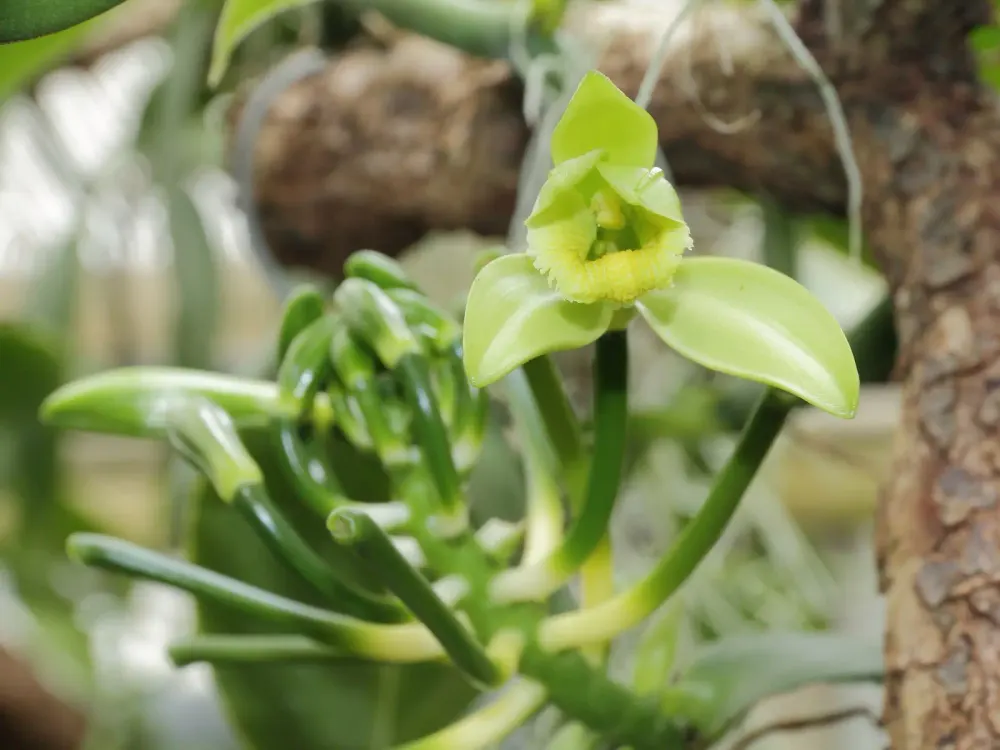
© C T Johansson · CC BY-SA 3.0 · Commons
Vanilla planifolia
Gewürzvanille · (Vanilla planifolia)
Orchid family (Orchidaceae)
Description
Vanilla planifolia is a species of vanilla orchid native to Mexico, Central America, Colombia, and Brazil. It is one of the primary sources for vanilla flavouring, due to its high vanillin content. Common names include flat-leaved vanilla and West Indian vanilla, though it is often simply referred to as vanilla.
- SpiceFruitInternalTraditional use
The fermented vanilla pods (capsules) are one of the world's most important flavour spices. Used in desserts, ice cream, baked goods, chocolate, liqueurs and perfumery. The pods are slit lengthwise, the seed paste scraped out, or the whole pod simmered with the dish. The characteristic aroma derives from the main aroma carrier vanillin (1.5–3 % in the cured bean) together with over 200 other volatile compounds such as p-hydroxybenzaldehyde, vanillic acid, anisyl alcohol and guaiacol. Bourbon vanilla (Madagascar, Réunion, Comoros) is the taste reference; Tahitian vanilla (Vanilla tahitensis) has a more floral profile. Traditionally also used to mask the taste of bitter medicinal preparations (syrups, tinctures).
[#src_wp_de_vanilla] [#src_wp_en_vanilla] [#src_pfaf_vanilla] [#src_ijmedrev_vanilla]
- TinctureFruitInternalTraditional use
Vanilla tincture (Extractum Vanillae) is an alcoholic extract of cured pods, traditionally used as a mild gastric tonic and digestive aid as well as a flavour corrigent in galenical preparations. In Mexican and Creole folk medicine it was also used as a 'nervine' and calming tonic for nervous restlessness and exhaustion. Modern animal pharmacology studies suggest anxiolytic and antidepressant-like effects of vanillin via monoaminergic pathways, but clinical evidence in humans is lacking.
Preparation & dosage
Traditional preparation: macerate 10–20 g finely chopped cured vanilla pods in 100 ml ethanol 70 % for 2–4 weeks, then strain. 1–2 ml (approx. 20–40 drops) one to three times daily, preferably after meals. Due to high cost, mostly used as a flavouring rather than a primary medicine.
- Dry amount
- 10–20 g
- Doses per day
- 3×
[#src_pfaf_vanilla] [#src_ijmedrev_vanilla] [#src_wp_en_vanilla]
- Essential oilFruitExternalFolk medicine
A true vanilla essential oil in the strict sense barely exists, as vanillin is not steam-distillable. Vanilla absolue (solvent extract) and vanilla oleoresin are the commercial perfumery and cosmetic raw materials. In folk and aromatherapy use, vanilla scent is associated with relaxing and mood-lifting effects; experimental studies have shown attenuation of the startle reflex under vanilla odour. Topically added to skin care products as a fragrance and for the mild antimicrobial properties of vanillin.
[#src_ijmedrev_vanilla] [#src_japtr_vanillin_wound] [#src_wp_en_vanilla]
- RawFruitExternalClinical trial
Vanillin, the main aroma compound of the cured pod, shows pronounced antioxidant and wound-healing properties in in-vitro and animal studies: it protects keratinocytes from oxidative stress, accelerates wound closure in scratch assays and acts antimicrobially against multidrug-resistant bacteria (synergistic with standard antibiotics). These effects apply to isolated vanillin, not to the whole food; experimental application as an adjuvant in advanced wound dressings is under investigation but not yet clinically established.
[#src_japtr_vanillin_wound] [#src_ejmi_vanillin_antibacterial] [#src_ijmedrev_vanilla]
- RawFruitInternalFolk medicine
Historical folk medicine: The Aztecs called the plant tlilxochitl ('black flower') and used it mixed with cacao and chilli (Xocoatl, a precursor of chocolate) as an invigorating aphrodisiac and tonic at the court of Moctezuma. The Spanish royal physician Francisco Hernández de Toledo (16th century) described vanilla as one of the three most important Aztec aphrodisiacs. In later European folk medicine (17th–19th century) vanilla was considered warming, cardiotonic, carminative and a 'nervine' for hysteria and melancholic moods. There is no modern clinical evidence for an aphrodisiac effect.
[#src_wp_de_vanilla] [#src_wp_en_vanilla] [#src_ijmedrev_vanilla] [#src_pfaf_vanilla]
- TeaFruitInternalFolk medicine
In folk practice, a small piece of vanilla pod or ½ teaspoon of scraped vanilla seed paste is stirred into hot milk or water and drunk as a calming bedtime drink for nervous restlessness, mild insomnia and minor digestive complaints. Widespread in Mexican, Caribbean and French home use, often combined with milk and sugar (golden milk, lait à la vanille). No scientific evidence of efficacy; the effect is today attributed mainly to the relaxing vanilla aroma and the ritual character.
Preparation & dosage
Steep a small piece (approx. 1 cm) of vanilla pod or ½ teaspoon of vanilla seed paste in 200 ml hot milk or water for 10 min, drink warm in sips — especially in the evening.
- Dry amount
- 0.5–1 g
- Doses per day
- 1×
[#src_wp_de_vanilla] [#src_pfaf_vanilla] [#src_ijmedrev_vanilla]