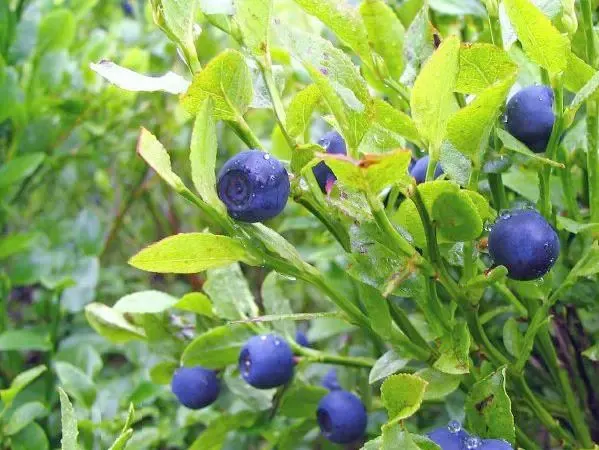
© Marek Silarski · CC BY-SA 3.0 · Commons
Vaccinium myrtillus
Heidelbeere · (Vaccinium myrtillus)
Heath family (Ericaceae)
Description
Vaccinium myrtillus is a holarctic species of shrub with edible fruit of blue color, known by the common names bilberry, blaeberry, wimberry, and whortleberry. It is more precisely called common bilberry or blue whortleberry to distinguish it from other Vaccinium relatives.
CONTRAINDICATED for children
Medicinal use not under 12. Fresh berries as food are safe.
- RawFruitInternalTraditional use
Classic self-care for mild non-specific diarrhoea: condensed tannins (proanthocyanidins) tighten intestinal mucosa, reduce fluid loss and are mildly antimicrobial.
Preparation & dosage
CHEW DRIED BERRIES: 5–10 g slowly, up to 3× daily. Only DRIED berries are astringent — fresh berries can be mildly laxative in large amounts. Do not continue beyond 3–4 days without medical advice.
- Dry amount
- 5–10 g
- Doses per day
- 3×
- Max duration
- 1 weeks
⚠ Age restriction: ≥ 12 years — Per EMA from 12 years. Diarrhoea in small children needs medical care.
- TeaFruitInternalTraditional use
Bilberry decoction for mild diarrhoea as alternative to direct chewing. Hot extraction dissolves tannins and anthocyanins from dried fruit flesh.
Preparation & dosage
DECOCTION: 5–10 g + 150–250 ml cold water, boil and simmer 10 min until berries swell. Strain (eat the berries too), drink lukewarm 2–3× daily. Lips and teeth temporarily stained blue-violet.
- Dry amount
- 5–10 g
- Doses per day
- 3×
- Max duration
- 1 weeks
⚠ Age restriction: ≥ 12 years — From 12 years.
- GargleFruitExternalTraditional use
Traditional mouth and throat rinse for mild oral mucosa inflammation, aphthae and gum irritation. EMA monograph confirms this indication as traditional use.
Preparation & dosage
DECOCTION as mouth rinse: 5–10 g + 150–250 ml water, simmer 10 min, strain, cool to lukewarm. Gargle or rinse 2–3× daily — spit out. Tannins act astringently on inflamed oral mucosa.
- Dry amount
- 5–10 g
- Doses per day
- 3×
- Max duration
- 1 weeks
⚠ Age restriction: ≥ 12 years — From 12 years.
[#src_ema_myrtilli_fructus_siccus] [#src_pfaf_vaccinium_myrtillus]
- RawFruitInternalFolk medicine
Fresh bilberries as food and source of anthocyanins, vitamin C, vitamin E, quercetin, manganese and pectins. Antioxidant effects of anthocyanins well documented; medicinal indications only for dried berries.
Preparation & dosage
FRESH BERRIES: eat as fruit without medicinal restrictions. Rich in anthocyanins, vitamin C, vitamin E, quercetin and manganese. Fructose and pectins can be mildly laxative in large amounts.
[#src_wp_en_vaccinium_myrtillus] [#src_frontiers_bilberry_2022]
- TeaLeafInternalFolk medicine
Folk use of bilberry leaves for digestive complaints and traditionally described as blood-sugar lowering. Clinical evidence for blood glucose effect is insufficient; high tannin and arbutin content require caution.
Preparation & dosage
LEAF TEA: 2–3 g dried leaves (harvested late summer) + 250 ml boiling water, steep 10 min. Max 3 weeks due to high tannin content. CAUTION: leaves contain arbutin — potentially toxic in large amounts or prolonged use. Only in short-term courses after consultation.
- Dry amount
- 2–3 g
- Doses per day
- 2×
- Max duration
- 3 weeks
[#src_pfaf_vaccinium_myrtillus] [#src_wp_en_vaccinium_myrtillus]