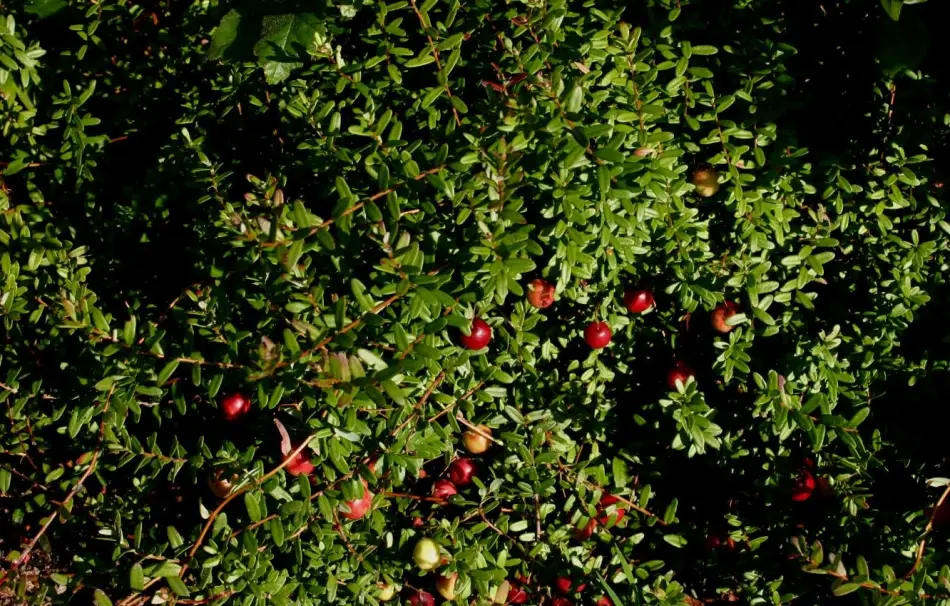
© Sten Porse · CC BY-SA 3.0 · Commons
Cranberry
Großfrüchtige Moosbeere · (Vaccinium macrocarpon)
Heath family (Ericaceae)
Description
The American cranberry (also called large cranberry) is an evergreen, prostrate dwarf shrub of the acidic peat bogs and wetlands of eastern North America. Its thin, creeping stems form dense mats from which short, upright flowering stalks rise. The pink flowers, with reflexed petals, resemble the head of a crane - hence the name 'cranberry'. They are pollinated by bees and ripen into bright red, tart berries. Commercially the plant is grown on flat bogs that are flooded for harvest, so the air-chambered berries float to the surface. The ripe fruit and its juice are used.
- RawFruitInternalClinical trial
Prevention of recurrent uncomplicated urinary tract infections (cystitis). The 2023 Cochrane review found moderate-certainty evidence that cranberry products reduce the risk of repeat infections - especially in women with recurrent UTIs, in children and in people particularly susceptible. The effect is modest and not universal; in the healthy general population or in elderly care-home residents the benefit is unclear. The European authority EFSA rejected a corresponding health claim for lack of an established cause-and-effect relationship.
Preparation & dosage
To help prevent recurrent uncomplicated urinary tract infections, drink about 240-300 ml of unsweetened cranberry juice daily or take a standardised dry extract (often adjusted to about 36 mg proanthocyanidins per day). This is a preventive, not an acute treatment: in an active bladder infection - especially with fever, flank pain or blood in the urine - cranberry is no substitute for doctor-prescribed antibiotics. The benefit builds up over weeks and is not equally pronounced in everyone.
- Liquid amount
- 240–300 ml
- Doses per day
- 2×
- RawFruitInternalTraditional use
Use as a food and source of vitamin C. Traditionally processed into sauce and juice in North America (classically served with the Thanksgiving turkey).
Preparation & dosage
Fresh or processed cranberries (e.g. as juice, sauce or dried) provide vitamin C, organic acids and polyphenols. Because of their very tart taste they are usually sweetened or combined with other fruits; dried commercial products are often heavily sugared. Large volumes of juice mean correspondingly high sugar and calorie intake.
🤝 Permaculture Partners
In your garden, this plant acts as: