© Σ64 · CC BY 3.0 · Commons
Turkey Tail
CautionSchmetterlingstramete · (Trametes versicolor)
Polypore family (Polyporaceae)
Description
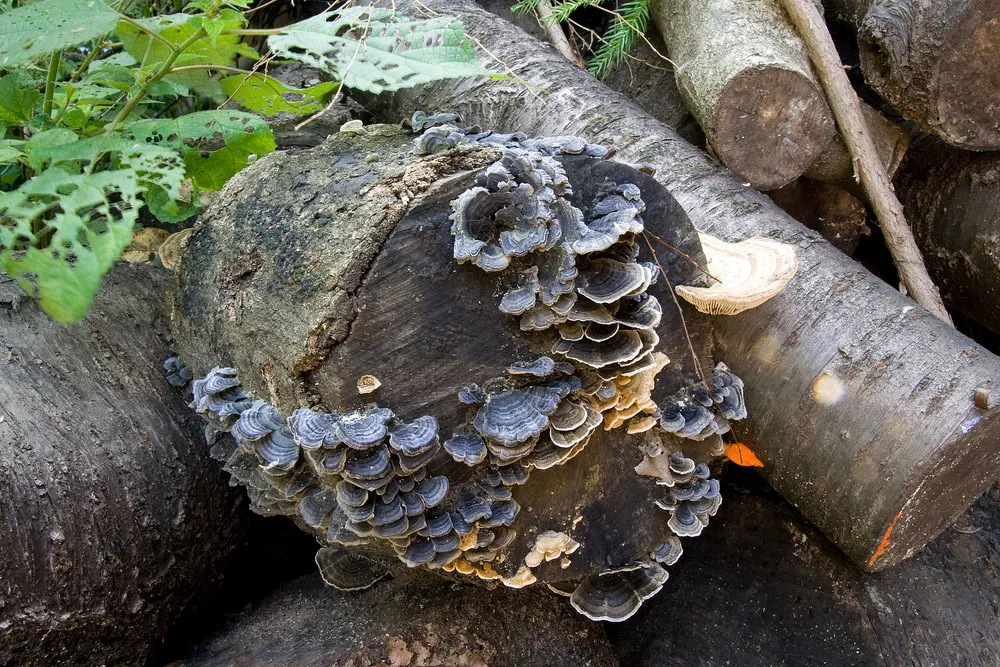
Turkey Tail (Trametes versicolor) is a widespread polypore that forms flat, bracket- to rosette-shaped fruiting bodies 2-8 cm across. Its hallmark is the silky, multi-coloured concentrically zoned upper surface in shades of brown, olive, blue and black, resembling a turkey's tail feather; the white underside bears fine pores (3-5 per mm). The fungus grows year-round in tiled, overlapping clusters on the deadwood of deciduous trees, especially beech, but also oak and birch. In traditional Chinese and Japanese medicine it has long been valued as an immune-modulating remedy under the names Yunzhi (云芝) and Kawaratake. Its mycelium yields the protein-bound polysaccharides PSK (krestin) and PSP, which are used in Japan as an adjuvant in cancer therapy.
- TeaWhole plantInternalTraditional use
Decoction (long simmer) of the dried, chopped fruiting body as an immune-supporting tonic tea in traditional Chinese medicine (Yunzhi).
- RawWhole plantInternalClinical trial
Standardised polysaccharide extract PSK (krestin) from the mycelium as powder/capsule; approved in Japan as adjuvant immunochemotherapy after curative resection of gastric and colorectal cancer. Several randomised trials and meta-analyses show a survival benefit.
- TinctureWhole plantInternalFolk medicine
Alcoholic tincture or dual extract of the fruiting body in modern folk practice for general immune support.