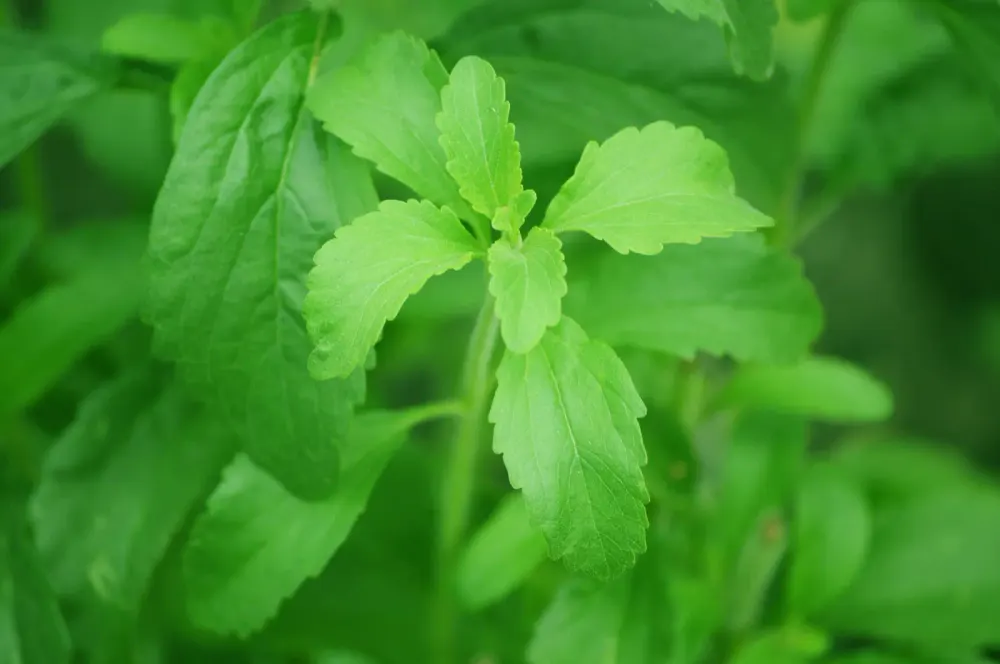
© Flyingbikie (Robert Lynch, Melbourne/Australia) · CC0 · Commons
Stevia rebaudiana
Stevia · (Stevia rebaudiana)
Daisy family (Asteraceae)
Description
Stevia rebaudiana is a plant species in the genus Stevia of the family Asteraceae. It is commonly known as candyleaf, sweetleaf or sugarleaf.
- RawLeafInternalFolk medicine
The Guaraní peoples of Paraguay and Brazil chewed fresh stevia leaves for centuries as a sweet treat and to sweeten yerba mate. The vernacular name 'ka'a he'ẽ' (sweet herb) reflects the plant's cultural status as a food supplement and wellness plant.
Preparation & dosage
- TeaLeafInternalFolk medicine
In South American folk medicine, stevia tea was used for digestive complaints, bloating and general strengthening. Ethnobotanical records document Guaraní use for gastrointestinal complaints.
Preparation & dosage
Pour 200 ml hot water over 1–2 g dried leaves, steep 5 minutes, strain.
- Dry amount
- 1–2 g
- Doses per day
- 2×
- SpiceLeafInternalClinical trial
Dried and powdered stevia leaves are used worldwide as a calorie-free sugar substitute. The contained steviol glycosides (primarily stevioside and rebaudioside A) are 200–300 times sweeter than sugar. EFSA evaluated steviol glycosides as a food additive (E 960) and established an ADI of 4 mg/kg body weight per day.
Preparation & dosage
- TeaLeafInternalFolk medicine
In folk medicine, stevia was used in South America to support blood pressure. Pharmacological studies showed vasodilatory effects of stevioside via calcium channel antagonism, though these effects are clinically irrelevant at usual sweetener amounts.
Preparation & dosage
- TeaLeafInternalFolk medicine
Used in South American folk medicine to support fever, infections, and skin problems. In vitro studies show antimicrobial activity of volatile oils from the leaves against certain bacteria and fungi.
Preparation & dosage
- TeaLeafInternalFolk medicine
Ethnomedicinal reports from Paraguay and Brazil document the use of stevia tea as a diuretic and to support liver function. In vitro and animal studies show hepatoprotective effects; clinical evidence in humans is lacking.
Preparation & dosage
Distribution in Europe
🪴 Grow at home
- ☀ Light
- bright, indirect
- 💧 Water
- every few days
- 🌱 Soil
- Loose, humus-rich, slightly acidic
- 🪴 Pot
- 20 cm
- ⭐ Difficulty
- ★★☆ intermediate
- 🐾 Pets
- pet-safe
Tips:
- Don't let it dry out — stevia wilts quickly when thirsty.
- Leaves are sweetest just before flowering — harvest then.
- In winter: bright, cool spot (~12-15 °C), little water.
Care tips are general indoor-gardening recommendations, not scientific sources.