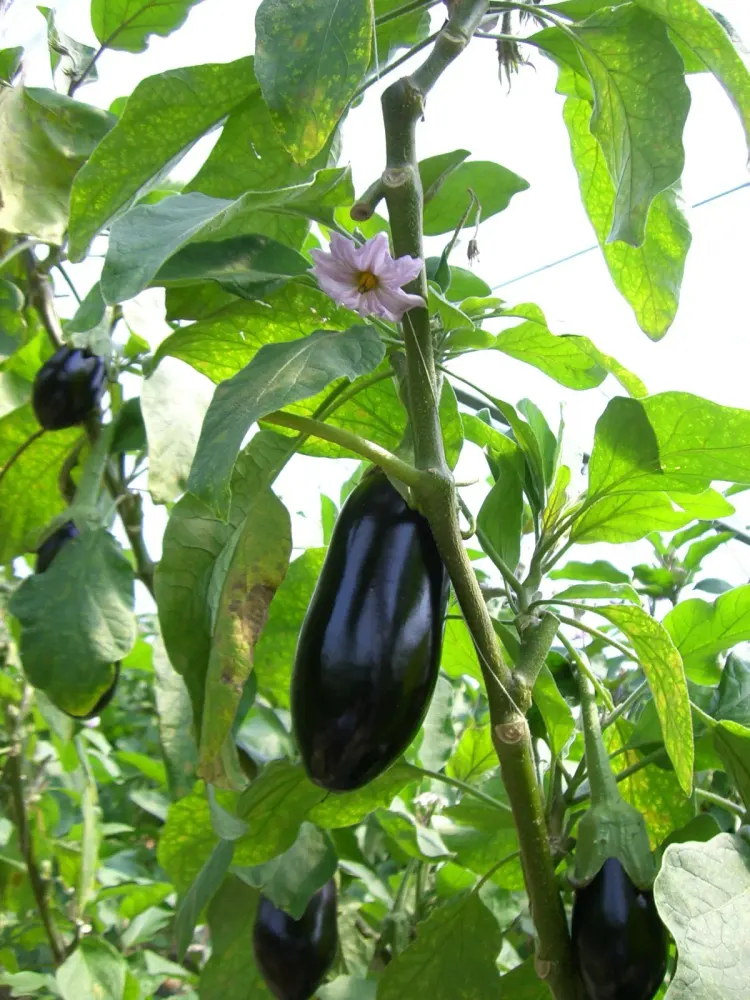
© Miya.m · CC BY-SA 3.0 · Commons
Eggplant
CautionAubergine · (Solanum melongena)
Nightshade family (Solanaceae)
Description
Eggplant, aubergine, brinjal, or baigan is a plant species in the nightshade family Solanaceae. Solanum melongena is grown worldwide for its edible fruit, typically used as a vegetable in cooking.
- RawFruitInternalClinical trial
Ripe aubergines are always eaten cooked — steamed, fried, grilled or baked. The flesh is low in calories (approx. 25 kcal/100 g), rich in dietary fibre (3 g/100 g) and contains notable amounts of potassium (approx. 230 mg/100 g) and B vitamins (B1, B3, B6). Aubergine is a key ingredient in Mediterranean dishes (moussaka, ratatouille, parmigiana) and Middle Eastern cuisines (baba ghanoush, imam bayıldı). Raw consumption is unsuitable due to bitter compounds and low solanine levels.
[#src_wp_de_aubergine] [#src_wp_en_eggplant] [#src_usda_eggplant]
- RawFruitInternalTraditional use
In Ayurvedic and Middle Eastern folk medicine, aubergine is regarded as blood-pressure balancing and anti-haemorrhoidal. The fruit contains chlorogenic acid (the most abundant phenolic compound in the flesh), nasunin in the purple skin, and small amounts of other polyphenols. In some traditional systems (Ayurveda, Unani) a fruit paste is applied for haemorrhoids; ethnobotanical use is documented for centuries, but clinical studies are lacking.
- CompressLeafExternalFolk medicine
In European and Asian folk medicine, fresh aubergine leaves are used as soothing, emollient poultices (cataplasms) for burns, abscesses, boils and cracked skin. Lightly crush or steam leaves and apply to the affected area. WARNING: Leaves contain higher concentrations of solanine and should be used externally only.
- RawFruitInternalTraditional use
The purple skin of aubergine contains nasunin, an anthocyanin from the delphinidin group, which acts as an antioxidant and in laboratory studies inhibited lipid peroxidation in brain cell membranes. Chlorogenic acid in the flesh shows preclinical antimicrobial and antidiabetic activity. For preventive dietary recommendations (coloured vegetables) evidence relies on epidemiological data, not on clinical trials with aubergine itself.
- RawFruitInternalFolk medicine
In medieval Persian and Arabic medicine (including al-Razi, Ibn Sina), aubergine is mentioned: well-ripened, fully cooked fruits were considered digestible and beneficial to digestion. Al-Razi explicitly warned that raw or unripe fruits contained harmful qualities and must always be cooked — an observation consistent with modern knowledge of solanine levels.
- RawFruitInternalTraditional use
Aubergines supply manganese (approx. 10 % of daily requirement per 100 g), a trace element that acts as a cofactor for various enzymes (including superoxide dismutase, manganese complexes) contributing to antioxidant capacity. Folate content (approx. 22 µg/100 g) makes aubergine a modest contributor to folate intake. As a low-calorie bulking vegetable, aubergine suits weight-reducing diets.
🤝 Permaculture Partners
In your garden, this plant acts as:
✨ Best symbiotic partners
- 🌿 Basil Basil protects eggplant from whitefly.
- 🌿 Phaseolus vulgaris Bush bean deters Colorado-beetle relatives from eggplant.
- 🌿 Tagetes patula Classic companion-planting partner.
Source: Helga und Margarete Langerhorst, Mein gesunder Naturgarten (eigene Kuration)