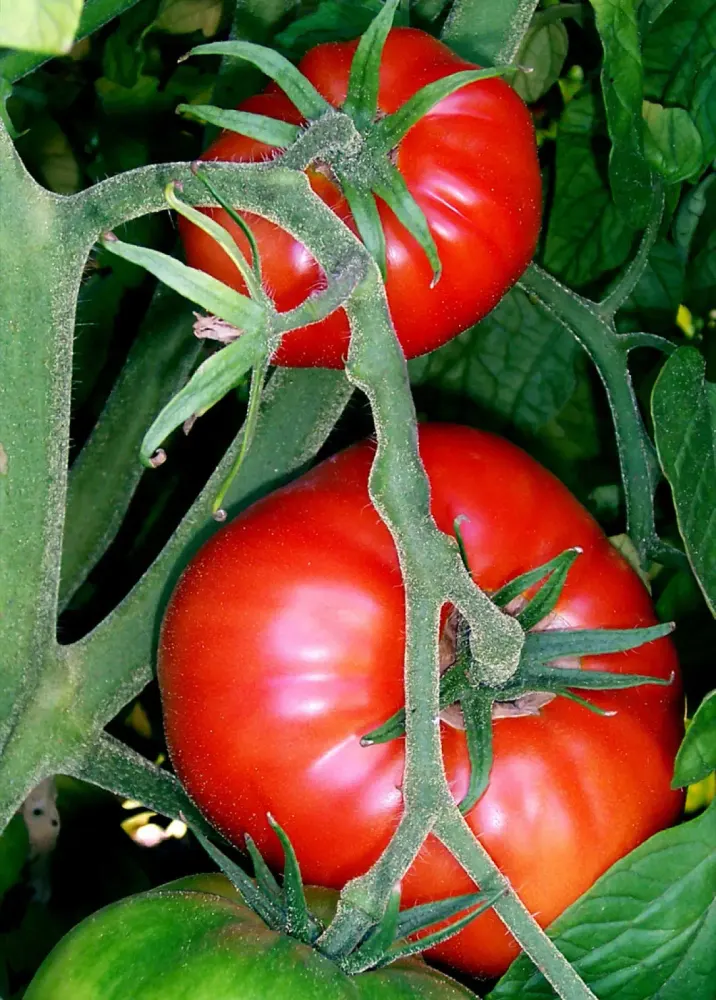
© Unknown · CC BY-SA 3.0 · Commons
Tomato
CautionTomate · (Solanum lycopersicum)
Nightshade family (Solanaceae)
Description
The tomato is a plant whose fruit is an edible berry that is eaten as a vegetable. The tomato is a member of the nightshade family that includes tobacco, potato, and chili peppers. It originated from western South America, and may have been domesticated there, in Mexico, or in Central America.
- RawFruitInternalClinical trial
Raw ripe tomato fruits supply lycopene (potent carotenoid antioxidant), vitamin C, vitamin K, potassium and dietary fibre. Clinical studies and EFSA opinions confirm the nutritional relevance of these nutrients for oxidative stress, immune function and cardiovascular health. Lycopene is better absorbed from heated tomato products (paste, sauce) than from raw fruit.
- SpiceFruitInternalTraditional use
Tomato paste, puree and cooked sauces (passata) are culinary preparations in which lycopene bioavailability is substantially improved by heat processing and co-presence of fat (olive oil). Foundation of Mediterranean cuisine (sofrito, sugo) — these cooked preparations are nutritionally superior to raw tomato juice in terms of lycopene uptake.
[#src_efsa_lycopene] [#src_usda_fooddata] [#src_pfaf_solanum]
- RawFruitInternalClinical trial
Regular tomato consumption is associated with reduced cardiovascular disease risk in epidemiological studies, attributed to the combined effect of lycopene, potassium, folate and phenolic acids. The EFSA panel confirms the evidence chain for lycopene antioxidant activity; however, direct clinical endpoints remain insufficient per EFSA 2011 for an approved product-level health claim.
[#src_efsa_lycopene] [#src_efsa_cardiovascular] [#src_wp_en]
- RawFruitInternalFolk medicine
In folk medicine, tomato slices were applied topically to sunburn and minor skin irritations — the mild acidity (citric and malic acid) and lycopene are considered cooling and soothing. This folk application is not clinically validated; however, the photoprotective effect of oral lycopene intake is the subject of clinical investigation.
- RawFruitInternalFolk medicine
In European folk medicine, tomatoes (fresh juice, raw fruit) were used for urinary complaints and considered mildly diuretic food. Their high water content (~95 %) and potassium content support renal flushing. Specific clinical evidence is lacking; the dietary use of potassium-rich vegetables is nutritionally recognised.
- SpiceFruitInternalTraditional use
Dried tomatoes (oven-dried, sott'olio) are a traditional preservation product of southern Italian and Spanish cuisine. Water removal concentrates lycopene, glutamic acid (umami), sugars and minerals strongly — dried tomatoes have approximately 10-fold higher lycopene content per unit weight than fresh fruit.
- RawFruitInternalTraditional use
Tomato juice and freshly pressed tomato products (gazpacho, cold soups) are a traditional vegetable intake form in the Mediterranean diet. Tomato juice contains significant amounts of lycopene, vitamin C, potassium and organic acids, and is in this context part of WHO-recommended Mediterranean dietary patterns.
🤝 Permaculture Partners
In your garden, this plant acts as:
✨ Best symbiotic partners
- 🌿 Onion Classic companion-planting partner.
- 🌿 Garlic Classic: garlic in every tomato bed — deters mildew.
- 🌿 Chives Chives deter aphids from tomatoes and attract bees for pollination.
- 🌿 Apium graveolens Celery scent masks tomato from pests.
- 🌿 Calendula officinalis Calendula attracts beneficials and deters nematodes.
- 🌿 Basil Basil deters whitefly and improves tomato aroma.
- 🌿 Parsley Parsley attracts lacewings that eat aphids.
- 🌿 Parsley Classic companion-planting partner.
- 🌿 Tagetes patula Marigold roots deter nematodes in the tomato bed.
- 🌿 Tropaeolum majus Nasturtium pulls aphids away from tomato (trap plant).
⚠️ Better not planted together
- 🥬 Cabbage Tomato and cabbage compete heavily for nitrogen.
- 🥬 Red cabbage Classic companion-planting partner.
- 🥬 Broccoli Classic companion-planting partner.
- 🥬 Cucumber Tomato and cucumber share fungal disease (mildew) — cross-infection.
- 🥬 Fennel Fennel strongly inhibits tomato growth (allelopathic).
- 🥬 Potato Both Solanaceae — late blight transfers between them.
📦 Part of these planting sets:
Source: Gertrud Franck, Gesunder Garten durch Mischkultur (1980, eigene Kuration) | Helga und Margarete Langerhorst, Mein gesunder Naturgarten (eigene Kuration)