© Rasbak · CC BY-SA 3.0 · Commons
Rhododendron ponticum
Toxic🐾Pontischer Rhododendron · (Rhododendron ponticum)
Heath family (Ericaceae)
Description
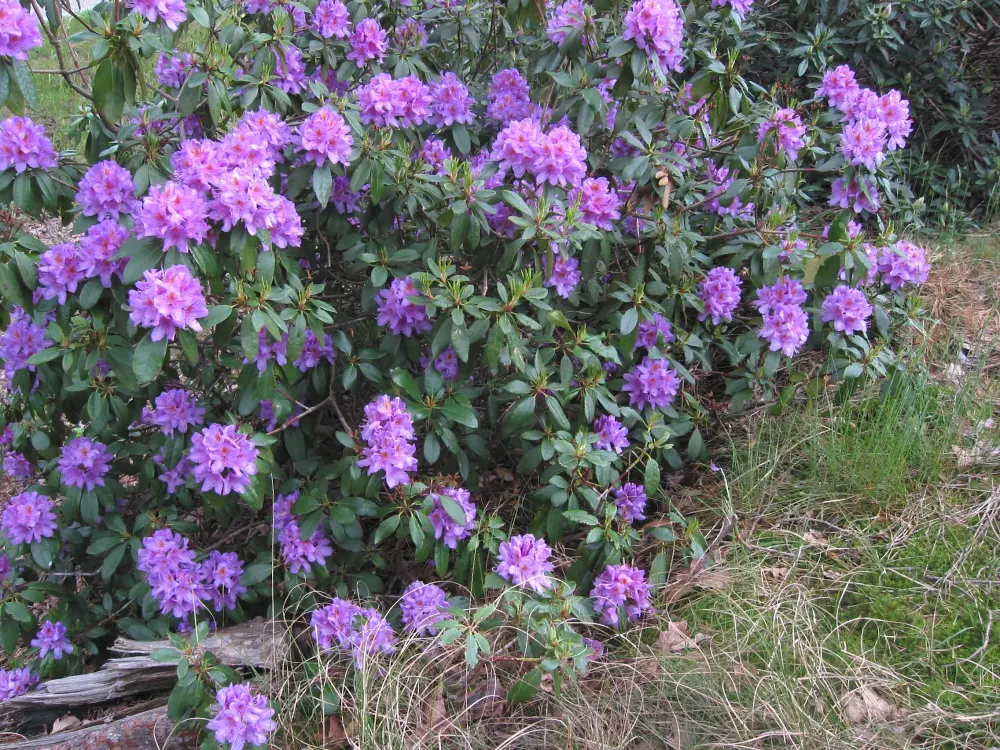
Rhododendron ponticum, called common rhododendron or pontic rhododendron, is a species of flowering plant in the Rhododendron genus of the heath family Ericaceae. It is native to the Iberian Peninsula in southwest Europe and the Caucasus region in northern West Asia.
🌿 Risk of confusion — read before wild-harvesting!
A systematic review (Silici & Atayoglu, 2015) analysed 1199 documented cases — primarily from the Turkish Black Sea coast (Trabzon, Rize, Giresun) — NO fatalities with adequate therapy. Risk of confusion: beekeepers in southern Turkey may unknowingly market mad honey — commercial honey in the EU is safe due to mixed forage and EU limit values for grayanotoxins.
External use only!
This plant must NOT be taken internally. Use only as compress, salve, or bath.
CONTRAINDICATED during pregnancy
Grayanotoxins cross the placental barrier (low molecular weight, lipophilic) and can cause fetal bradycardia and hypotension. Even small amounts of mad honey can induce severe maternal hypotension in pregnant women with consecutive utero-placental hypoperfusion. Any oral or large-area dermal use during pregnancy is strictly contraindicated.
CONTRAINDICATED during breastfeeding
Grayanotoxins presumably pass into breast milk (lipophilic); in infants they can induce bradycardia and apnoea tendency. Breastfeeding: strictly contraindicated.
CONTRAINDICATED for children
Children react extremely sensitively due to low body mass and immature cardiovascular regulation. Even 1 tsp of mad honey can trigger life-threatening bradycardia in small children. Flowers and leaves are also highly dangerous if swallowed orally. Rhododendron shrubs in front gardens, playgrounds and kindergartens require education of supervising adults.
Critical drug interactions with:
Beta-Blocker (Propranolol, Metoprolol, Bisoprolol, Atenolol) · Calciumkanal-Blocker (Verapamil, Diltiazem) · Antiarrhythmika (Klasse I — Lidocain, Flecainid; Klasse III — Amiodaron) · Herzglykoside (Digoxin, Digitoxin) · Antihypertensiva (ACE-Hemmer, AT1-Antagonisten, Diuretika, Clonidin) · PDE-5-Inhibitoren (Sildenafil, Tadalafil, Vardenafil)
- RawLeafExternalFolk medicine
Folk medicinal use of fresh Rhododendron ponticum twigs for toothache: Wikipedia (EN) documents topical application of fresh sap from cut branches on painful teeth and gums — an indication of local anaesthetic properties of grayanotoxins (sodium-channel modulation). No longer recommended today due to percutaneous/mucosal absorption and systemic toxicity.
Preparation & dosage
- SalveLeafExternalFolk medicine
Anatolian-Caucasian folk medicine: fresh crushed leaves or infusions of Rhododendron ponticum were applied externally to rheumatic joint pain and skin parasites. The analgesic effect is based on sodium channel modulation by grayanotoxins (similar to Aconitum liniments). Abandoned today due to percutaneous absorption with systemic bradycardia/hypotension.
Preparation & dosage
[#src_ullah_2018_rhododendron_ponticum] [#src_silici_2015_rhododendron_ponticum]
- RawWhole plantExternalFolk medicine
Cultural-historical use as ornamental and grafting rootstock: Rhododendron ponticum has been cultivated in European gardens since the 18th century and today serves primarily as a robust grafting rootstock for noble Rhododendron hybrids. Invasive in the UK, Ireland, Belgium and the Netherlands — endangering native heath and oak woodlands. The plant as such has no medicinal tradition in Western/Central Europe.
Preparation & dosage
[#src_wp_de_rhododendron_ponticum] [#src_wp_en_rhododendron_ponticum]
Historical documentation only — do NOT use
These internal applications are historically documented. This plant is highly toxic — self-treatment can cause severe poisoning or death. For documentation only, explicitly NOT a recommendation.
- RawFlowerInternalFolk medicine
Traditional use of "mad honey" (Turkish "deli bal") from the nectar of Rhododendron ponticum and R. luteum in the Black Sea region (Turkey, Caucasus, Nepal) as a folk remedy for high blood pressure, gastrointestinal complaints and sexual dysfunction. Traditional dose: 1 teaspoon in the morning on an empty stomach; from 2–3 tablespoons typical poisoning symptoms (bradycardia, hypotension) occur. Mechanism: grayanotoxins (andromedotoxin) as reversible activators of voltage-gated sodium channels (Nav1.x) — pharmacologically related to aconitine. Use is dangerous due to narrow therapeutic window and banned in many countries (e.g. South Korea since 2005).
Preparation & dosage
[#src_wp_mad_honey_rhododendron_ponticum] [#src_silici_2015_rhododendron_ponticum] [#src_ullah_2018_rhododendron_ponticum]
- RawLeafInternalFolk medicine
Historical ancient warfare using toxic Pontic honey: documented in Xenophon's "Anabasis" (401 BC) — Greek mercenaries under Xenophon were poisoned en masse on mad honey near Trabzon (two days of unconsciousness, later full recovery). Pompey's troops were poisoned in 65/69 BC by Mithridates VI Eupator and the Heptakometes with deliberately placed honeycombs in the same region and subsequently slaughtered (Strabo, Geographica). Pure historical cultural phenomenon.
Preparation & dosage
[#src_gunduz_2008_rhododendron_ponticum] [#src_wp_mad_honey_rhododendron_ponticum]
- RawFlowerInternalFolk medicine
Turkish-Anatolian use of small amounts of mad honey for stomach ulcers, digestive complaints and diabetes — based on the mistaken assumption that the vagal stimulation ("calming") caused by grayanotoxins is therapeutically useful. Multiple case series from Trabzon and Rize document instead severe bradycardia and syncope in this self-medication. In modern terms: to be considered as risk only.
Preparation & dosage
[#src_silici_2015_rhododendron_ponticum] [#src_ullah_2018_rhododendron_ponticum]
- TinctureLeafInternalFolk medicine
Homeopathic use of Rhododendron chrysanthum / R. ponticum (mother tincture and potencies D6–D30) as constitutional remedy for rheumatic complaints, testicular pain, "weather-sensitive" headaches and migraine triggered by weather change. From D6 onward preparations contain no pharmacologically active grayanotoxin amount; mother tincture and low potencies remain highly toxic.
Preparation & dosage
[#src_wp_en_rhododendron_ponticum] [#src_wikidata_rhododendron_ponticum]