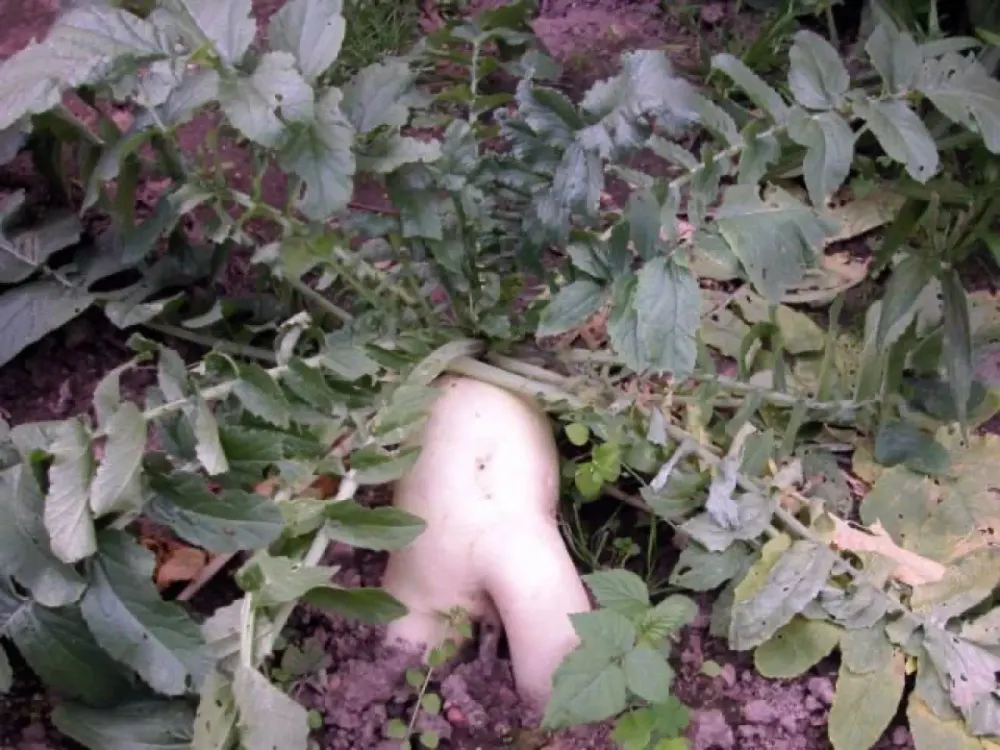
© Eckard Wolff-Postler · CC BY-SA 3.0 · Commons
Black_Spanish_radish
CautionRettiche · (Raphanus sativus var. niger)
Cabbage family (Brassicaceae)
Description
Description for Black_Spanish_radish pending — see Wikipedia article.
- RawRootInternalCommission E
Fresh black radish (juice or grated root) is approved by the German Kommission E as a cholagogue for dyspeptic complaints of biliary origin. The isothiocyanates released from glucosinolate breakdown — primarily glucoraphenin and glucoraphasatin — stimulate bile production and secretion. Supports liver detoxification.
Preparation & dosage
Fresh radish juice: 30–40 ml undiluted juice before meals (3 times daily). Alternatively: 50–100 g freshly grated radish root daily. Kommission E daily dose is 50 ml fresh juice divided into 3 doses.
- Doses per day
- 3×
[#src_gallstones_phytother] [#src_wiki_black_radish] [#src_detox_hepg2]
- RawRootInternalCommission E
For bloating and sluggish digestion, Kommission E recommends black radish as a bitter-containing digestive. The pungent mustard oil glycosides stimulate gastric gland secretion and intestinal motility. Traditionally also known as a stomach cleanser and liver tonic.
Preparation & dosage
50–100 g freshly grated radish root or 30–40 ml fresh juice with main meals.
- Doses per day
- 3×
[#src_wiki_black_radish] [#src_pfaf_raphanus] [#src_gallstones_phytother]
- TeaRootInternalTraditional use
Traditionally, black radish juice mixed with honey was used as a cough remedy and expectorant. A tea from dried radish slices is less common but acts mildly as an expectorant through mustard oils and saponins.
Preparation & dosage
Simmer 5–10 g dried radish slices in 200 ml water for 10 minutes, strain. Alternatively: 1–2 tablespoons fresh radish juice with honey 3 times daily.
- Dry amount
- 5–10 g
- Doses per day
- 3×
- RawRootInternalClinical trial
Laboratory studies show that aqueous black radish extract upregulates cytochrome P450 enzymes (CYP1A1) and phase-II detoxification enzymes (GST) in human liver cells (HepG2). This supports elimination of mutagens and carcinogens. In an animal study, radish diet accelerated excretion of the carcinogen DMBA.
Preparation & dosage
30–50 ml fresh radish juice daily, on an empty stomach. Or 50–100 g freshly grated root with meals.
- Doses per day
- 1×
- RawRootInternalFolk medicine
In Central and Eastern European folk medicine, grated black radish dressed with vinegar and oil is served as a side dish with heavy meals to stimulate digestion and counteract fat overload. The isothiocyanates stimulate bile flow and pancreatic enzymes.
Preparation & dosage
Season freshly grated black radish root with olive oil, apple cider vinegar, and salt. Serve as a salad or side dish.
- Doses per day
- 1×
- TinctureRootInternalTraditional use
Alcoholic fresh extract of black radish (1:5, 45 % ethanol) preserves volatile isothiocyanates better than dry extracts. Traditionally used for bile regulation and liver stimulation.
Preparation & dosage
40–50 drops of 1:5 tincture (40–45 % ethanol) before meals, 3 times daily. Do not use with gallstones without medical consultation.
- Doses per day
- 3×
[#src_glucosinolate_jchromatogr] [#src_gallstones_phytother]
- RawRootInternalFolk medicine
Fresh black radish juice was used in folk medicine topically for fungal skin infections and internally as a general tonic and immune stimulant. Raphanin (isothiocyanate) shows antimicrobial activity against various bacteria and fungi in vitro.
Preparation & dosage
Apply fresh pressed juice topically to affected skin areas or drink 20–30 ml fresh juice daily.
- Doses per day
- 1×
🤝 Permaculture Partners
In your garden, this plant acts as:
✨ Best symbiotic partners
Source: Helga und Margarete Langerhorst, Mein gesunder Naturgarten (eigene Kuration)