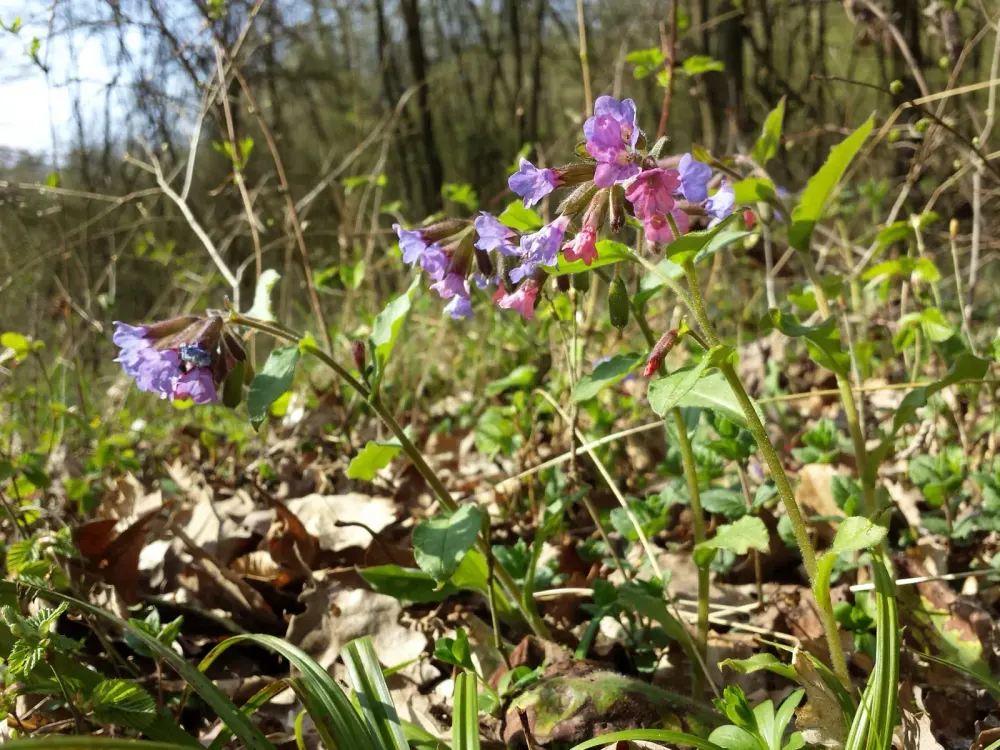
© Stefan.lefnaer · CC BY-SA 3.0 · Commons
Pulmonaria officinalis
CautionGeflecktes Lungenkraut · (Pulmonaria officinalis)
Borage family (Boraginaceae)
Description
Pulmonaria officinalis, common names lungwort, common lungwort, Mary's tears or Our Lady's milk drops, is a herbaceous rhizomatous evergreen perennial plant of the genus Pulmonaria, belonging to the family Boraginaceae.
CONTRAINDICATED during pregnancy
Pyrrolizidine alkaloids cross the placental barrier. Internal use during pregnancy is strictly contraindicated.
CONTRAINDICATED during breastfeeding
Pyrrolizidine alkaloids are excreted into breast milk and may harm the newborn. Internal use during lactation is strictly contraindicated.
CONTRAINDICATED for children
Due to PA content, internal use is not recommended for children under 18 years of age.
Critical drug interactions with:
Hepatotoxische Arzneimittel
- TeaAerial partsInternalTraditional use
Lungwort tea made from aerial parts is traditionally used in European folk medicine for coughs, bronchitis, and throat complaints. Mucilages coat the mucous membranes of the respiratory tract protectively; saponins act as expectorants. The application is rooted in the Doctrine of Signatures: the spotted leaves reminded early herbalists of lung tissue.
Preparation & dosage
Pour 200 ml of boiling water over 2–4 g of dried lungwort herb, steep for 10 minutes, strain. Drink up to 3 cups daily. Do not use long-term (note PA content, max. 4–6 weeks).
- Dry amount
- 2–4 g
- Doses per day
- 3×
[#src_pfaf_pulmonaria] [#src_wiki_pulmonaria] [#src_phenolic_spring_autumn]
- TeaAerial partsInternalFolk medicine
In folk medicine, lungwort tea was used as a gargle for sore throats and hoarseness. The tannin content acts as an astringent and mildly anti-inflammatory on the pharyngeal mucosa.
Preparation & dosage
Steep 3–5 g dried herb in 250 ml hot water for 10 minutes. Allow to cool and use as a gargle — do not swallow.
- Dry amount
- 3–5 g
- Doses per day
- 3×
- TeaAerial partsInternalFolk medicine
In folk medicine, lungwort was applied for mild bladder complaints and irritable bladder. The silicic acid content and mucilages are said to soothe urinary mucous membranes. Not scientifically proven.
Preparation & dosage
Steep 2–4 g dried herb in 200 ml water for 10 minutes. Ensure adequate fluid intake daily.
- Dry amount
- 2–4 g
- Doses per day
- 2×
- TinctureAerial partsInternalFolk medicine
Alcoholic extract of lungwort was traditionally used as a more concentrated alternative to tea for persistent cough. In vitro, lungwort extracts show COX-2 inhibitory and antioxidant activity at the plasma level.
Preparation & dosage
Ready preparation 1:5 (40 % ethanol): 30–50 drops up to 3 times daily. Do not use longer than 4–6 weeks (PA burden).
- Doses per day
- 3×
- CompressLeafExternalFolk medicine
Fresh crushed lungwort leaves were applied as compresses in folk medicine to slow-healing wounds, ulcers, and eczema. The tannin and silicic acid content act as astringents and support wound healing.
- SalveAerial partsExternalFolk medicine
Some folk medicine traditions use lungwort extract in a fatty base topically for skin irritations, rough skin, and minor wounds. In vitro, phenolic acids from Pulmonaria show antioxidant and anti-inflammatory properties.
- RawLeafInternalFolk medicine
Young lungwort leaves were consumed in some regions as wild vegetables in salads or steamed. The leaves contain flavonoids, phenolic acids, and mucilages. Due to PA content, consumption should remain infrequent and in small quantities.