© Holger Krisp (Wikimedia Commons) · CC BY 3.0 · Commons
Oyster mushroom
Austern-Seitling · (Pleurotus ostreatus)
Oyster mushroom family (Pleurotaceae)
Description
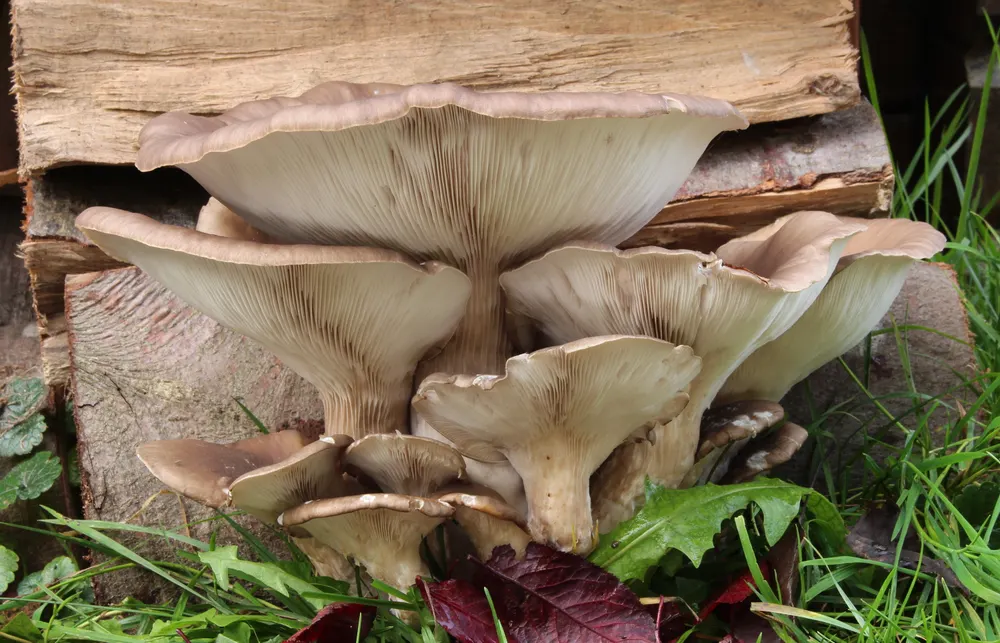
The oyster mushroom (Pleurotus ostreatus) is an edible culinary and medicinal fungus with shell- or oyster-shaped caps in grey to brown shades and a lateral or off-centre stem. It grows in clusters on hardwood, especially beech, and is cultivated commercially worldwide on straw, sawdust and even spent coffee grounds. The mushroom is high in protein and contains beta-glucans as well as the natural statin lovastatin, making it valued both in the kitchen and in nutrition and health research. Its mild, slightly anise-like flavour and firm texture make it one of the most widely cultivated edible mushrooms in the world.
🌿 Risk of confusion — read before wild-harvesting!
Foragers should note the risk of confusion with similar species and only eat specimens that are confidently identified.
- RawWhole plantInternalTraditional use
Fresh fruiting bodies are fried, sautéed or grilled as a protein-rich vegetable or meat substitute; they should always be cooked thoroughly before eating.
- TinctureWhole plantInternalClinical trial
In dried or extract form, the mushroom has been studied for lowering total and LDL cholesterol; the effect is attributed to beta-glucans and the naturally occurring lovastatin.