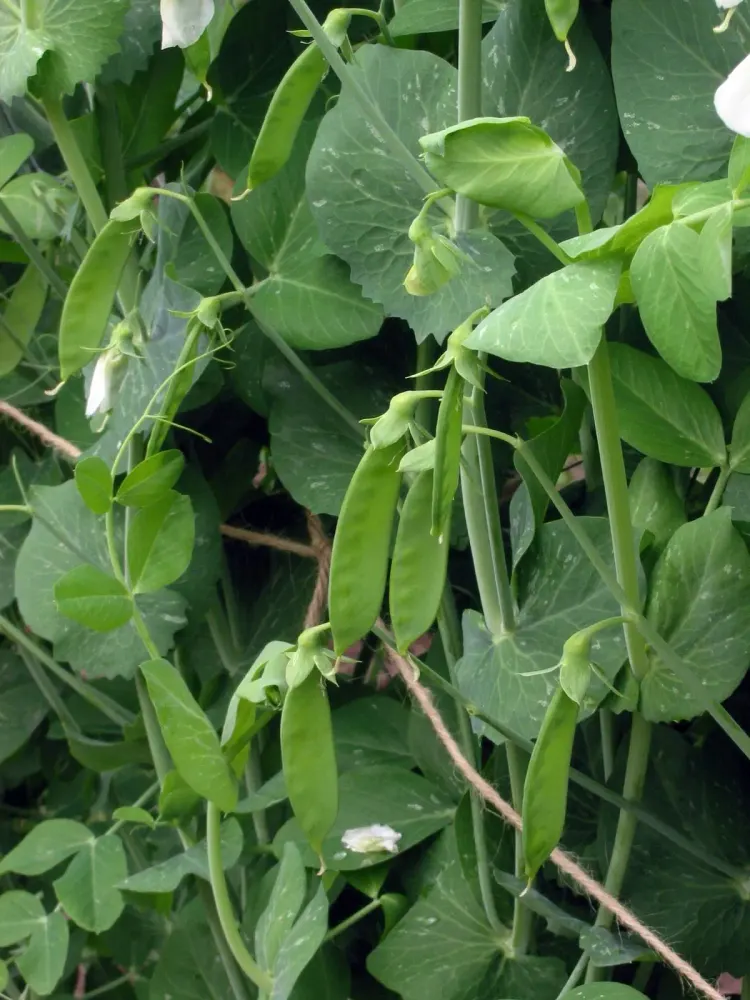
© Rasbak · CC BY-SA 3.0 · Commons
Snap pea
CautionZuckererbse · (Pisum sativum convar. saccharatum)
Bean family (Fabaceae)
Description
The snap pea, also known as the sugar snap pea, is an edible-pod pea with rounded pods and thick pod walls, in contrast to snow pea pods, which are flat with thin walls. The name mangetout can apply to snap peas and snow peas.
- RawFruitInternalTraditional use
Sugar snap peas are eaten with pod, raw or briefly blanched — one of the few legumes that can be consumed without cooking. Per 100 g they supply approx. 42 kcal, 2.8 g protein, 2.6 g dietary fibre, 60 mg vitamin C (100 % of daily value) and 25 µg vitamin K (21 % DV). Used in salads, stir-fries, as raw snack or side vegetable. Young, crisp pods have the best flavour — the riper, the woodier and sweeter the seed interior.
[#src_wp_en_snappea] [#src_wp_de_zuckererbse] [#src_nutrition_snappea]
- RawSeedInternalTraditional use
The seeds (peas), as mature dry peas, contain approx. 20–25 g protein/100 g plus approx. 45–55 % starch and 10–15 % dietary fibre. Fresh green peas supply approx. 5 g protein, 14 g carbohydrates and 42 µg folate per 100 g. Folate is essential for cell division and neural tube closure. Pea starch contains a high proportion of resistant starch (prebiotic). As dry peas they also represent a classic staple food in pea soup and stews.
[#src_pmc_pisum_comp] [#src_wp_en_snappea] [#src_nutrition_snappea]
- RawWhole plantInternalTraditional use
Pea shoots and tendrils are rich in vitamin C, chlorophyll and antioxidants — considerably more nutrient-dense than the mature pod. Used in Asian cuisine (especially Chinese) and modern salad dishes raw or briefly sautéed. Pea microgreens contain particularly high vitamin C values. Described in folk medicine as 'blood-cleansing' and restorative.
- RawSeedInternalTraditional use
Fresh peas are an excellent source of thiamine (vitamin B1, approx. 0.27 mg/100 g) and further B vitamins essential for energy metabolism and the nervous system. Iron content is approx. 1.5–2 mg/100 g fresh (non-haem iron; bioavailability improved by concurrent vitamin C intake). Peas also contain manganese and potassium (approx. 200 mg/100 g). Phytosterols (mainly β-sitosterol) contribute to cholesterol regulation.
- RawSeedInternalFolk medicine
In folk medicine, peas are traditionally regarded as mildly diuretic and 'blood-cleansing' (folk medicine concept), and as supportive for diabetes and heart disease. Modern phytochemical investigations show antihyperglycaemic potential (kaempferol glycosides, naringenin) and antioxidant activity in laboratory tests (DPPH assay). Clinical studies are lacking for most folk medicine indications; only the nutritional significance is scientifically well supported.
- RawSeedExternalFolk medicine
Dried, ground pea flour is used in folk medicine as an external paste (poultice) for skin blemishes and mild inflammation. Kaolin-like adsorption effect of the fine starch. No clinical evidence; traditionally handed-down use.
- RawSeedInternalTraditional use
Pea protein (isolate from Pisum sativum) is a complete protein with all essential amino acids and high lysine concentration (complementary to cereals). In modern plant-based diets and sports nutrition, pea protein isolate is gaining importance as a vegan alternative to soy protein. Coumestrol (a phyto-oestrogen) has been detected in peas in trace amounts — relevance for normal dietary use is low.
[#src_pmc_pisum_comp] [#src_pmc_pisum_pharm] [#src_nutrition_snappea]
🤝 Permaculture Partners
In your garden, this plant acts as:
✨ Best symbiotic partners
- 🌿 Carrot Classic companion-planting partner.
⚠️ Better not planted together
Source: Helga und Margarete Langerhorst, Mein gesunder Naturgarten (eigene Kuration)