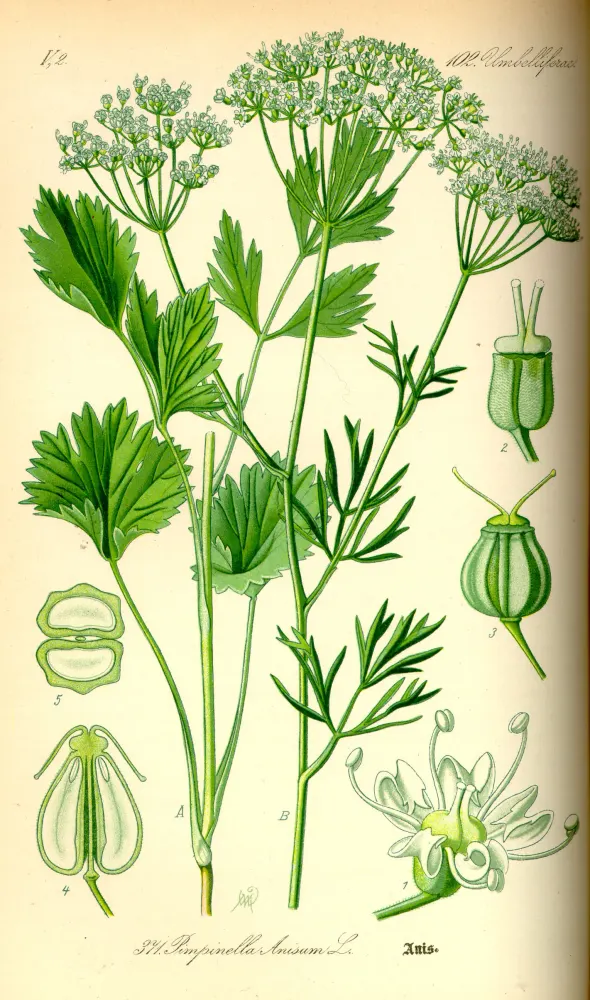
© Otto Wilhelm Thomé, Flora von Deutschland (1885) · Public domain · Commons
Anise
CautionAnis · (Pimpinella anisum)
Carrot family (Apiaceae)
Description
Anise is an annual spice and medicinal plant with finely feathered leaves and small white umbel flowers. The ripe fruits (botanically schizocarps, colloquially called seeds) have a characteristic sweet-aromatic scent and belong to the oldest cultivated medicinal plants of the Mediterranean region. Used in both kitchen and pharmacy for millennia.
CONTRAINDICATED for children
Medicinal tea not for children under 12. Pure essential oil strictly NOT for children under 5 (laryngospasm).
- TeaFruitInternalTraditional use
Classic digestive tea for bloating, mild GI cramps and fullness. Commission E approved for dyspeptic complaints. Anethole relaxes smooth muscle (spasmolytic) and promotes gas expulsion (carminative).
Preparation & dosage
IMPORTANT: Crush aniseed in mortar immediately before preparation. 1–3.5 g + 150–250 ml boiling water, cover and steep 10–15 min (lid retains essential oil), strain. Prepare fresh 3× daily between meals; for bloating directly after meals.
- Dry amount
- 1–3.5 g
- Doses per day
- 3×
- Max duration
- 2 weeks
⚠ Age restriction: ≥ 12 years — Per EMA from 12 years. For infant colic the safer approach is the breastfeeding mother drinking the tea.
- TeaFruitInternalTraditional use
Secretolytic and secretomotor cough tea for cold cough with thick mucus. Commission E approved for catarrhs of the respiratory tract. Anethole liquefies bronchial mucus and facilitates expectoration; partly excreted through the bronchi.
Preparation & dosage
BRONCHIAL TEA: crush seeds, steep 10–15 min covered in 150–250 ml boiling water, strain. Drink warm 3× daily. Anethole is excreted through the lungs — hence bronchial effect. Honey (from 1 year) enhances mucosal effect.
- Dry amount
- 1–3.5 g
- Doses per day
- 3×
- Max duration
- 2 weeks
⚠ Age restriction: ≥ 12 years — From 12 years.
- SpiceFruitInternalFolk medicine
Culinary use as spice since antiquity. Anise stimulates digestive glands and reduces flatulence tendency in typical anise-spiced dishes. Culinary amounts are far below therapeutic doses.
Preparation & dosage
SPICE: Use whole or coarsely ground aniseed in cooking and baking — bread, biscuits, liqueurs, cheese. Culinary amounts (1–2 tsp per dish) considered safe. Anise combines well with fennel, dill and star anise in spice blends.
- Essential oilFruitExternalTraditional use
External application of diluted anise essential oil for cough and bronchial complaints. Inhalation of volatile components (anethole, methylchavicol) soothes mucosa and is mildly antimicrobial.
Preparation & dosage
EXTERNAL: Anise essential oil diluted 1–2% in carrier oil, applied to chest or back for cough and bronchitis. ONLY as ready-made preparation — pure essential oil NOT directly on skin or mucous membranes. STRICTLY FORBIDDEN for children under 5 (laryngospasm risk). Not on face, nose or mouth.
- TeaFruitInternalFolk medicine
Folk evening use as mildly calming tea. Pliny the Elder described anise as sleep-promoting; the analgesic and relaxing properties of anethole may contribute to mild sedation.
Preparation & dosage
RELAXING TEA: 1–2 g crushed seeds + 200 ml boiling water, steep 10 min covered, strain. Evening drink as mild sedative for restlessness. Folk tradition following Pliny the Elder describes sleep-promoting properties.
- Dry amount
- 1–2 g
- Doses per day
- 2×
- Max duration
- 2 weeks
- TeaFruitInternalFolk medicine
Folk use for menstrual complaints and dysmenorrhoea. Anethole has structural similarity to oestrogen; in-vitro studies describe weak oestrogenic activity. Therapeutic tea doses are far above culinary spice amounts.
Preparation & dosage
TEA for menstrual complaints: 1.5–3 g crushed seeds + 250 ml boiling water, steep 15 min covered, strain. Drink warm 2× daily in days before and during menstruation. Not with oestrogen-sensitive conditions.
- Dry amount
- 1.5–3 g
- Doses per day
- 2×
- Max duration
- 1 weeks
Classical quotes
"Anise makes the eye clear, calms the cough and sweetens the breath."
Distribution in Europe
🤝 Permaculture Partners
In your garden, this plant acts as:
✨ Best symbiotic partners
- 🌿 Coriander Classic companion-planting partner.
Source: Helga und Margarete Langerhorst, Mein gesunder Naturgarten (eigene Kuration)