© Unknown · CC BY-SA 3.0 · Commons
Phaseolus vulgaris
CautionGartenbohne · (Phaseolus vulgaris var. nanus)
Bean family (Fabaceae)
Description
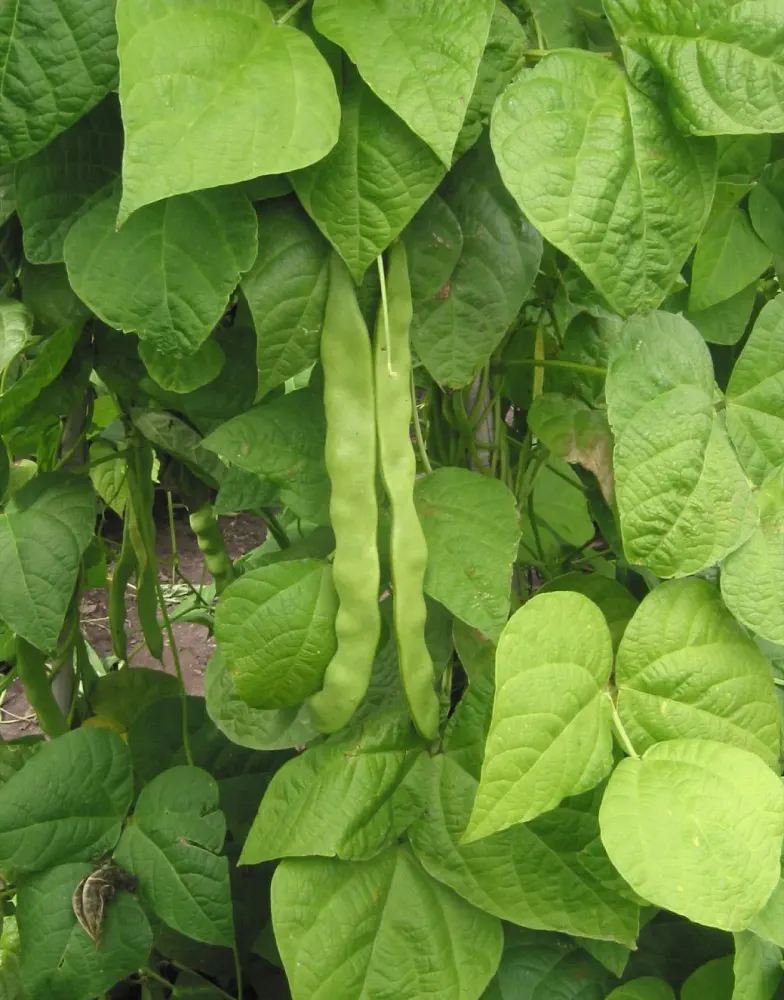
Phaseolus vulgaris, the common bean, is a herbaceous annual plant. Its botanical classification, along with other Phaseolus species, is as a member of the legume family, Fabaceae. It forms a green-leaved vine which produces beans inside of pods.
- RawFruitInternalTraditional use
Green beans (young pod vegetable) are a versatile culinary ingredient: blanched, steamed, in stews or as salad. Per 100 g fresh green bean they deliver approx. 36 kcal, 2.7 g dietary fibre, vitamin K (43 µg), vitamin C, manganese and iron. As dry beans (mature seeds), protein content rises to approx. 10 g/100 g (cooked). WARNING: Raw, undercooked or mature beans are ALWAYS toxic (phasin/phytohaemagglutinin) — consume only when thoroughly cooked (min. 10 minutes boiling).
Preparation & dosage
- TeaFruitInternalCommission E
Dried, seed-free bean pods (Phaseoli fructus sine semine) are recognised as a herbal medicinal product under the German Kommission E and EMA-HMPC: approved traditional remedy for minor urinary complaints, flushing the urinary tract and increasing urine production (mildly diuretic). Kommission E (BGA, 1986) recommends it as supportive treatment for dysuria. Total daily dose 5–15 g dried pods as tea infusion, divided into several doses. Use for a maximum of 2 weeks without medical consultation. Not suitable for children under 18 or in cases of cardiac/renal oedema.
Preparation & dosage
Pour 150 ml boiling water over 2.5 g dried bean pods, steep 10 minutes, strain. Drink 2–6 cups daily; concurrently drink plenty of fluids (min. 2 litres/day) for urinary flushing.
- Dry amount
- 2.5–2.5 g
- Doses per day
- 4×
- Max duration
- 2 weeks
- RawSeedInternalTraditional use
Mature dry beans (seeds) are an important plant protein source: approx. 21–25 g protein per 100 g dry bean; biological value increases when combined with cereals (complementary amino acids). Contains iron (approx. 6 mg/100 g), folate (approx. 394 µg/100 g), magnesium and zinc. The phaseolin protein accounts for approx. 40–50 % of seed nitrogen. Traditionally important as a filling staple food and meat substitute in legume-centred diets (Mediterranean cuisine, folk cooking). Always consume thoroughly cooked.
- TeaFruitInternalFolk medicine
In Central European folk medicine, bean pod teas were traditionally also used for gout and rheumatic complaints — folk tradition without clinical confirmation. The assumed effect is based on the mild diuretic action (flushing uric acid) and the flavonoid content of the pods. Kommission E finds no proven efficacy for these indications.
Preparation & dosage
- RawSeedInternalTraditional use
Beans are rich in dietary fibre (approx. 6–9 g/100 g dry bean, cooked), acting prebiotically and promoting gut microbiome health. Contained oligosaccharides (raffinose, stachyose) can cause flatulence in sensitive individuals — thorough cooking and combining with savory (Satureja) traditionally reduce this effect. Antioxidant polyphenols (quercetin, kaempferol, anthocyanins in dark varieties) contribute to protection against oxidative stress.
- SpiceWhole plantInternalFolk medicine
Savory (Satureja hortensis) is the classic culinary companion for cooking beans — not only as a spice but also because the essential oils of savory are traditionally held to reduce the typical bean flatulence (oligosaccharides). This use is passed down in folk medicine and is not clinically proven, but is deeply rooted in Central European kitchen practice. Here the bean is the food combined with the herb.
- RawSeedInternalTraditional use
Beans supply notable amounts of B vitamins, especially folate: approx. 394 µg/100 g (dry bean, raw) — one of the highest values among vegetables. Folate is essential for cell division, DNA synthesis and neural tube development in pregnancy. Vitamins B2, B6 and vitamin E are also present. The vitamin K content of young green beans (approx. 43 µg/100 g) supports blood coagulation and bone health.
🤝 Permaculture Partners
In your garden, this plant acts as:
✨ Best symbiotic partners
- 🌿 Apium graveolens Classic companions: bean fertilises, celery uses the nitrogen.
- 🌿 Celeriac Classic companion-planting partner.
- 🌿 Chard Classic companion-planting partner.
- 🌿 Cucumber Classic companion-planting partner.
- 🌿 Cucurbita pepo Bush bean fertilises with nitrogen, squash shades bean bed.
- 🌿 Summer savory Savory strengthens beans and deters black bean aphid.
- 🌿 Eggplant Bush bean deters Colorado-beetle relatives from eggplant.
- 🌿 Potato Bush bean deters Colorado potato beetle (classic rule).
- 🌿 Maize Bush bean fixes nitrogen for hungry maize.
⚠️ Better not planted together
📦 Part of these planting sets:
Source: Helga und Margarete Langerhorst, Mein gesunder Naturgarten (eigene Kuration) | Klassische Mischkultur-Tradition (Three Sisters, Bauernregel)