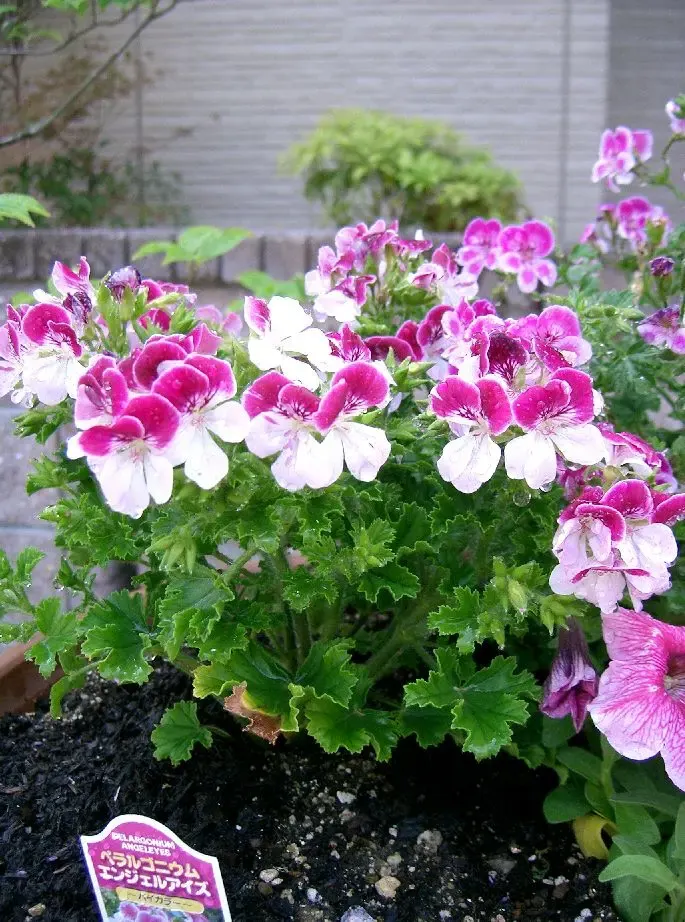
© KENPEI · CC BY-SA 3.0 · Commons
Pelargonium graveolens
Caution🐾Duftpelargonie · (Pelargonium graveolens)
Cranesbill family (Geraniaceae)
Description
Pelargonium graveolens is a Pelargonium species native to the Cape Provinces and the Northern Provinces of South Africa, Zimbabwe and Mozambique. Common names include rose geranium, sweet scented geranium, old-fashioned rose geranium, and rose-scent geranium.
- TeaLeafInternalTraditional use
Traditional infusion of fresh or dried rose geranium leaves for nervous restlessness, mild stress and nervously triggered digestive complaints. In Morocco, rose geranium is also classically added to green tea with spearmint as a flavouring herb. Gently calming, with a fine rose-citronellol aroma.
Preparation & dosage
Pour 200 ml boiling water over 1-2 g (about 2-3 fresh or 1 tsp dried) chopped rose geranium leaves, cover and infuse 8 minutes, then strain. Drink 1-2 cups daily, preferably in the afternoon or evening. Fresh leaves give a finer rose aroma than dried herb.
- Dry amount
- 1–2 g
- Doses per day
- 2×
- Max duration
- 4 weeks
[#src_wiki_pelargonium_en] [#src_herbalreality_rose_geranium] [#src_pfaf_pelargonium]
- Essential oilLeafExternalTraditional use
Aromatherapy use of rose geranium essential oil (geranium Bourbon oil) for relaxation, stress, irritability and nervous tension. The high citronellol-geraniol profile is considered psychologically balancing; Bourbon quality is regarded in aromatherapy as a 'women's oil' for premenstrual unrest.
Preparation & dosage
Diffuser: 3-5 drops of rose geranium essential oil in 100 ml water, vaporise for 20-30 minutes. Massage oil: 5-10 drops in 50 ml carrier oil (almond, jojoba) — corresponds to 0.5-1 %. NEVER apply undiluted. Patch test 24 h before first use.
- Doses per day
- 2×
- Max duration
- 4 weeks
⚠ Age restriction: ≥ 6 years — In children under 6 years, avoid intensive diffuser use in the bedroom due to the citronellol/geraniol content. Avoid entirely in infants and toddlers.
[#src_kacaniova_pgraveolens_eo] [#src_wiki_pelargonium_en] [#src_herbalreality_rose_geranium]
- CompressLeafExternalFolk medicine
Folk-medicinal use in South Africa: infusion or decoction of the leaves as a compress for small wounds, skin irritations, abscesses and haemorrhoids. Astringent and antimicrobial action — wound dressing belongs to the traditional healing practice of Zulu, Sotho, Xhosa and Mfengu healers.
Preparation & dosage
Steep 10-20 g fresh chopped leaves in 250 ml hot water for 15 minutes, strain and cool. Soak a clean cloth, wring lightly and apply to the affected area for 10-15 minutes. 1-2 times daily.
- Dry amount
- 10–20 g
- Doses per day
- 2×
[#src_herbalreality_rose_geranium] [#src_pfaf_pelargonium] [#src_wiki_pelargonium_de]
- Essential oilLeafExternalTraditional use
Skin care: rose geranium oil is regarded in aromatherapy as balancing for both dry and oily skin and is popular in homemade facial oils. Studies of the PG Bourbon profile show antimicrobial and antioxidant activity against various skin microbes (S. aureus, S. enterica).
Preparation & dosage
Facial oil: 1-3 drops of rose geranium essential oil in 30 ml jojoba or almond oil (about 0.2-0.5 %). Apply thinly in the evening after cleansing. Halve concentration on sensitive skin. Not for acute skin rashes.
- Doses per day
- 1×
- Max duration
- 8 weeks
[#src_kacaniova_pgraveolens_eo] [#src_herbalreality_rose_geranium]
- Essential oilLeafExternalFolk medicine
Insect repellent: fresh leaves of rose geranium and diluted essential oil repel mosquitoes and small biting insects — the citronellol-geraniol fraction shares this repellent activity with classical citronella oil. The 'Citrosa' cultivars are sold commercially as 'mosquito geranium'.
Preparation & dosage
Crush fresh leaves and dab on exposed skin (not on irritated skin). Alternative roll-on: 10-20 drops geranium essential oil + 5 drops lavender oil in 50 ml fractionated coconut oil. Patch test before first use. Do not apply to children under 2 years.
- Doses per day
- 3×
- Max duration
- 4 weeks
⚠ Age restriction: ≥ 2 years — No skin contact with essential oils in children under 2 years.
[#src_wiki_pelargonium_en] [#src_herbalreality_rose_geranium]
- SpiceLeafInternalFolk medicine
Culinary herb: the rose-scented leaves flavour jellies, jams (especially quince and apple jelly — EU Directive 2001/113/EC permits pelargonium leaves as a flavouring), syrups, confectionery, sorbets and aromatised sugar. In Cyprus they are added to apricot preserves.
Preparation & dosage
[#src_wiki_pelargonium_en] [#src_wiki_pelargonium_de] [#src_pfaf_pelargonium]
- BathLeafExternalFolk medicine
Folk-medicinal relaxation bath for nervous tension, exhaustion and irritated skin. The essential oils act via skin and inhaled air; warm water releases muscle tension. A classical 'women's bath' in the South African folk tradition.
Preparation & dosage
Pour 1.5 L hot water over 50-100 g dried or a large handful of fresh rose geranium leaves, infuse for 20 minutes, strain and add to a full bath (35-38 °C, 15-20 minutes). Avoid concentrated use on sensitive skin.
- Dry amount
- 50–100 g
- Doses per day
- 1×
Distribution in Europe
🪴 Grow at home
- ☀ Light
- full sun
- 💧 Water
- every few days
- 🌱 Soil
- Geranium compost with drainage
- 🪴 Pot
- 20 cm
- ⭐ Difficulty
- ★☆☆ beginner
- 🐾 Pets
- pet-safe
Tips:
- Scent when touched — mosquitoes avoid the smell.
- Winter: bright and cool (5-12 °C).
- Fresh leaves for tea or essential oil.
Care tips are general indoor-gardening recommendations, not scientific sources.