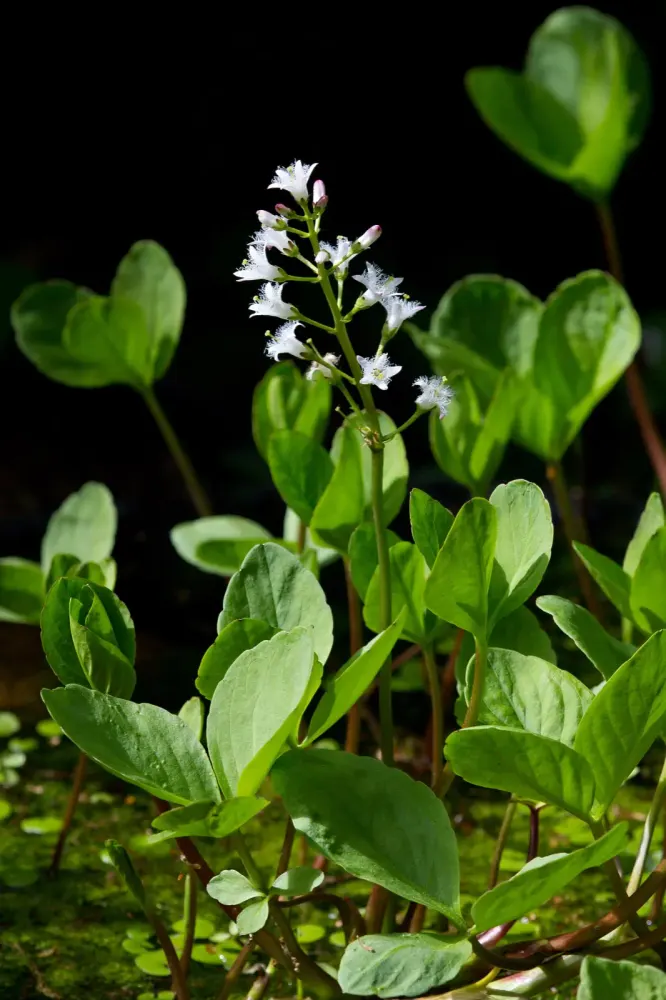
© Christian Fischer · CC BY-SA 3.0 · Commons
Menyanthes
CautionFieberklee · (Menyanthes trifoliata)
Bogbean family (Menyanthaceae)
Description
Menyanthes is a monotypic genus of flowering plants in the family Menyanthaceae containing the single species Menyanthes trifoliata. The North American form is often referred to as M. trifoliata var.
CONTRAINDICATED during pregnancy
Use during pregnancy not recommended - insufficient safety data, reflex stimulation of digestive organs undesirable.
CONTRAINDICATED during breastfeeding
Use during breastfeeding not recommended - insufficient data, bitter principles may pass into breast milk.
CONTRAINDICATED for children
Use in children and adolescents under 18 years not recommended due to lack of data (EMA HMPC).
- TeaLeafInternalEMA well-established
Loss of appetite and dyspeptic complaints (bloating, flatulence, weak digestion) - bitter tonic taken before meals
Preparation & dosage
- TinctureLeafInternalEMA well-established
Loss of appetite, dyspeptic complaints - classical bitter tincture (stomach bitters) stimulating gastric and bile secretion
Preparation & dosage
- SpiceLeafInternalTraditional use
Bitter component of stomach bitters and herbal digestive liqueurs to support digestion (digestif)
Preparation & dosage
- TeaLeafInternalFolk medicine
Traditional folk use for fever (hence the name 'fever clover'), rheumatic complaints and as a spring blood-cleansing tea - no longer supported by EMA
Preparation & dosage
- BathAerial partsExternalFolk medicine
Folk medicine: baths with buckbean infusion for rheumatic complaints and skin eruptions (scrofulous skin conditions) - no modern evidence
Preparation & dosage