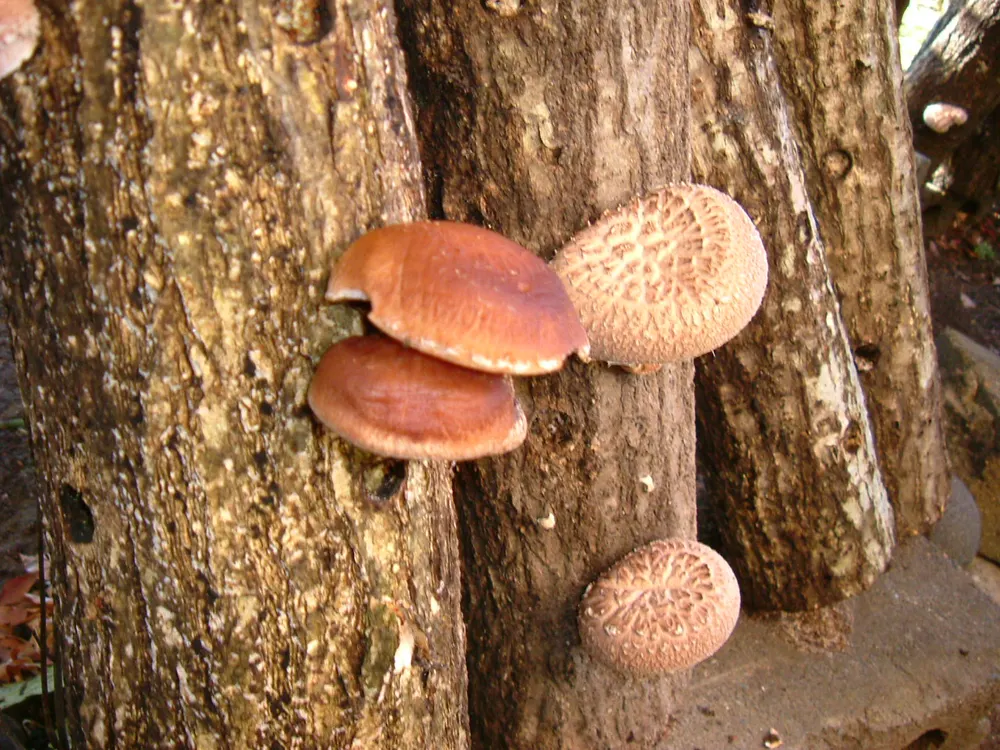
© Sakurai Midori (Wikimedia user Midori) · CC BY-SA 3.0 · Commons
Shiitake
CautionShiitake · (Lentinula edodes)
Omphalotaceae (Omphalotaceae)
Description
The shiitake (Lentinula edodes) is a saprotrophic edible and medicinal mushroom of the family Omphalotaceae that grows on hardwoods such as oak and konara. Its fruiting body has a light- to dark-brown convex cap with gills running down the stem and a white to buff spore print. It has been cultivated in East Asia for centuries, with an early written record of cultivation dating to 1209 in China. Today shiitake is among the most widely cultivated edible mushrooms worldwide and supplies a substantial share of global mushroom production. In traditional Chinese and Japanese medicine it has long been valued as a strengthening tonic.
- RawWhole plantInternalTraditional use
Dried fruiting-body powder or extracts (also as capsules) are traditionally taken for general strengthening and immune support; the polysaccharide lentinan is regarded as immunomodulating.
- TeaWhole plantInternalFolk medicine
A decoction of the dried fruiting bodies is used in East Asian folk medicine for stomach complaints and general invigoration.
- RawWhole plantInternalTraditional use
Shiitake contains eritadenine, an amino acid credited with cholesterol-lowering effects; the mushroom is traditionally eaten to support cardiovascular health.
- TinctureWhole plantInternalTraditional use
Lentinan derived from shiitake is approved in China and Japan as an adjunct to chemotherapy; randomized clinical evidence is mixed (positive earlier trials and meta-analyses, but a large phase III trial missed its primary endpoint). Not for self-treatment of cancer.