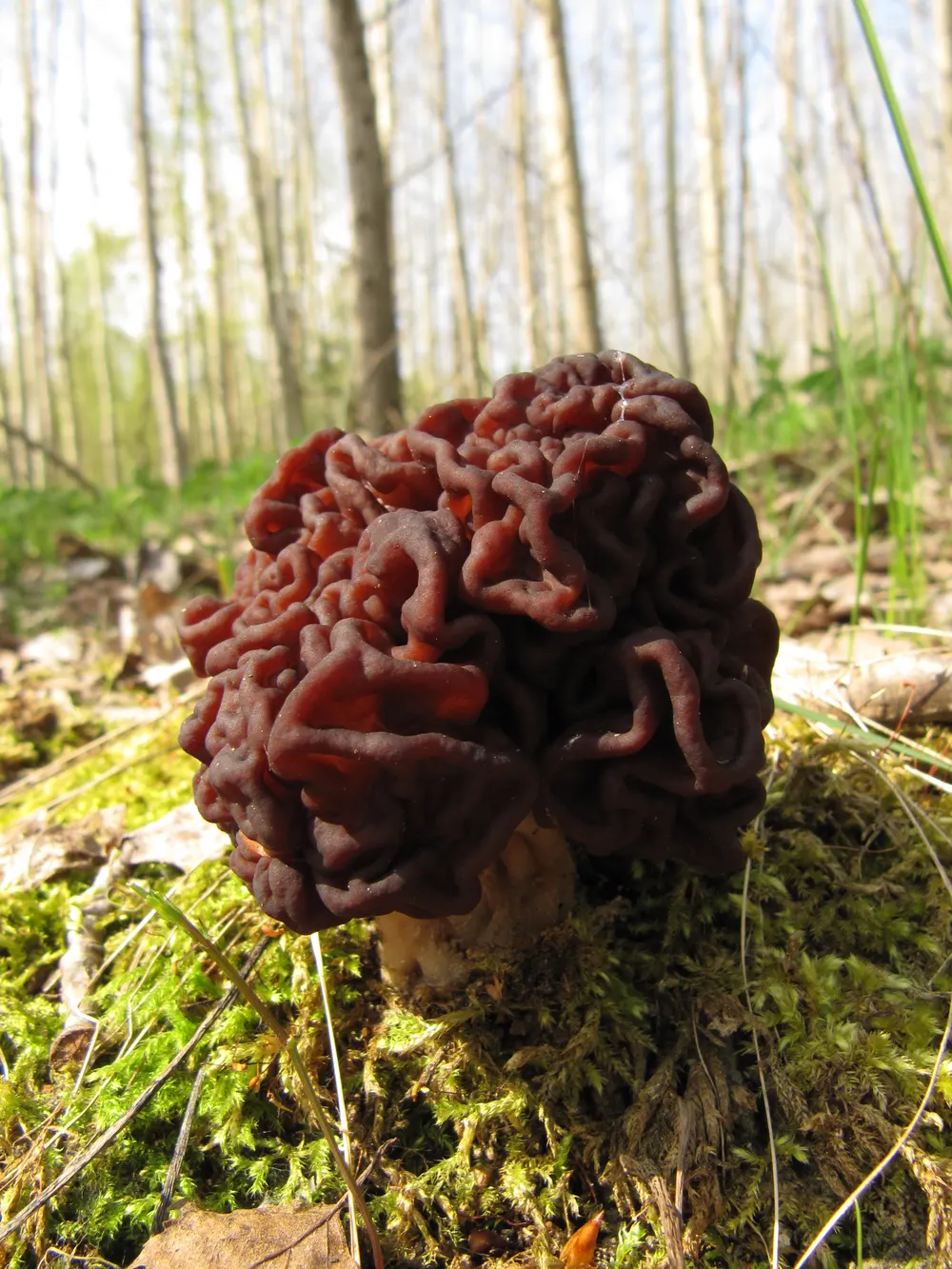
© Toffel (Wikimedia Commons) · CC BY-SA 3.0 · Commons
False morel
Toxic🐾Frühjahrslorchel · (Gyromitra esculenta)
False morels family (Discinaceae)
Description
The false morel forms an irregular, brain-like convoluted cap that is reddish-brown to dark brown, sitting on a short, pale stipe, and can reach up to 10 cm high and 15 cm wide. It appears early in the year, often soon after snowmelt. Because of its shape it is easily confused with the edible true morels (Morchella), but it is highly poisonous when raw. It contains the toxin gyromitrin, which the body converts into monomethylhydrazine. Despite the species name 'esculenta' (edible), it is today considered dangerous and consumption is strongly discouraged.
🌿 Risk of confusion — read before wild-harvesting!
DEADLY raw: gyromitrin is converted in the body into monomethylhydrazine (also used as rocket fuel). It causes vomiting, diarrhoea, liver damage, seizures, coma and death; fatalities can occur days after consumption. High risk of confusion with edible true morels (Morchella).
Historical documentation only — do NOT use
These internal applications are historically documented. This plant is highly toxic — self-treatment can cause severe poisoning or death. For documentation only, explicitly NOT a recommendation.
- RawWhole plantInternalFolk medicine
Historically the false morel was eaten as a food mushroom in parts of Northern and Eastern Europe after repeated parboiling and discarding of the cooking water. This process does not remove all toxins; the mushrooms are considered deadly dangerous, and consumption is strongly discouraged today.