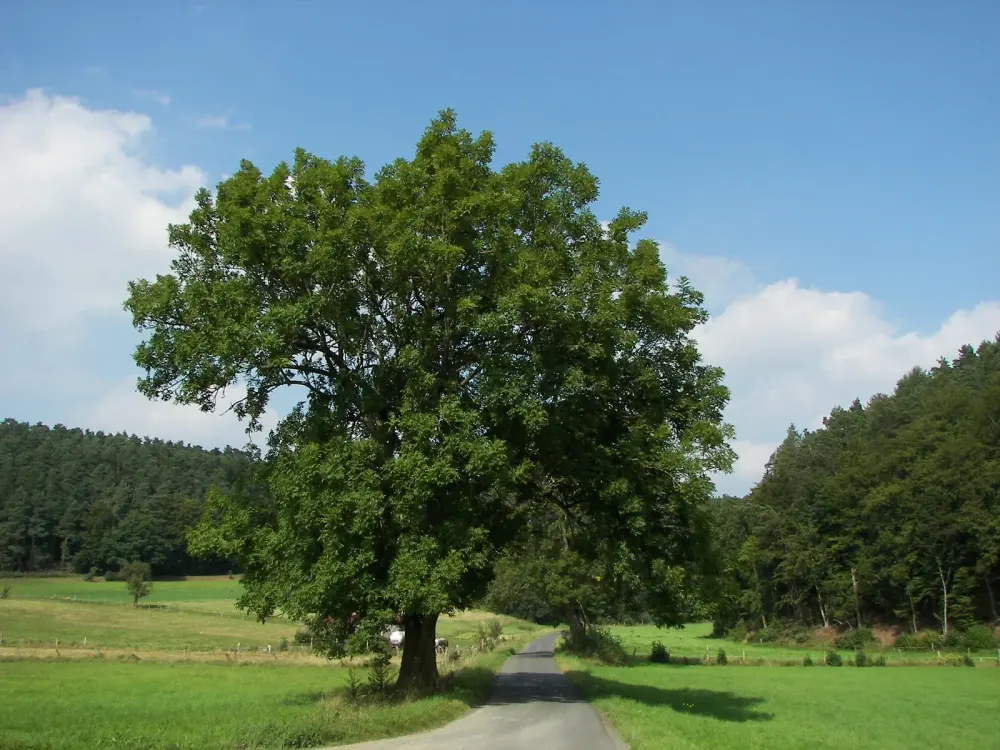
© Willow · CC BY 2.5 · Commons
Fraxinus excelsior
CautionGemeine Esche · (Fraxinus excelsior)
Olive family (Oleaceae)
Description
Fraxinus excelsior, known as the ash, or European ash or common ash to distinguish it from other types of ash, is a flowering plant species in the olive family Oleaceae. It is native throughout mainland Europe east to the Caucasus and Alborz mountains, and west to Great Britain and Ireland, the latter determining its western boundary. The northernmost location is in the Trondheimsfjord region of Norway.
- TeaLeafInternalTraditional use
Ash leaf tea has traditionally been used in European folk medicine for mild joint complaints and rheumatic conditions. The anti-inflammatory activity is attributed to the interplay of secoiridoids (oleuropein, ligstroside), flavonoids (rutin), and hydroxycinnamic acids. The EMA/HMPC monograph (EMA/HMPC/239271/2011) classifies this indication as traditional use.
Preparation & dosage
Pour 150 ml of boiling water over 1.5–5 g of dried, chopped ash leaves, steep for 10 minutes, then strain. Drink up to 3 cups daily.
- Dry amount
- 1.5–5 g
- Doses per day
- 3×
[#src_ema_fraxinus] [#src_pmc_fraxinus_antiinfl] [#src_arzneipflanzenlexikon_fraxinus]
- TeaLeafInternalTraditional use
Ash leaf tea is traditionally used as an aquaretic to support kidney function and for mild urinary tract complaints. Mannitol and potassium salts in the leaves promote diuresis. The EMA/HMPC monograph lists this indication as a traditional herbal use.
Preparation & dosage
Steep 1.5–5 g of dried ash leaves in 150 ml boiling water for 10 minutes. Ensure adequate fluid intake (at least 2 litres per day).
- Dry amount
- 1.5–5 g
- Doses per day
- 3×
- TinctureBarkInternalFolk medicine
Alcoholic extract of young ash branch bark was used in folk medicine for joint rheumatism and fever. The bark contains higher levels of iridoid bitters and coumarins (fraxin, fraxetin, esculin) than the leaves.
Preparation & dosage
Ready-made preparation or 1:5 tincture (40–60 % ethanol): 50 drops up to 3 times daily, not longer than 4 weeks without medical consultation.
- Doses per day
- 3×
- TeaLeafInternalFolk medicine
In traditional folk medicine, ash leaves were used for their mild purgative effect in constipation and sluggish digestion. The mannitol content acts as an osmotic laxative. This use is not scientifically validated.
Preparation & dosage
Steep 2–4 g dried leaves in 200 ml hot water for 10 minutes. Drink in the evening.
- Dry amount
- 2–4 g
- Doses per day
- 2×
- TeaBarkInternalFolk medicine
Ash bark was historically used in Europe as a substitute for Peruvian bark (quinine) in intermittent fever (malaria-like conditions). The bitter iridoid glycosides have a tonic effect. This use is now obsolete and only of historical relevance.
Preparation & dosage
Simmer 2–5 g chopped ash bark in 250 ml water for 15 minutes, strain. Historical use only — always consult a doctor for fever.
- Dry amount
- 2–5 g
- Doses per day
- 2×
- CompressLeafExternalFolk medicine
Fresh or steamed ash leaves were applied as moist compresses in folk medicine to poorly healing wounds, ulcers, and skin complaints. The tannin content acts as an astringent and mild antiseptic.
- BathLeafExternalFolk medicine
Full baths with concentrated ash leaf infusions were traditionally used for gout and rheumatic joint pain. The warmth and possible transdermal absorption of phenolic acids support local circulation.
Preparation & dosage
Boil 100 g dried ash leaves in 2 litres of water for 10 minutes, strain, and add to a bathtub (37–38 °C). Bathe for 15–20 minutes.