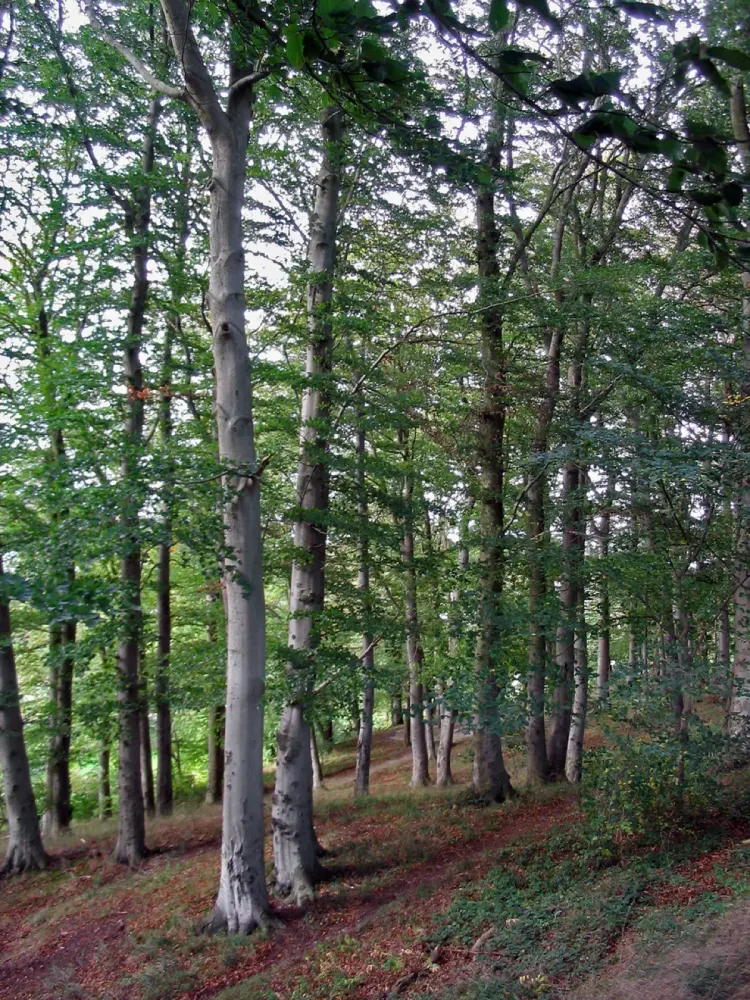
© Darkone (Fotograf) · CC BY-SA 1.0 · Commons
Fagus sylvatica
CautionRotbuche · (Fagus sylvatica)
Beech family (Fagaceae)
Description
Fagus sylvatica, the European beech or common beech, is a large deciduous tree in the beech family with smooth silvery-grey bark, large leaf area, and a short trunk with low branches. It is native to much of Europe, growing in humid climates.
- TeaBarkInternalFolk medicine
Beech bark decoction was used in European folk medicine for fever, colds, and mild respiratory complaints. The bark contains tannins, catechin, and epicatechin, which act as astringents and have mild antipyretic and antiseptic properties.
Preparation & dosage
Simmer 2–5 g dried beech bark in 250 ml water for 15 minutes, strain. Drink twice daily. For short-term use only.
- Dry amount
- 2–5 g
- Doses per day
- 2×
- CompressLeafExternalFolk medicine
Young beech leaves were applied in folk medicine as moist compresses to inflamed skin, boils, and poorly healing wounds. The anti-inflammatory properties of fresh leaves are attributed to their flavonoid and phenolic acid content.
- InhalationBarkInternalFolk medicine
Beechwood tar (obtained by dry distillation of branches) was historically used internally as a stimulating expectorant and externally as an antiseptic liniment for skin diseases. The tar contains guaiacol and creosol as active principles. Of historical interest only due to possible toxicity and absence of modern safety data.
- RawSeedInternalFolk medicine
Beechnuts have been used as food since antiquity (40% oil, 23% protein, 22% starch). Eat raw only in small amounts — they contain fagine (trimethylamine) and oxalic acid, causing nausea and headaches in larger quantities. Heating (roasting) breaks down fagine; soaking and leaching reduces tannin content for flour production.
- RawLeafInternalFolk medicine
Young beech leaves in spring (April–May, before flowering) are edible and mildly sweet. They were used as a salad addition or wild vegetable. In folk medicine they were considered mildly anti-inflammatory and tonic.
- SalveBarkExternalFolk medicine
Beech bark extract was used in folk healing in antiseptic ointments or oil preparations for skin rashes and toothache. The antimicrobial activity of polyphenols (catechin, epicatechin, protocatechuic acid) against Staphylococcus aureus and Candida species has been confirmed in laboratory studies.