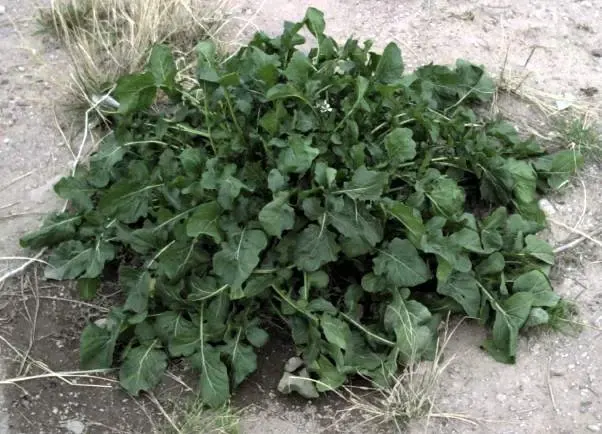
© Photo by Eric Bear Albrecht · Public domain · Commons
Eruca sativa
CautionRucola · (Eruca sativa)
Mustard family (Brassicaceae)
Description
Eruca sativa is an edible annual plant in the family Brassicaceae. Other common names include salad rocket, garden rocket, colewort, roquette, ruchetta, rucola, rucoli, and rugula.
- RawLeafInternalClinical trial
Rocket leaves are among the most nutrient-dense leafy vegetables in Europe: 100 g supplies approx. 108 µg vitamin K (about 90 % DV), 97 µg folate (24 % DV), 160 mg calcium, 47 mg magnesium, 369 mg potassium and 15 mg vitamin C. Folate is essential for cell division and neural tube development; vitamin K for blood coagulation and bone mineralisation. Consumed raw in salads, on pizza or as a pesto base, the sensitive nutrient matrix is best preserved — prolonged heating degrades vitamin K and folate.
[#src_usda_arugula] [#src_wp_en_eruca] [#src_nutrition_you_arugula]
- RawLeafInternalTraditional use
In Mediterranean folk medicine, rocket leaves are considered digestive (carminative) and stomach-toning. The characteristic bitter aroma of isothiocyanates and the mildly astringent tannin component stimulate gastric juice and bile secretion. Traditionally, rocket is served before the main course as a raw salad with lemon and olive oil — corresponding to the classic aperitif function of bitter herbs. Cooking or wilting mellows the aroma and reduces the digestive-stimulating isothiocyanates.
- RawSeedInternalTraditional use
Rocket seeds (Taramira oil in Arab and Indian tradition) are cold-pressed to yield a peppery edible oil used traditionally as a hair tonic and for skin care. Taramira oil contains erucic acid (C22:1) as main fatty acid together with glucosinolates. In the folk medicine of North Africa and South Asia, the seed oil is regarded as a warming, toning remedy.
- RawLeafInternalFolk medicine
Rocket has held a reputation as an aphrodisiac since antiquity — Roman poets (Pseudo-Virgil, 'Moretum') and Egyptian traditions describe the plant as libido-enhancing. Scientifically this is linked to the high content of glucoerucin and erucin, which show H₂S-donor activity and demonstrated vasodilatory and toning effects in animal models. Folk tradition without clinical efficacy evidence in humans.
- RawLeafInternalFolk medicine
In the traditional medicine of the Mediterranean and Middle East, rocket was used as a diuretic and depurative agent. Aqueous extracts from leaves and seeds were regarded as nephroprotective and supportive for urinary tract infections. Preclinical data confirm a diuretic effect of ethanolic seed extracts in animal models; no clinical studies in humans.
[#src_pmc_eruca_reproductive] [#src_pmc_cardiovascular_eruca]
- RawLeafInternalTraditional use
The high nitrate content of rocket (approx. 467 mg/100 g fresh weight, EFSA reference 2008) is converted in the body to nitrite and further to nitric oxide (NO). NO is a key vasodilator contributing to blood pressure regulation — an effect also documented for spinach and beetroot. At normal consumption (salad portions up to 50 g daily) the absorbed nitrate remains within the acceptable daily intake (ADI 3.7 mg/kg body weight). At very high daily intake combined with concurrent consumption of nitrosamine-forming foods (cheese, processed meats), caution is warranted.
[#src_focus_nitrate_rucola] [#src_efsa_nitrate_news] [#src_wp_de_rucola]
- SpiceLeafInternalTraditional use
Rocket is used as a herb in Mediterranean cuisine in many forms: as pesto (raw-blended with Parmesan, pine nuts and olive oil), scattered over hot pizza after baking, stirred into pasta or added to risotto. Brief heat exposure (added subsequently to hot dishes) largely preserves aroma and vitamin K. As a herb in small amounts (10–20 g), the nitrate contribution per meal is low.
Distribution in Europe
🪴 Grow at home
- ☀ Light
- partial shade
- 💧 Water
- every few days
- 🌱 Soil
- Standard seed compost
- 🪴 Pot
- 15 cm
- ⭐ Difficulty
- ★☆☆ beginner
- 🐾 Pets
- pet-safe
Tips:
- Bolts quickly in heat/drought — water evenly.
- Partial shade is better than full sun — stays tender longer.
- Sow new pots every 2-3 weeks for continuous harvest.
Care tips are general indoor-gardening recommendations, not scientific sources.
🤝 Permaculture Partners
In your garden, this plant acts as:
✨ Best symbiotic partners
- 🌿 Garlic Classic companion-planting partner.
- 🌿 Lettuce Classic companion-planting partner.
- 🌿 Basil Classic companion-planting partner.
- 🌿 Tropaeolum majus Classic companion-planting partner.
📦 Part of these planting sets:
Source: Helga und Margarete Langerhorst, Mein gesunder Naturgarten (eigene Kuration)