© Aseedtolife · CC BY 4.0 · Commons
Green cardamom
CautionGrüner Kardamom · (Elettaria cardamomum)
Ginger family (Zingiberaceae)
Description
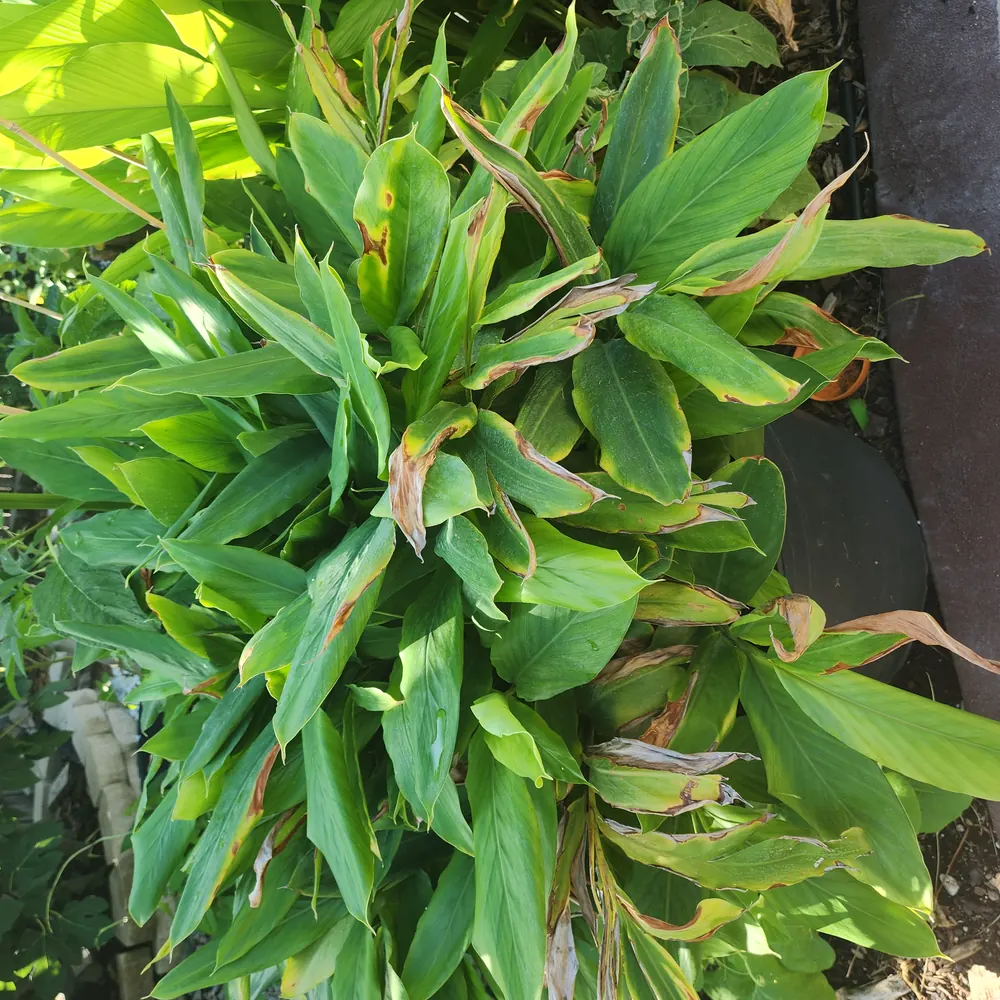
Green cardamom is a perennial herb of the ginger family, native to the humid mountain forests of the Western Ghats in southern India. Several pseudostems, taller than a person, rise from a creeping rhizome, while the flowering spikes lie close to the ground. These produce the three-chambered pods that hold the actual spice. Harvesting is done by hand shortly before full ripeness, because split pods lose their aroma quickly; the pods are then dried gently. Today most cardamom is grown in India and Guatemala. The characteristic scent comes from the essential oil of the seeds, dominated by α-terpinyl acetate and 1,8-cineole. Cardamom is a fixture of Indian cooking and of Arabic coffee, and equally of the traditional medicine of South Asia, where the seeds are chewed after a meal. Recent research has focused mainly on blood pressure and inflammatory markers, so far in small studies. As a culinary spice, cardamom is considered harmless for most people.
The seeds are traditionally used as a spice and as a digestive aid for gastrointestinal discomfort. In South Asia it is customary to chew a few seeds after a meal; they are said to ease a feeling of fullness and to freshen the breath.
For an infusion the pods are lightly crushed and steeped — on their own or together with black tea, ginger and cinnamon, as in Indian masala chai. The infusion is a matter of enjoyment; a benefit beyond traditional use is not established.
Preparation & dosage
Crush two or three pods, pour over 250 ml of boiling water and steep covered for five to ten minutes. Keep it covered so the essential oil does not escape with the steam.
- Doses per day
- 3×
Sources: [1]
In randomized trials, ground green cardamom was tested at 3 g per day over eight to sixteen weeks. A pooled analysis of eight such trials with 769 participants found small but statistically significant reductions in inflammatory markers (hs-CRP, interleukin-6, TNF-α) and in blood pressure — on average −0.5 mmHg systolic and −0.9 mmHg diastolic. The authors themselves note that all trials came from Iran, that they differ considerably, and that the number of studies is small. The blood-pressure figures are statistically meaningful but very small in everyday terms. Cardamom does not replace treatment.
Preparation & dosage
The trials used 3 g of cardamom powder daily, split into two doses, over eight to sixteen weeks. That is the amount studied, not a recommendation.
- Dry amount
- 3–3 g
- Doses per day
- 2×
As a culinary spice, cardamom is considered safe for most people. Allergic reactions are possible. People with gallstones should avoid large amounts, as cardamom can stimulate bile secretion and trigger colic. The 3 g of powder per day used in trials is far above what seasoning adds up to — such amounts do not belong in everyday use without medical advice. Seek medical advice for medicinal use or during pregnancy.
Customary as a kitchen spice. There are no studies in pregnant women for the higher amounts used in trials — so use such amounts only on medical advice.
The lactation database LactMed lists no data on levels in breast milk or on effects in breastfed infants. Cardamom was one component of a herbal mixture that improved breastfeeding duration in a randomized trial; that allows no conclusion about cardamom on its own.
Harmless as a spice in food. Larger amounts as a supplement have not been studied in children.
Drug interactions
Blutdrucksenker (Antihypertensiva)
In trials cardamom lowered blood pressure slightly. With ongoing antihypertensive treatment and larger amounts an additive effect is conceivable — keep an eye on blood pressure.
Gerinnungshemmer und Thrombozytenhemmer
A fibrinolysis-enhancing effect has been described for cardamom. Robust studies on the combination with anticoagulants are lacking; clarify larger amounts with a doctor.
Contraindications
- Gallstones — larger amounts can trigger colic through increased bile production.
- Known allergy to plants of the ginger family (cardamom, ginger, turmeric, galangal).
Harvested part: Seeds/pods
- Time of day:
- In its home range the spikes are picked repeatedly over several weeks, as soon as the lowest pods of a spike ripen.
- Drying:
- Dry the pods whole and unhusked, gently at about 45–50 °C or in the shade. Take the seeds out of the pod only shortly before use — exposed seeds lose their essential oil within a few weeks.
- Storage:
- 12 months — Store whole pods airtight, dark and cool. Ground cardamom loses its aroma within a few weeks.
- α-TerpinylacetatEssential oilSeed
Main component of the essential oil; carries the fruity, sweet note.
- 1,8-Cineol (Eucalyptol)Essential oilSeed
Second main component; responsible for the cool, eucalyptus-like impression.
- LimonenEssential oilSeed
- SabinenEssential oilSeed
- α-Pinen und β-PinenEssential oilSeed
- Linalool und α-TerpineolEssential oilSeed
- α-PhellandrenEssential oilSeed
- Flavonoide (Quercetin)Flavonoid
- [1]MonographBotany, traditional uses, phytochemistry and biological activities of cardamom — a critical review (J. Ethnopharmacology)(accessed: 2026-06-23)
- [2]MonographEffect of cardamom consumption on inflammation and blood pressure in adults: meta-analysis of RCTs (PMC10804083)(accessed: 2026-08-20)
- [3]MonographCardamom — Drugs and Lactation Database (LactMed), NCBI Bookshelf NBK615240(accessed: 2026-08-20)
- [4]WikipediaElettaria cardamomum — Wikipedia(accessed: 2026-06-23)
- [5]CommonsFile:Cardamom Plant Elettaria cardamomum.jpg — Wikimedia Commons(accessed: 2026-06-23)