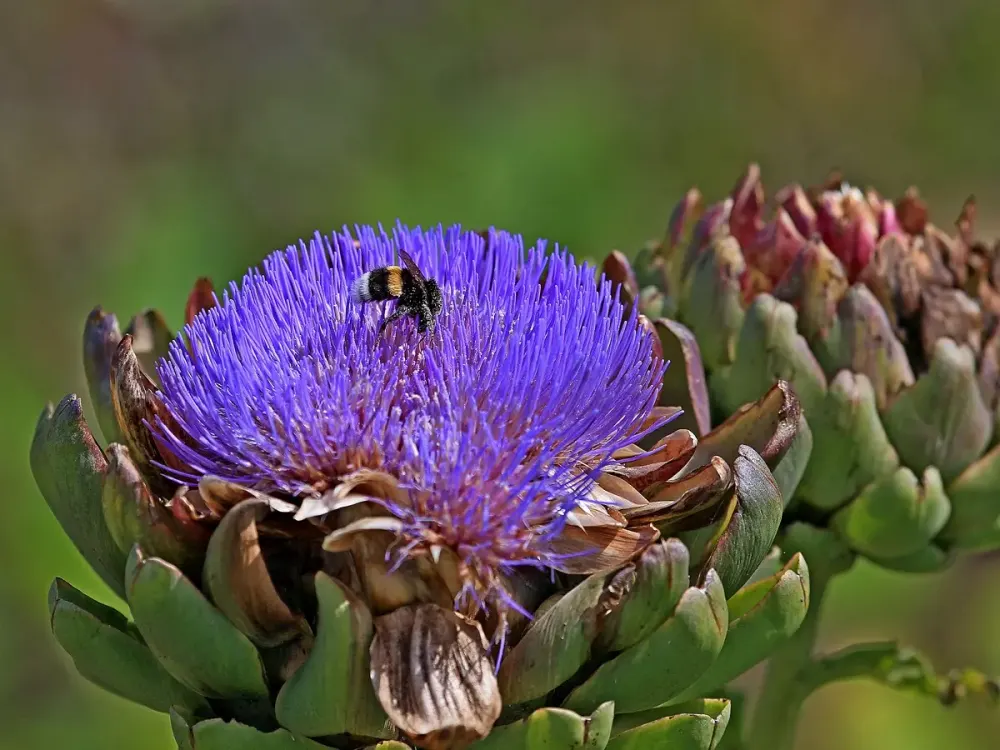
© Frank Liebig · CC BY-SA 3.0 de · Commons
Artichoke
CautionArtischocke · (Cynara scolymus)
Daisy family (Asteraceae)
Description
The artichoke is a variety of a species of thistle cultivated as food.
CONTRAINDICATED during pregnancy
Artichoke leaf preparations not recommended in pregnancy due to lack of safety data (EMA). Choleretic effect theoretically unfavourable.
CONTRAINDICATED during breastfeeding
Not recommended in lactation due to lack of data.
CONTRAINDICATED for children
Per EMA monograph only for adults and adolescents from 12 years. Not for children under 12.
- TinctureLeafInternalTraditional use
Traditional use for dyspeptic complaints: fullness, flatulence, nausea and slow digestion — especially after fatty or rich meals. Cynaropicrin stimulates bile flow and gastric juice production; caffeoylquinic acids act choleretically and hepatoprotectively.
Preparation & dosage
FINISHED PREPARATION — TINCTURE or DRY EXTRACT (recommended form; standardised content ensures efficacy): Use standardised artichoke finished medicinal products per package leaflet. Tincture (1:5, ethanol 25 %): typically 1–3 ml in water 3× daily 15–30 min before meals. Dry extract (DEV 25–35:1): typically 320–640 mg per dose, 2–3× daily. The bitter taste stimulates saliva and bile flow already via oral mucosa — take just before eating.
- Doses per day
- 3×
- Max duration
- 2 weeks
⚠ Age restriction: ≥ 12 years — Per EMA monograph for adults and adolescents from 12 years.
- TeaLeafInternalTraditional use
Bitter tea to stimulate digestion and bile flow for fullness and flatulence. Less widely used in practice than tinctures and capsules due to intense bitter taste.
Preparation & dosage
HOT INFUSION (very bitter — tincture/dry extract preferred in practice): 1.5–2 g finely cut artichoke leaves, pour 150–200 ml boiling water, cover, steep 10 min, strain. 2–3× daily 30 min before meals. Do not sweeten — the bitterness IS the mechanism of action (activation of bitter receptors).
- Dry amount
- 1.5–2 g
- Doses per day
- 3×
- Max duration
- 2 weeks
⚠ Age restriction: ≥ 12 years — From 12 years.
- TinctureLeafInternalTraditional use
Traditional folk medicinal use of artichoke leaves as a hepatoprotective. Caffeoylquinic acids (chlorogenic acid, cynarin) protect hepatocyte membranes from oxidative damage. Modern research confirms hepatoprotective action in animal models; clinical data in humans are limited.
Preparation & dosage
DRY EXTRACT as hepatoprotective: Use standardised finished preparations per package leaflet. Typically 320–640 mg dry extract 2–3× daily for 4–8 weeks for liver-support indication. Medical supervision recommended for liver disease.
- Doses per day
- 3×
- Max duration
- 8 weeks
⚠ Age restriction: ≥ 18 years — For hepatoprotective indication adults only.
- TinctureLeafInternalClinical trial
Use investigated in individual controlled trials for supportive lowering of mildly elevated cholesterol. Luteolin inhibits HMG-CoA reductase (cholesterol biosynthesis) in vitro. Effect is mild and not a replacement for statins.
Preparation & dosage
STANDARDISED DRY EXTRACT for supportive cholesterol lowering: typical daily dose 600–1920 mg (320–640 mg per dose, 2–3× daily) for 6–12 weeks. NOTE: This indication is NOT EMA-recognised as traditional use — based on individual RCTs. Rule out gallstones first, monitor cholesterol values medically. Not a replacement for statin therapy.
- Dry amount
- 0.6–1.92 g
- Doses per day
- 3×
- Max duration
- 12 weeks
⚠ Age restriction: ≥ 18 years — Adults from 18 years only.
- RawFlowerInternalFolk medicine
Freshly harvested artichoke flower buds eaten raw: flower bottoms and bract bases as raw food in small amounts. Inulin in flower bottoms and stalks (10–30 % dry weight) acts prebiotically, supporting growth of beneficial gut bacteria. Used in folk medicine as a digestive and mild detoxifying aid.
- TeaLeafInternalFolk medicine
Traditionally drunk in Vietnam and Romania as a health tea ('Ceai de Anghinare') with bile-stimulating and digestive effects. Mild bitter taste and lower extract content make it suitable for everyday use.
Preparation & dosage
ARTICHOKE TEA FROM DRIED LEAVES — FOLK MEDICINE VIETNAM / ROMANIA: 1–2 g dried artichoke leaves with 200 ml hot water, steep 5 min, strain. 1–2 cups daily after meals. Milder and better tolerated than European bitter concentrates — commonly used as everyday health tea in Vietnamese cuisine.
- Dry amount
- 1–2 g
- Doses per day
- 2×
- Max duration
- 4 weeks