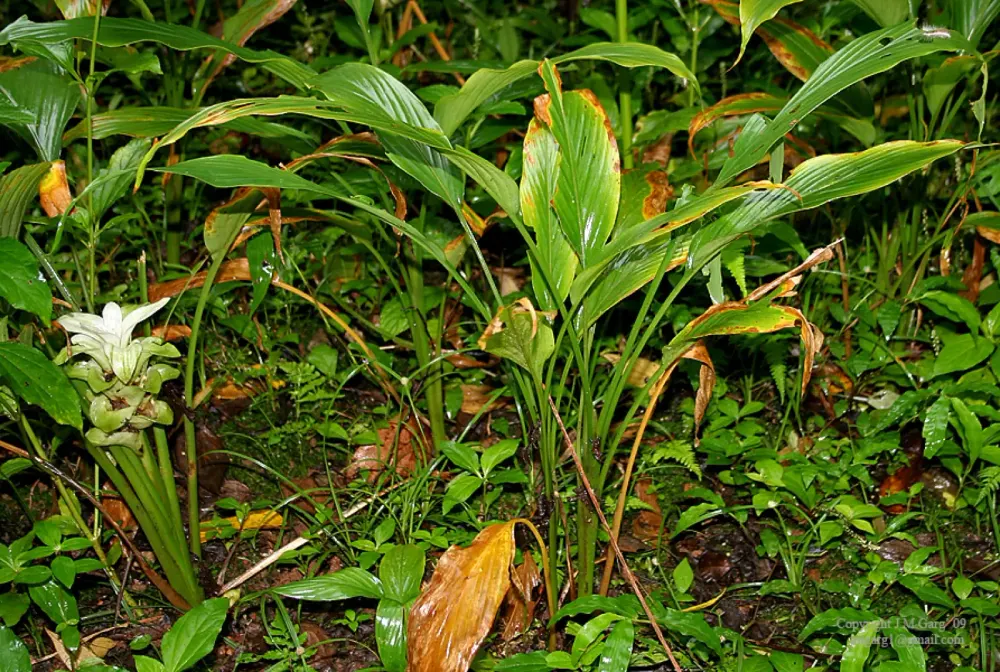
© J.M.Garg · CC BY 3.0 · Commons
Turmeric
CautionKurkuma · (Curcuma longa)
Ginger family (Zingiberaceae)
Description
Turmeric, or Curcuma longa, is a flowering plant in the ginger family Zingiberaceae. It is a perennial, rhizomatous, herbaceous plant native to the Indian subcontinent and Southeast Asia that requires temperatures between 20 and 30 °C and high annual rainfall to thrive. Plants are gathered each year for their rhizomes, some for propagation in the following season and some for consumption or dyeing.
- SpiceRhizomeInternalCommission E
Dried turmeric rhizome powder for dyspeptic complaints — positive Kommission E monograph for Curcumae longae rhizoma.
Preparation & dosage
POWDER / SPICE (Kommission E): 1.5–3 g dried turmeric powder (ground rhizome) per day in 2–3 portions with meals — stir into warm dishes, soups or milk. Daily dose per Kommission E: 1.5–3 g crude drug. Indication: dyspeptic complaints (bloating, flatulence, sluggish digestion, loss of appetite). Do not use in gallstones or bile duct obstruction without medical evaluation. Seek medical advice if complaints persist beyond 8 weeks.
- Dry amount
- 1.5–3 g
- Doses per day
- 3×
- Max duration
- 8 weeks
[#src_kommission_e_curcuma] [#src_escop_curcuma] [#src_ema_curcuma_trad]
- TinctureRhizomeInternalTraditional use
Traditional turmeric tincture for digestive support — EMA-recognised traditional use.
Preparation & dosage
TINCTURE (1:5 in 45–60 % ethanol): 1–2 ml (~20–40 drops) 3× daily before meals, diluted in water. Traditional use (EMA) for relief of mild dyspeptic complaints, bloating and flatulence. Effect after 1–2 weeks of regular use. Avoid in bile duct obstruction or gallstones without medical advice. Due to ethanol content, not for alcohol or liver disease.
- Liquid amount
- 1–2 ml
- Doses per day
- 3×
- Max duration
- 6 weeks
[#src_ema_curcuma_trad] [#src_escop_curcuma] [#src_who_curcuma]
- TeaRhizomeInternalTraditional use
Turmeric infusion from ground rhizome as digestive tea — bitter taste, choleretic and carminative action.
Preparation & dosage
INFUSION / DECOCTION: 1–1.5 g finely grated or ground turmeric rhizome in 200 ml boiling water (or simmer briefly 5 min), steep 8–10 min, strain. 2–3× daily fresh, preferably 20–30 min before meals. Add a pinch of black pepper (piperine) and/or a little fat (coconut oil, milk) — markedly improves curcumin bioavailability. Traditional use for digestive complaints and to stimulate bile flow. Not for bile duct obstruction or known symptomatic gallstones.
- Dry amount
- 1–1.5 g
- Doses per day
- 3×
- Max duration
- 6 weeks
[#src_escop_curcuma] [#src_ema_curcuma_trad] [#src_who_curcuma] [#src_pfaf_curcuma]
- SpiceRhizomeInternalTraditional use
Turmeric in the kitchen as an anti-inflammatory spice — 'golden milk' and curry dishes, Ayurvedic tradition for joint complaints.
Preparation & dosage
KITCHEN / SPICE: 2–4 g turmeric powder daily in food, smoothies or the so-called 'golden milk' drink (250 ml warm plant milk + 1 tsp turmeric + pinch of pepper + ginger + a little fat). Used in folk medicine and Ayurveda as anti-inflammatory adjunct for joint complaints. Clinical studies show moderate effect on CRP and IL-6 with regular intake, though bioavailability of curcumin in plain powder is low. Complements a balanced diet; does not replace medical therapy for inflammatory-rheumatic conditions.
- Dry amount
- 2–4 g
- Doses per day
- 1×
[#src_who_curcuma] [#src_pfaf_curcuma] [#src_wp_de_curcuma] [#src_clinical_curcuma_joints]
- SalveRhizomeExternalFolk medicine
Turmeric paste applied externally — folk remedy for skin inflammations, eczema and minor wounds in Ayurveda and Asian folk medicine.
Preparation & dosage
PASTE / SALVE (external): Mix fresh grated rhizome or turmeric powder with a little water or coconut oil into a paste, apply to affected skin area, leave 20–30 min, then rinse off. Folk use for superficial wounds, skin irritations, eczema and minor inflammations. Caution: turmeric stains skin and clothing intensely yellow — wear gloves, protect clothing. For open wounds or larger skin defects prefer medical evaluation. Do not apply to eyes or mucous membranes.
- TinctureRhizomeInternalFolk medicine
Folk bitter tonic tincture with turmeric as main component — liver and bile support in German herbal medicine.
Preparation & dosage
BITTER DIGESTIVE TINCTURE (folk): 0.5–1.5 ml turmeric tincture (1:5 in 45 % ethanol) combined with other bitter herbs (e.g. artichoke, dandelion, milk thistle) as a compound tincture, 3× daily before meals, diluted in water. Traditionally used as a liver and bile tonic — stimulates bile flow and promotes fat digestion. Folk use in German and Austrian herbal medicine. Not for gallstones without medical advice; gallstone colic can be triggered.
- Liquid amount
- 0.5–1.5 ml
- Doses per day
- 3×
- Max duration
- 4 weeks
[#src_wichtl_curcuma] [#src_escop_curcuma] [#src_kommission_e_curcuma]
- SpiceRhizomeInternalFolk medicine
Traditional cold remedy 'Haldi-Doodh' (turmeric latte) — Ayurvedic home remedy for colds, sore throat and febrile infections.
Preparation & dosage
AYURVEDIC USE (traditional): Turmeric powder in warm milk with honey (Haldi-Doodh / turmeric latte) for colds, sore throat and febrile infections. Used for millennia in Ayurveda and South Asian folk medicine as a fortifying general remedy and immunomodulatory home remedy. No clinical evidence of antiviral activity in humans; adjunctive and comforting use. Not a substitute for conventional therapy in severe infections.
[#src_who_curcuma] [#src_wp_de_curcuma] [#src_wp_en_curcuma]