© H. Zell (Wikimedia Commons) · CC BY-SA 3.0 · Commons
Cowbane
Toxic🐾Wasserschierling · (Cicuta virosa)
Carrot family (Apiaceae)
Description
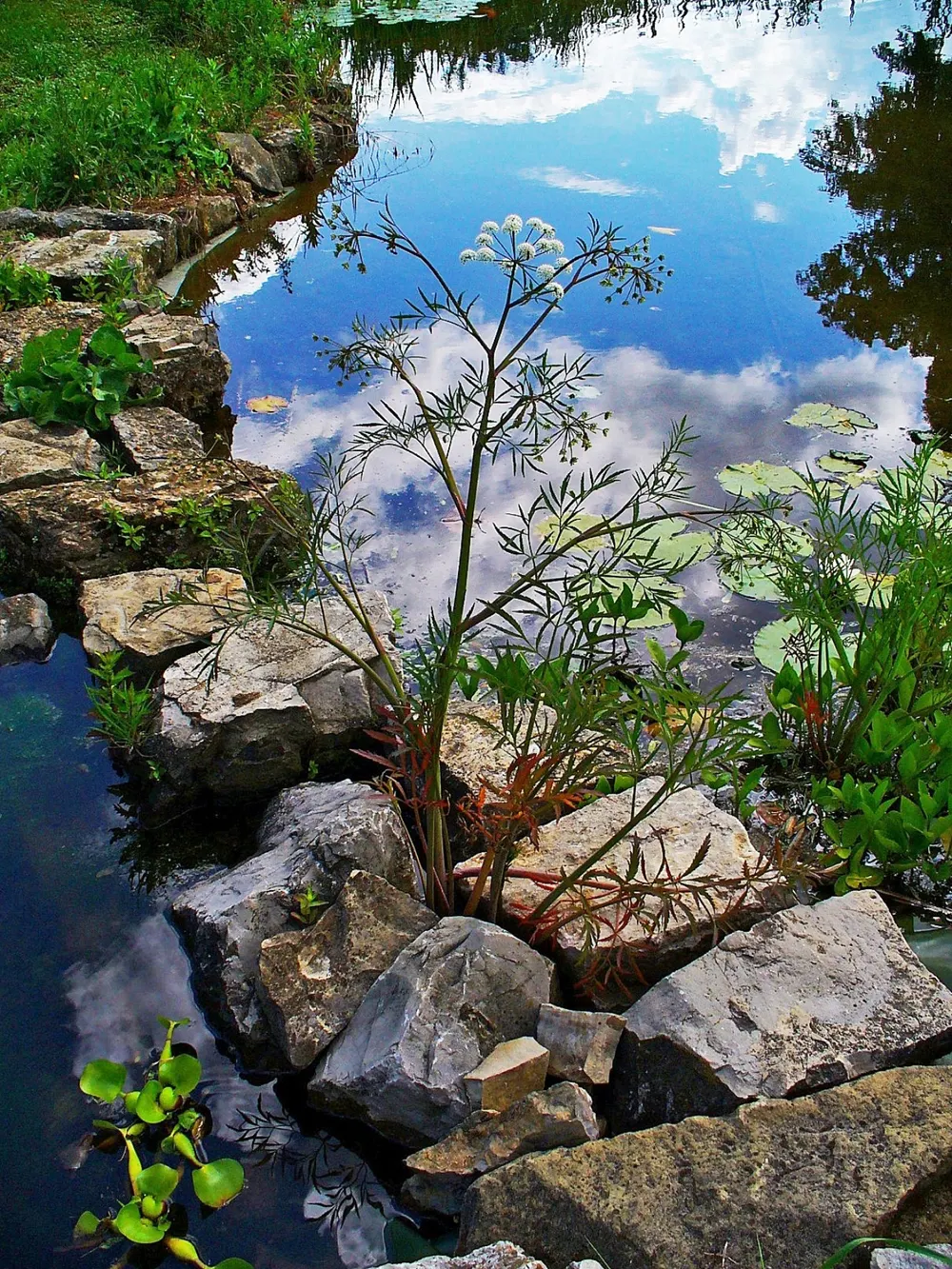
Cowbane is a perennial wetland plant 0.5 to 1.5 metres tall, with a hollow, often purple-streaked stem and a thick, chambered root tuber. Its two- to three-pinnate leaves and white umbrella-shaped flower clusters resemble many harmless members of the carrot family, which makes the plant especially dangerous. Cutting the tuber releases a yellowish, oily-smelling sap. It grows along ditches, pond margins and marshes across northern and central Europe. It is regarded as one of the most poisonous plants in Europe.
🌿 Risk of confusion — read before wild-harvesting!
DEADLY: Contains cicutoxin; even small amounts cause violent convulsions and epileptic seizures within minutes, followed by respiratory paralysis. High risk of confusion with edible Apiaceae such as parsnip or celery — never touch or ingest.
- SalveRhizomeExternalFolk medicine
Historically, despite its extreme toxicity, cowbane was applied externally as a salve or compress against gout, rheumatism and cramps — a long-abandoned and life-threatening practice.