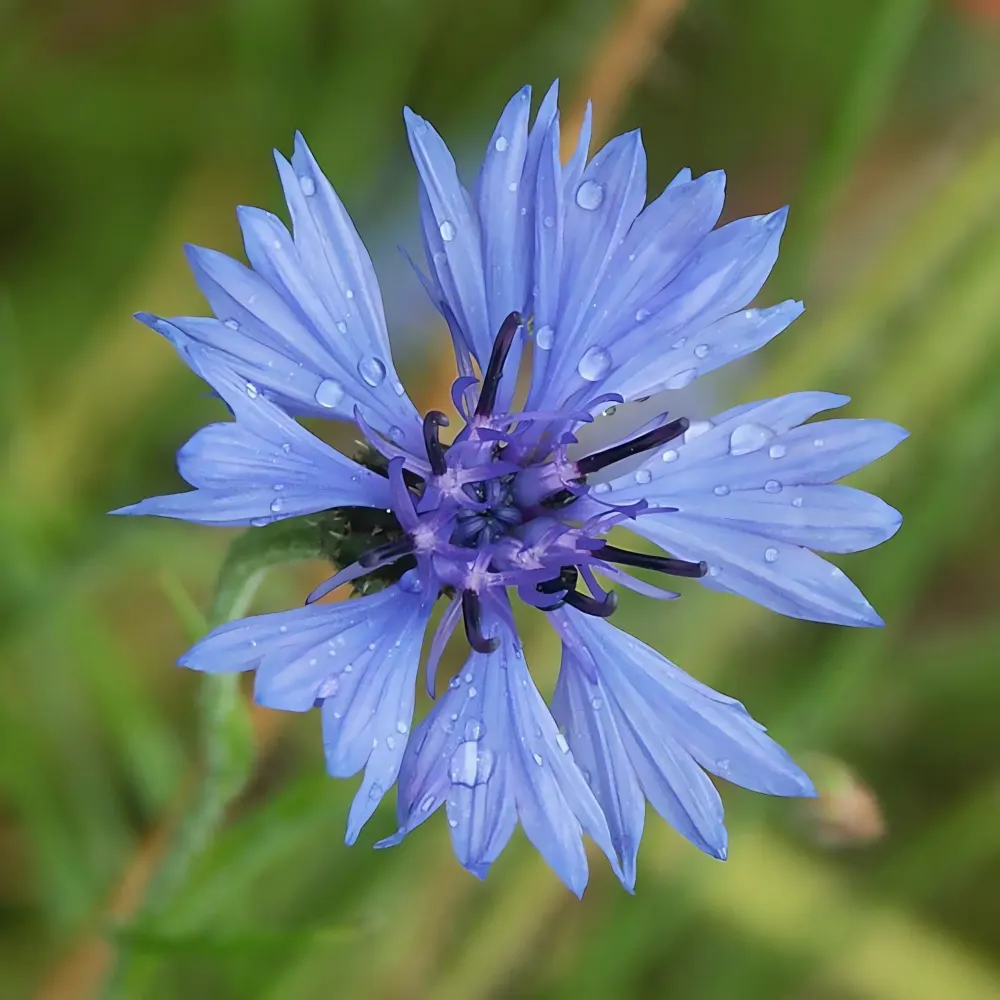
© böhringer friedrich · CC BY-SA 2.5 · Commons
Centaurea cyanus
CautionKornblume · (Centaurea cyanus)
Daisy family (Asteraceae)
Description
Centaurea cyanus, commonly known as cornflower or bachelor's button, is an annual flowering plant in the family Asteraceae native to Europe. In the past, it often grew as a weed in cornfields, hence its name.
- TeaFlowerInternalFolk medicine
Infusion of dried flowers was traditionally used as a bitter to stimulate appetite and liver and bile function. The German Commission E assessed this indication negatively in 1989 due to lack of scientific evidence.
Preparation & dosage
- Dry amount
- 1–2 g
- Doses per day
- 2×
- CompressFlowerExternalFolk medicine
Traditionally, cool flower infusions were used as eye baths or compresses for minor eye inflammation and conjunctival redness. Strict hygiene is mandatory; contaminated infusions are contraindicated.
Preparation & dosage
- GargleFlowerExternalFolk medicine
Concentrated flower infusion for rinsing in mouth ulcers and mild gum bleeding. The tannin content has an astringent effect on the mucosa.
Preparation & dosage
- TeaFlowerInternalFolk medicine
Historically used as a mild diuretic and diaphoretic for fever and fluid retention. These folk medicine applications are not scientifically substantiated.
Preparation & dosage
- Dry amount
- 1–2 g
- Doses per day
- 2×
- RawFlowerInternalFolk medicine
Petals can be used raw in salads or as a decorative element in food. Dried flowers serve as a decorative component in tea blends (e.g. Lady Grey) and as a natural food colorant.
- TeaFlowerInternalFolk medicine
In folk medicine, cornflower tea was used as an emmenagogue for irregular or absent menstruation. Not scientifically substantiated.
Preparation & dosage
- Dry amount
- 1–2 g
- Doses per day
- 2×