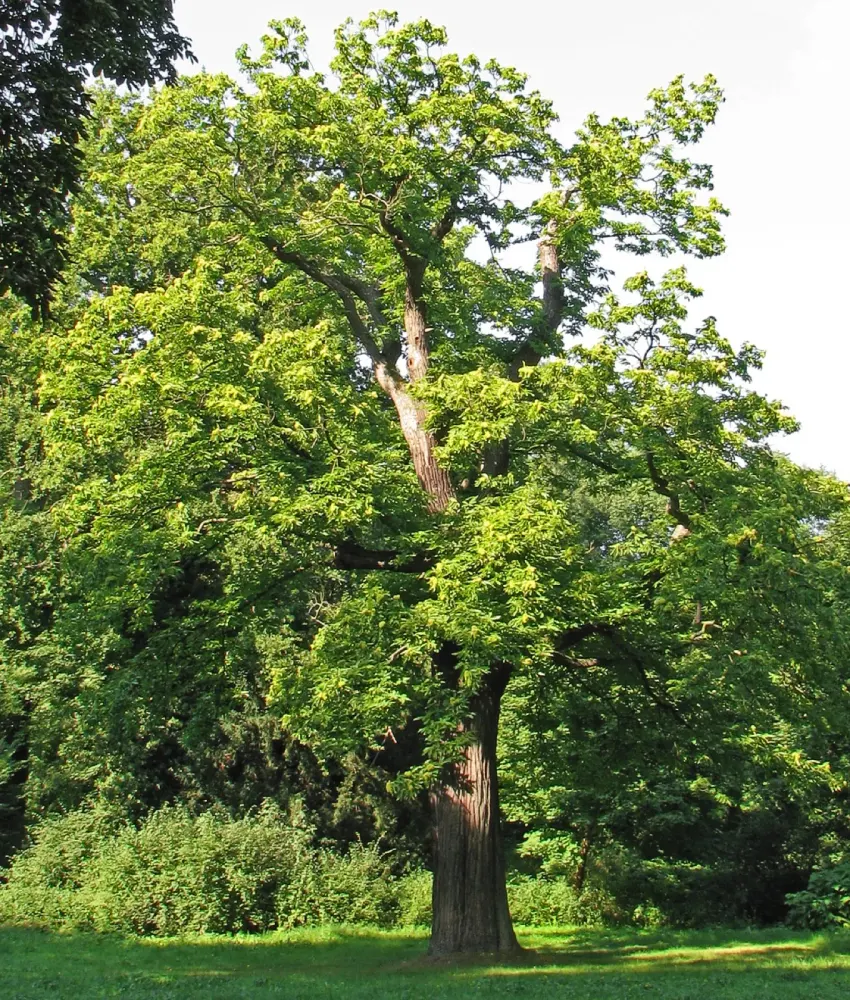
© Darkone (talk · contribs) · CC BY-SA 2.5 · Commons
Sweet chestnut
CautionEdelkastanie · (Castanea sativa)
Beech family (Fagaceae)
Description
The sweet chestnut, also known as the Spanish chestnut or European chestnut, is a species of tree in the family Fagaceae, native to Southern Europe and Anatolia, and widely cultivated in Western and Central Europe. A substantial, long-lived deciduous tree, it produces an edible seed, the chestnut, which has been used in cooking since ancient times.
- TeaLeafInternalFolk medicine
Leaf tea for whooping cough and coughs: dried sweet chestnut leaves contain tannins and flavonoids with astringent, antitussive, and expectorant properties. Widely used in folk medicine for whooping cough, bronchitis, and sore throats.
Preparation & dosage
Add 10–25 g dried leaves to 500 ml boiling water, steep for 10 minutes, strain. Drink one cup 3 times daily.
- Dry amount
- 10–25 g
- Doses per day
- 3×
[#src_pfaf_castanea] [#src_wiki_de_kastanie] [#src_mfgt_castanea]
- GargleLeafExternalFolk medicine
Gargle for sore throat and inflammation: the tannin-rich leaf decoction has an astringent effect on the pharyngeal mucosa and soothes inflammation. Also used in folk medicine for fever and ague.
Preparation & dosage
- RawFruitInternalFolk medicine
Chestnuts as food: the fruits are rich in starch (up to 45 % DW), low in fat, and gluten-free. They provide dietary fiber, B vitamins, and minerals such as potassium and magnesium. Roasted or boiled chestnuts have been a staple food in Southern Europe since antiquity.
- SpiceFruitInternalFolk medicine
Chestnut flour as a cooking ingredient: dried and ground chestnuts produce a gluten-free flour used for bread, pasta, and pancakes. Particularly suitable for people with coeliac disease.
- TinctureBarkExternalTraditional use
Bark extract for circulatory and skin problems: the bark contains high levels of hydrolyzable tannins (ellagitannins: castalagin, vescalagin) with antiatherogenic, antithrombotic, and anti-inflammatory properties. Documented in vitro and in animal models.
- CompressLeafExternalFolk medicine
Leaf compress for wounds and skin problems: fresh or lightly steamed leaves are applied as a compress to wounds, skin rashes, or inflammatory skin conditions. The tannins act as astringents and promote wound healing.
- TeaLeafInternalFolk medicine
Leaf tea for diarrhoea: the astringent tannins in chestnut leaves (castalagin, vescalagin, ellagic acid) inhibit excessive intestinal motility and relieve mild diarrhoea. Common in folk medicine in Southern Europe.