Legal notice
Internationally controlled narcotic; listed under the 1961 UN Single Convention (Schedule I).
Legal status varies widely by country, ranging from strict prohibition through medical approval to partial legalisation. Inform yourself about the rules that apply to you.
For education and documentation only. Not a consumption guide, not legal or medical advice. Possession, cultivation and use are regulated differently by country and species — check the law that applies to you.
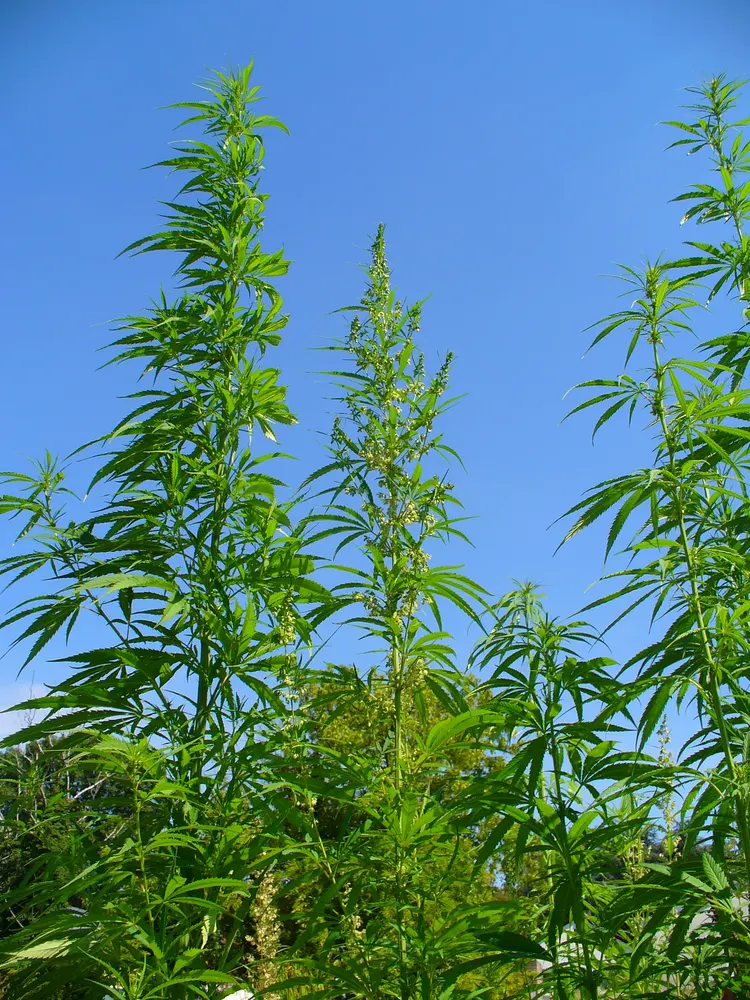
© H. Zell · CC BY-SA 3.0 · Commons
Cannabis / Hemp
Caution🐾Hanf / Cannabis · (Cannabis sativa L.)
Hemp family (Cannabaceae)
Description
Cannabis sativa is an annual, usually dioecious herbaceous plant of the hemp family (Cannabaceae), native to Eastern Asia and now cosmopolitan through cultivation. Depending on conditions it grows from 20 cm to over 5 m tall and bears palmately divided, serrated leaves with 1 to 13 leaflets. It has been cultivated throughout recorded history as a fibre crop for textiles, rope and paper, as an oilseed, and since antiquity as a medicinal and intoxicating plant. The Chinese pharmacopoeia Shennong Bencaojing already records hemp as a remedy, and traditional Indian medicine used it as a sedative, analgesic and anti-inflammatory agent. More than 500 compounds are now described, including at least 113 cannabinoids such as the psychoactive THC and the non-intoxicating CBD.
- TinctureFlowerInternalClinical trial
Cannabidiol (CBD) is approved as a medicine for severe childhood epilepsies (Dravet and Lennox-Gastaut syndromes); this represents the most robust evidence base for a medicinal cannabis constituent.
- TinctureFlowerInternalClinical trial
Cannabinoids are used against chemotherapy-induced nausea and vomiting and outperformed some conventional antiemetics in trials.
- TinctureFlowerInternalEMA well-established
Oral cannabis extract may relieve spasticity in multiple sclerosis; for chronic, especially neuropathic pain it shows a modest but inconsistent effect.
- RawFlowerInternalTraditional use
In traditional Indian medicine cannabis served as a sedative, hypnotic, analgesic and anti-inflammatory agent; in medieval Europe also for pain relief during childbirth. (Historical record, not a usage recommendation.)
- RawSeedInternalTraditional use
Hemp seeds are used as food and for oil, and the stem fibres have been used since antiquity for textiles, rope and paper. These uses are non-psychoactive.