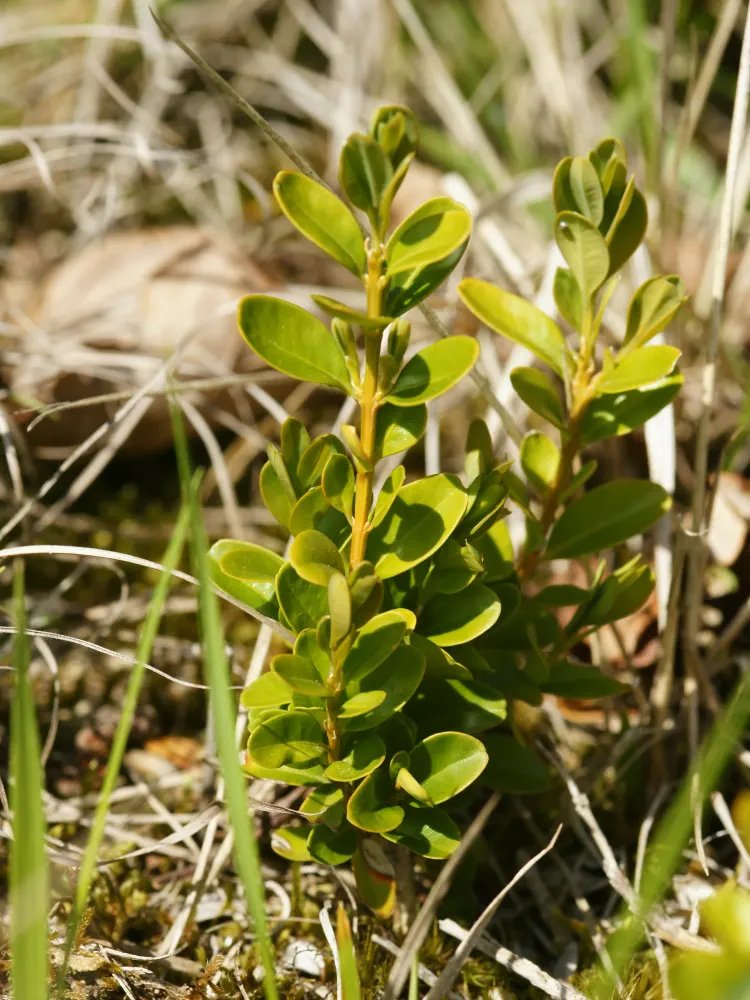
© Hans Hillewaert · CC BY-SA 3.0 · Commons
Buxus sempervirens
Toxic🐾Gewöhnlicher Buchsbaum · (Buxus sempervirens)
Box family (Buxaceae)
Description
Buxus sempervirens, the common box, European box, or boxwood, is a species of flowering plant in the genus Buxus, native to western and southern Europe, northwest Africa, and southwest Asia, from southern England south to northern Morocco, and east through the northern Mediterranean region to Turkey. Buxus colchica of western Caucasus and B. hyrcana of northern Iran and eastern Caucasus are commonly treated as synonyms of B.
External use only!
This plant must NOT be taken internally. Use only as compress, salve, or bath.
CONTRAINDICATED during pregnancy
Strictly contraindicated. Boxwood steroid alkaloids cross the placenta; abortifacient and teratogenic effects are documented from veterinary poisoning cases in pregnant animals. External use of extensive tinctures should also be avoided.
CONTRAINDICATED during breastfeeding
Contraindicated. Lipophilic steroid alkaloids pass into breast milk; infants are particularly at risk due to immature hepatic metabolism. No internal use during breastfeeding.
CONTRAINDICATED for children
Contraindicated. Children are particularly at risk due to low body weight and tendency to put attractive leaves and capsules in their mouth. A few leaves alone can cause severe symptoms in toddlers. Box plants in front gardens and playgrounds are problematic.
Critical drug interactions with:
Zentral dämpfende Substanzen (Benzodiazepine, Opioide, Alkohol) · Hepatotoxische Medikamente (Paracetamol-Hochdosis, Methotrexat, Isoniazid)
- RawWhole plantExternalFolk medicine
Classical garden and cemetery hedging plant; due to extremely dense growth and excellent response to clipping, Buxus has been the leading species of formal gardening since antiquity (topiary, knot gardens, parterres). Famous installations at Versailles, Villa d'Este and Sissinghurst use boxwood as architectural backbone. Since 2007 severely threatened in Central Europe by the invasive box tree moth (Cydalima perspectalis) and box blight (Cylindrocladium buxicola).
[#src_wp_de_buxus_sempervirens] [#src_wp_en_buxus_sempervirens] [#src_wp_cydalima_buxus_sempervirens]
- RawWhole plantExternalFolk medicine
Wood use — boxwood, with a raw density of 0.95-1.03 g/cm³, ranks among the densest European woods and sinks in water. Traditional applications include wood-engraving blocks (Thomas Bewick, 18th century), woodwind instruments (recorders, clarinet mouthpieces, bagpipe chanters), weaving shuttles, chess pieces, tool handles, carving and turnery work. Today one of the most heavily traded European fine timbers.
[#src_wp_en_buxus_sempervirens] [#src_wp_de_buxus_sempervirens] [#src_pfaf_buxus_sempervirens]
- TinctureLeafExternalFolk medicine
HISTORICALLY OBSOLETE — In folk-medicine tradition, alcoholic boxwood extracts were rubbed externally against hair loss (alopecia) and marketed as a hair tonic. Efficacy is not established; percutaneous absorption of alkaloids cannot be excluded. Today without indication, documented only as ethnobotanical record.
Preparation & dosage
[#src_pfaf_buxus_sempervirens] [#src_henriette_buxus_sempervirens]
- RawLeafExternalFolk medicine
Ecclesiastical and folk-custom use — boxwood sprigs traditionally replace palm fronds on Palm Sunday in Central and Northern Europe ('Palmbuschen', 'palm besom'); in some regions used as grave decoration on All Saints' Day and as evergreen mourning ornament. Pure symbolism, no medicinal use.
[#src_wp_de_buxus_sempervirens] [#src_wp_en_buxus_sempervirens]
- RawLeafExternalFolk medicine
Historical dyeing use — yellowish to red-brown natural dyes for wool and hair were formerly obtained from box leaves and roots; Pliny and Dioscorides already mention dyeing blond hair with Buxus. Today replaced by synthetic dyes; documented purely ethnobotanically.
[#src_pfaf_buxus_sempervirens] [#src_wp_en_buxus_sempervirens]
Historical documentation only — do NOT use
These internal applications are historically documented. This plant is highly toxic — self-treatment can cause severe poisoning or death. For documentation only, explicitly NOT a recommendation.
- TeaLeafInternalFolk medicine
HISTORICALLY OBSOLETE — In early modern and folk medicine of Southern and Western Europe, decoctions of box leaves were used as 'plant quinine' against malaria (intermittent fever) and as a diaphoretic. This use is now OBSOLETE and DANGEROUS: the steroid alkaloids (buxine, cyclobuxine D) cause severe gastrointestinal cramping, vomiting, diarrhoea, central nervous excitation and respiratory paralysis. Documented as ethnobotanical note only, NOT a use recommendation.
[#src_wp_de_buxus_sempervirens] [#src_henriette_buxus_sempervirens] [#src_pfaf_buxus_sempervirens]