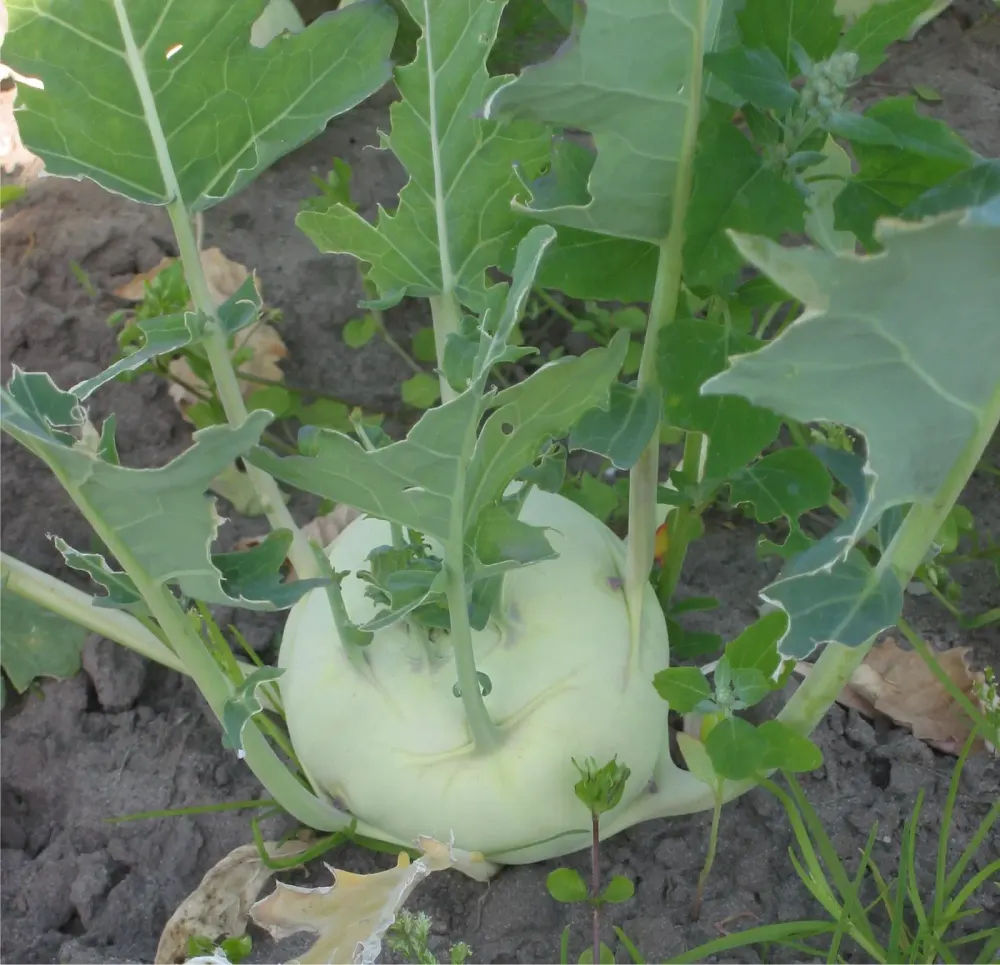
© Rasbak · CC BY-SA 3.0 · Commons
Kohlrabi
Kohlrabi · (Brassica oleracea var. gongylodes)
Cabbage family (Brassicaceae)
Description
Kohlrabi, also called German turnip or turnip cabbage, is a biennial vegetable, a low, stout cultivar of wild cabbage. It is a cultivar of the same species as cabbage, broccoli, cauliflower, kale, Brussels sprouts, collard greens, Savoy cabbage, and gai lan.
- RawFruitInternalClinical trial
Kohlrabi is exceptionally rich in vitamin C: the swollen stem contains approx. 62 mg/100 g (approx. 69–102 % of daily requirement). This exceeds many citrus fruits. Other important nutrients: potassium (approx. 350–380 mg/100 g), copper (approx. 0.13 mg/100 g, 14 % DV), vitamin B6 (approx. 0.15 mg/100 g) and dietary fibre (approx. 3.6 g/100 g). Eaten raw in slices as a snack, grated in salad or as crudités — raw preserves the highest vitamin C content, as vitamin C is heat-sensitive. The skin is woody-fibrous and peeled before raw consumption.
[#src_usda_kohlrabi] [#src_wp_en_kohlrabi] [#src_wp_de_kohlrabi]
- RawFruitInternalTraditional use
In German and Central European culinary tradition, kohlrabi is a typical spring and summer vegetable for children and convalescents — mild, easy to digest, low in fibre when young. Folk medicine recommends kohlrabi for digestive complaints and as a gentle diet for stomach problems. Young leaves (especially rich in vitamin C — approx. twice as much as the bulb) are prepared like leaf vegetables. In parts of France the bulbs are grated and preserved by fermentation like sauerkraut.
[#src_wp_de_kohlrabi] [#src_wp_en_kohlrabi] [#src_pfaf_brassica]
- RawFruitInternalTraditional use
In the Indian Ayurvedic tradition, kohlrabi (known as 'Ganth Gobi') is recommended for pitta disorders (states of overheating in the body) — as a cooling, refreshing food. In Kashmir, kohlrabi (Mŏnji) is served with leaves and stem as a main dish with light broth over rice. Furthermore, traditional European folk medicine used kohlrabi for cold symptoms and general fatigue — plausible given its high vitamin C content.
[#src_wp_en_kohlrabi] [#src_wikidata_kohlrabi] [#src_nutrition_and_you_kohlrabi]
- RawLeafInternalTraditional use
Kohlrabi leaves are nutritionally significant: they contain approx. twice as much vitamin C and approximately 100 times the carotin (provitamin A) compared with the bulb. Young leaves can be used raw in salads, as soup or sautéed like cabbage. In the folk medicine of South Asia and the eastern Mediterranean, kohlrabi leaves are used for colds and inflammation. Older leaves are blanched before consumption to reduce bitter compounds.
- RawFruitInternalTraditional use
In traditional Indian medicine and parts of the Middle East, kohlrabi juice is applied externally to the scalp for hair loss — a folk practice without clinical evidence. Internally: the high vitamin C content supports collagen synthesis (relevant for skin, wounds, connective tissue). Kohlrabi also contains glucosinolates that are hydrolysed to isothiocyanates and show chemoprotective activity in laboratory studies.
[#src_nutrition_and_you_kohlrabi] [#src_wp_en_kohlrabi] [#src_wikidata_kohlrabi]
- RawFruitInternalTraditional use
Kohlrabi contains glucosinolates (sulphur-containing secondary compounds), including glucoraphanin, glucoiberin, glucobrassicin and others. When cut or chewed, these are hydrolysed by the enzyme myrosinase to isothiocyanates (incl. sulforaphane, indole-3-carbinol). These compounds are associated in epidemiological studies and laboratory experiments with prevention of colorectal and prostate cancer. Goitrogenic effect (thyroid inhibition) possible at very high intake.
[#src_nutrition_and_you_kohlrabi] [#src_wp_en_kohlrabi] [#src_wikidata_kohlrabi]
- SpiceFruitInternalTraditional use
Kohlrabi is classically steamed or cooked as a side dish (with butter and herbs), processed into purée, used in stews and soups or for stuffings and gratins. In parts of Germany and Austria, kohlrabi cream soup is a classic home recipe. The mild, slightly sweet flavour results from malic acid, citric acid and natural sugars. Steaming and brief cooking preserve glucosinolates better than prolonged boiling.
🤝 Permaculture Partners
In your garden, this plant acts as:
✨ Best symbiotic partners
Source: Helga und Margarete Langerhorst, Mein gesunder Naturgarten (eigene Kuration)