© KENPEI · CC BY-SA 3.0 · Commons
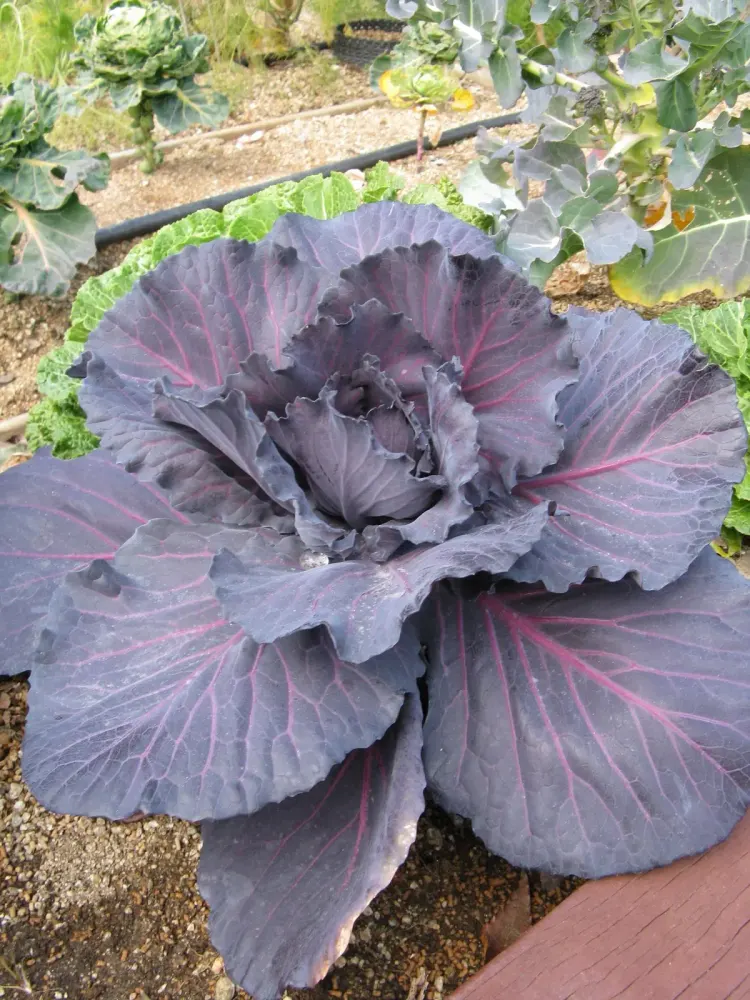
Red cabbage
CautionRotkohl · (Brassica oleracea convar. capitata var. rubra)
Cabbage family (Brassicaceae)
Description
The red cabbage is a kind of cabbage, also known as Blaukraut after preparation. Its leaves are coloured dark red/purple. However, the plant changes its colour according to the pH value of the soil due to a pigment belonging to anthocyanins.
- RawLeafInternalTraditional use
Raw red cabbage contains more anthocyanins (mainly cyanidin glycosides) and more vitamin C (approx. 57 mg/100 g fresh) than white cabbage. As a raw salad it is traditionally used in European folk cuisine to support the immune system and as a mineral source. Cooking significantly reduces vitamin C content — raw consumption is nutritionally preferable.
[#src_archana_antioxidant] [#src_singh_ascorbic] [#src_hanschen_glucosinolate]
- RawLeafInternalTraditional use
Traditionally fermented red cabbage sauerkraut (lactic acid fermentation) is used in Central European folk medicine for digestive complaints and as a probiotic food. Lactic acid fermentation increases the bioavailability of glucosinolates and produces live Lactobacillus cultures supporting gut microbiota.
- RawLeafInternalTraditional use
Anthocyanins of red cabbage (mainly cyanidin-3-diglucoside, cyanidin-3-sophoroside) are linked in folk medicine and modern nutritional research to improved capillary integrity and vascular health. Tanchev & Timberlake (1969) were the first to characterise the anthocyanin composition of Brassica oleracea and demonstrated its antioxidant capacity.
[#src_tanchev_anthocyanins] [#src_oroian_tpc_extraction] [#src_archana_antioxidant]
- RawLeafInternalFolk medicine
In European folk medicine, fresh red cabbage juice is drunk for joint complaints and arthritis symptoms. Glucosinolates (mainly glucobrassicin, sinigrin) are regarded as the key bioactive compounds. Clinical evidence for this specific indication is lacking; traditional use is culturally widespread.
- CompressLeafExternalFolk medicine
Steamed or gently warmed red cabbage leaves are applied in folk medicine as compresses for joint pain, gout, and skin irritations. Topical application of the antioxidant anthocyanins and mildly anti-inflammatory glucosinolates is believed to reduce swelling and relieve pain.
- SpiceLeafInternalTraditional use
As a cooked vegetable, red cabbage is a staple of German and Austrian winter cuisine. It provides dietary fibre (approx. 2.5 g/100 g), vitamin K₁ (approx. 76 µg/100 g), and folate. The traditional red cabbage salad with vinegar and sugar keeps anthocyanins more stable through the low pH than cooking does.
[#src_singh_ascorbic] [#src_wiki_rotkohl] [#src_tanchev_anthocyanins]
- RawLeafInternalFolk medicine
In naturopathy, raw red cabbage juice (approx. 100 ml daily) is recommended as a liver and gallbladder remedy. Sulforaphane (hydrolysed glucosinolate) activates hepatic phase-II detoxification enzymes (glutathione S-transferase). Clinical studies for this indication using red cabbage juice are lacking; preclinical data on cruciferous vegetables in general exist.
🤝 Permaculture Partners
In your garden, this plant acts as:
✨ Best symbiotic partners
- 🌿 Apium graveolens Classic companion-planting partner.
- 🌿 Rhubarb Rhubarb leaves shade the soil — red cabbage likes it too.
⚠️ Better not planted together
- 🥬 Tomato Classic companion-planting partner.
Source: Gertrud Franck, Gesunder Garten durch Mischkultur (1980, eigene Kuration) | Helga und Margarete Langerhorst, Mein gesunder Naturgarten (eigene Kuration)