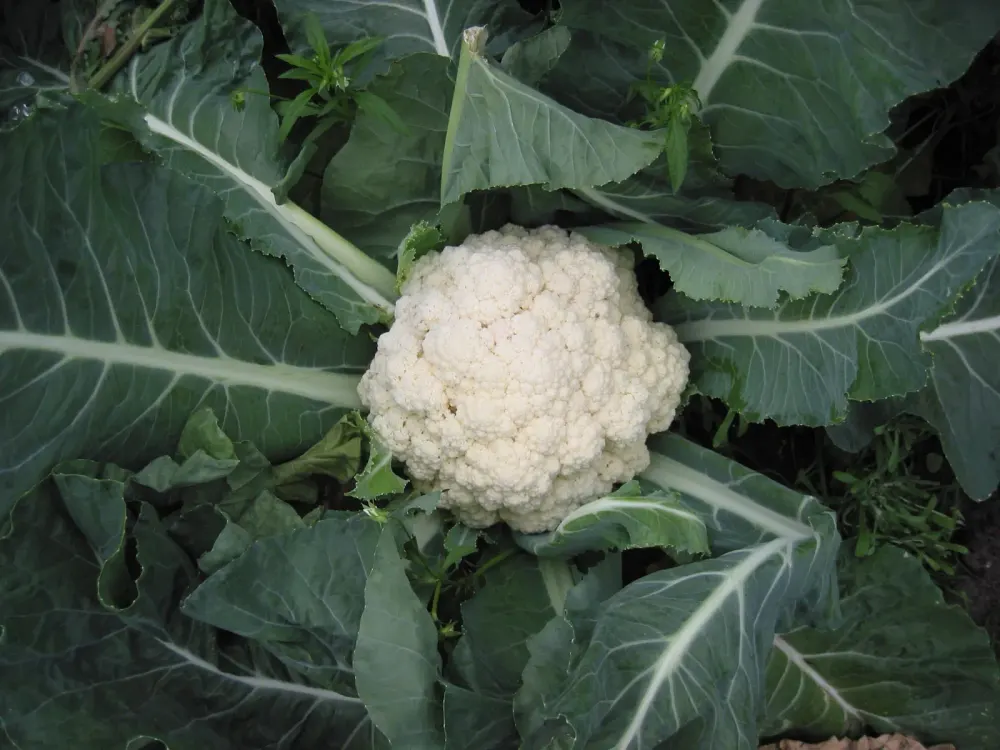
© Rasbak · CC BY-SA 3.0 · Commons
Cauliflower
Blumenkohl · (Brassica oleracea var. botrytis)
Cabbage family (Brassicaceae)
Description
Cauliflower is a vegetable belonging to the species Brassica oleracea in the family Brassicaceae. It is one of several cultivated forms of the species along with cabbage, broccoli, Brussels sprouts, kale, kohlrabi, and others. The edible portion of the plant is its dense head of undeveloped flower buds known as the "curd".
- RawFlowerInternalClinical trial
Raw cauliflower is an excellent source of vitamin C (approx. 48–64 mg/100 g — 50–70 % of the daily value). Vitamin C supports immune function, promotes collagen synthesis and enhances iron absorption from plant-based sources. Raw cauliflower retains more vitamin C than cooked, as ascorbic acid is sensitive to heat and water. As a raw food in salads, dips or crudités it is a nutrient-rich alternative to cooked vegetables.
Preparation & dosage
[#src_wp_en_cauliflower] [#src_wp_de_blumenkohl] [#src_usda_cauliflower]
- RawFlowerInternalClinical trial
Cauliflower provides approximately 15–20 µg of vitamin K1 per 100 g — roughly 13–20 % of the daily value. Vitamin K1 (phylloquinone) is essential for the blood coagulation cascade (activation of clotting factors II, VII, IX, X) and for calcium metabolism in bone (osteocalcin activation). Particularly relevant for individuals taking anticoagulant medications (vitamin K antagonists) — these patients must keep their vitamin K-rich vegetable intake consistent.
- RawFlowerInternalClinical trial
Cauliflower provides approx. 57–88 µg of folate (vitamin B9) per 100 g — approximately 14–22 % of the daily value; pregnant women require 400–800 µg/day. Folate is essential for DNA synthesis, cell division and red blood cell formation. Combined with approx. 46 mg choline/100 g, cauliflower supports cognitive development and liver function. When steamed gently or eaten raw, folate losses are minimal; prolonged boiling in excess water reduces folate content considerably.
[#src_usda_cauliflower] [#src_wp_en_cauliflower] [#src_wp_de_blumenkohl]
- RawFlowerInternalClinical trial
Cauliflower contains glucosinolates — a group of sulphur-containing secondary metabolites concentrated in crucifers (Brassicaceae). The main glucosinolate in cauliflower is glucoraphanin. Upon cutting, chewing or digestion, the enzyme myrosinase converts glucoraphanin into sulforaphane — an isothiocyanate with antioxidant and anti-inflammatory properties. Important: cooking inactivates myrosinase, so raw or steamed vegetables produce more sulforaphane than boiled ones. No food replaces medical treatment.
[#src_wp_en_cauliflower] [#src_healthline_sulforaphane] [#src_nutritionadvance_cauliflower]
- SpiceFlowerInternalTraditional use
In the traditional cuisine of Central and Eastern Europe, cauliflower is regarded as an easily digestible gentle vegetable and used after stomach problems and gastrointestinal illnesses as the first vegetable reintroduced. Steamed or pureed as soup it is mild, low in fibre and well tolerated. In folk medicine cauliflower was used for respiratory inflammation and gastrointestinal complaints — without clinical confirmation but consistent in traditional lore.
- RawFlowerInternalClinical trial
Cauliflower provides approx. 2–2.9 g dietary fibre per 100 g, comprising soluble fibre (pectin, inulin) and insoluble fibre (cellulose). Soluble fibres act prebiotically, promoting growth of beneficial gut bacteria; insoluble fibres stimulate intestinal peristalsis. Flatulence is possible in sensitive individuals (sulphur-containing glucosinolates). Gentle cooking (steaming rather than boiling) and gradual introduction reduces intolerance.
- RawFlowerInternalClinical trial
Cauliflower is a good plant-based source of choline (approx. 44–46 mg/100 g) — an essential nutrient for membrane function, neurotransmitter synthesis (acetylcholine) and fat transport in the liver. Choline is particularly important during pregnancy for foetal brain development. Cauliflower is among the few vegetables with a relevant choline content. It also provides pantothenic acid (vitamin B5, approx. 13 % DV) and vitamin B6 (approx. 11 % DV) — both important for energy metabolism.
🤝 Permaculture Partners
In your garden, this plant acts as:
✨ Best symbiotic partners
- 🌿 Apium graveolens Classic companion-planting partner.
Source: Helga und Margarete Langerhorst, Mein gesunder Naturgarten (eigene Kuration)